Main Facts
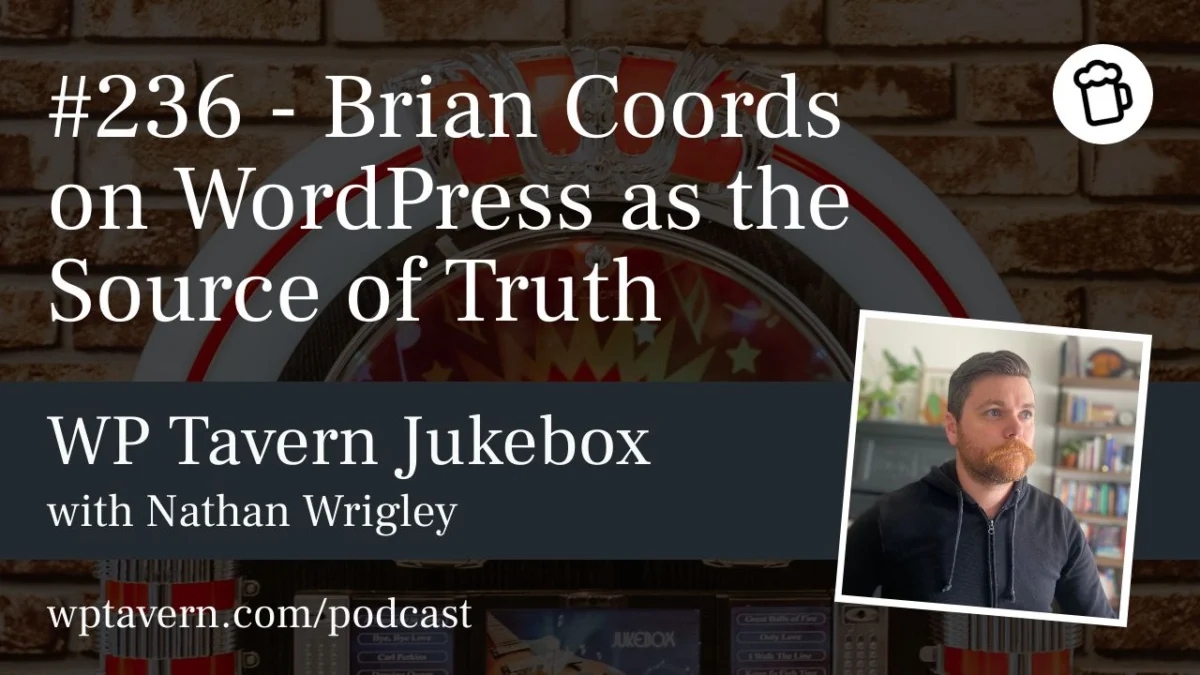
In a recent comprehensive episode of the Jukebox Podcast by WP Tavern, host Nathan Wrigley sat down with Brian Coords, Developer Advocate at WooCommerce. Coords, an educator-turned-developer who spent a decade in the freelance and agency trenches, recently delivered a widely discussed talk at WordCamp US titled "The Site is the Source of Truth: Block Themes, AI, and Agency Workflows."
The conversation explored the shifting role of WordPress in an era increasingly dominated by generative artificial intelligence and static site builders. Rather than abandoning WordPress for shiny, unproven AI-driven workflows, Coords argues that the WordPress ecosystem—particularly with the maturity of block themes—provides a resilient foundation. By centralizing design patterns, typography, and brand constraints directly inside a WordPress site, teams can transform their platforms into a singular "source of truth." This organizational discipline not only aids human collaborators but also prevents generative AI tools from creating chaotic, inconsistent brand experiences.
Furthermore, the discussion touched on the upcoming evolution of WooCommerce, the strategic balancing act of moving critical features into core software, and the psychological comfort of human-centric web management in an automated world.
Chronology
From the Classroom to Code
Brian Coords’ career trajectory is far from conventional. Before diving into the world of tech, Coords worked as a high school educator. However, a growing family and a shifting geographic reality forced a surprise career detour. He jumped headfirst into WordPress, spending ten years working across agency and freelance landscapes.
Despite transitioning into web development, Coords never lost his passion for pedagogy. Recognizing that Developer Relations (DevRel) roles in tech mirrored his love for teaching, writing, and explaining complex systems, he effectively built a public portfolio for the role pro bono. His persistence paid off when he landed at WooCommerce, where he now bridges the communication gap between everyday users, agency developers, and core product teams.
The WordCamp US Presentation
The central theme of the Jukebox interview stems from Coords’ preparation for WordCamp US. Originally submitting multiple presentation concepts, the organizers selected his proposal examining block themes, AI, and agency workflows. Initially drafted months prior, the talk evolved alongside his daily work on WooCommerce’s upcoming block themes.
Rather than leaning into pure hype, Coords used the presentation to guide the audience through a historical retrospective of WordPress. He examined why the platform has achieved such remarkable longevity, questioning why agencies are currently tempted to throw WordPress out with the bathwater in favor of static generators and prompt-based AI coding.
The Evolution of WooCommerce and Block Themes
During the production of the podcast, Coords and the WooCommerce team were actively preparing a public beta for an official WooCommerce block theme.Historically, WooCommerce relied heavily on the Storefront theme and a sprawling ecosystem of single-purpose extension plugins to manage everything from mini-carts to custom headers.
As the block editor matures, WooCommerce is systematically absorbing foundational utilities directly into core, drastically reducing plugin bloat and simplifying site maintenance for store owners.
Supporting Data and Technical Insights
- Plugin Sprawl Reduction: According to internal WooCommerce comparisons, approximately 90% of the features previously requiring separate, auxiliary extension plugins (such as layout carousels or specific mini-cart features) can now be native functions within the modern block editor.
- The "Source of Truth" Framework: Coords emphasizes that AI tools are exceptionally talented at moving from "zero to one" when creating something from scratch. However, they struggle with long-standing digital properties. By utilizing WordPress block patterns curated by human designers, AI agents are forced to operate within strict, pre-approved stylistic boundaries.
- Core vs. Ecosystem Balance: WooCommerce core releases continue to absorb features once handled by minor plugins—such as multi-variation product image galleries. This shift raises the technical "floor" of what a default installation can achieve, forcing single-feature plugin developers to adapt to an AI-accelerated market.
- The State of Adoption: Agency adoption of block themes has moved slower than initial projections. While greenfield projects readily adopt block-based building, existing e-commerce sites operate under an "if it ain’t broke, don’t touch it" ethos, necessitating high-value incentives to justify major theme migrations.
Official Perspectives and Industry Insights
The Danger of Generative Chaos
Throughout the interview, Coords highlighted a recurring trap for digital agencies adopting AI: a lack of governance. Without a centralized repository of approved templates, design tokens, and tone-of-living guidelines, generative AI tools quickly fracture brand consistency.
"If you ask AI for two pages on your site, they might look completely different… It might not understand your audience and your values," Coords explained.
By utilizing WordPress as a centralized knowledge base, organizations provide a structured sandbox for both human developers and AI copilots to operate efficiently.
Re-evaluating the Role of Writing in the AI Age
While initial tech industry trends pointed toward fully automated content generation, Coords noted a distinct cultural pendulum swing within tech companies—including his own—toward human-authored material.
"Writing is important, and writing should be done by humans. We don’t want to put AI content out," Coords remarked, noting that while AI can assist with review processes, the soul of digital publishing remains fundamentally human.
The WooCommerce Tightrope
Balancing core features against a thriving third-party developer ecosystem is one of WooCommerce’s most delicate challenges. While customers frequently complain about "plugin fatigue"—managing dozens of dependencies just to run a functional store—extension developers rely on these utilities for their livelihoods.
Coords points out that the true threat to small utility plugins is not WooCommerce absorbing them into core, but rather the democratization of code via AI.
"If your plugin isn’t doing anything super complicated… then there’s probably not going to be a market for it in the future."
Implications for the Future of WordPress and Agencies
Why E-Commerce Moats Matter
As static site builders and artificial intelligence agents reshape the web design landscape, simple marketing brochure sites face existential questions regarding their reliance on traditional Content Management Systems. However, Coords and host Nathan Wrigley agree that e-commerce platforms like WooCommerce occupy a far safer, more fortified position.
Because financial transactions, customer databases, order tracking, and high-stakes revenue generation require deep reliability, store owners are fundamentally disincentivized from relying on unvetted "vibe-coded" AI solutions. The financial risk of a broken checkout page far outweighs the fleeting convenience of automated site generation.
The Psychology of Logging In
A profound philosophical takeaway from the discussion centers on the human experience of administrative software. Despite the futuristic promise of speaking to an AI agent to handle every business operation, Coords and Wrigley highlighted the quiet satisfaction of direct control.
Logging into a familiar WordPress dashboard to view daily revenue, check order histories, and manage product variants provides a psychological sense of "coming home." This tactile connection to digital property suggests that dedicated backend interfaces will remain vital, ensuring that WordPress maintains its utility long after the current AI hype cycle matures.
Conclusion: A Resilient Ecosystem
Ultimately, Brian Coords’ insights from WordCamp US and his day-to-day work at WooCommerce paint an optimistic picture for the WordPress community. While the rules of building websites are changing rapidly, the fundamental need for structured systems, reliable e-commerce foundations, and human-guided design ensures that WordPress will remain a cornerstone of the web development landscape for years to come.