In the traditional playbook of public relations, success was measured in column inches, relationship depth with top-tier journalists, and the prestige of the publication hosting a brand’s press release. For decades, the goal was simple: get the logo in the paper.
However, as the digital landscape shifts from keyword-based search to generative AI-driven discovery, the fundamental mechanics of visibility have undergone a seismic change. Today, a brand’s presence isn’t just determined by a human editor’s decision to publish; it is increasingly decided by algorithms like ChatGPT, Gemini, and Google’s AI Overviews.
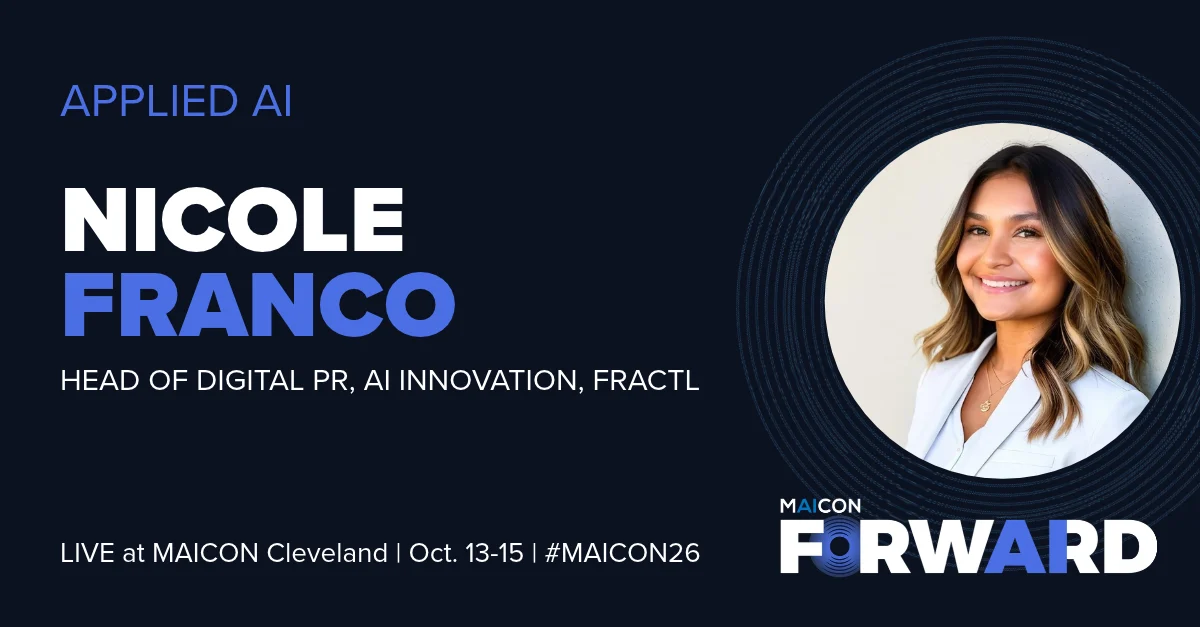
This paradigm shift is the focus of Nicole Franco, Head of Digital PR and AI Innovation at the data-driven agency Fractl. As she prepares to headline a keynote session at MAICON 2026, titled "Entity-Led Digital PR Workflows: Using Commentary, AI Prompts, and Media Partnerships to Build SME Authority in Search," the marketing industry is being forced to reckon with a uncomfortable truth: the old PR tactics are no longer sufficient to guarantee brand discovery in an AI-first world.
The Death of the Traditional Pitch
For years, marketers were trained to build rapport with journalists to secure feature stories. While this work remains relevant for brand sentiment, it is increasingly disconnected from the "recommendation engine" that now powers consumer research.
When a prospective buyer asks an AI model for a recommendation—"What is the best enterprise software for supply chain management?" or "Which food brand offers the healthiest snacks?"—the model does not scan for who bought the most expensive ad campaign. Instead, it scans for "entities"—the brands, people, and data points that have established consistent, high-authority footprints across the web.
If a brand is not "entity-linked" within the sources that AI models trust, they effectively do not exist in the new digital marketplace. This creates an urgent, critical gap between how PR has been practiced and how visibility is now earned.
Rethinking PR as an Entity Engine
Franco’s philosophy, which she will detail at MAICON 2026, reframes PR not as a story-pitching department, but as an "Entity Engine." This conceptual shift moves the focus away from individual articles and toward the ecosystem of authority surrounding a brand.
"The best way to think about this is to identify a cohesive metric across your entities and see how you can create and repurpose content across all media," Franco explains.
In this new framework, PR is no longer a siloed function. The digital PR campaign, the LinkedIn post amplifying the journalist’s coverage, the thought leadership byline, and the expert commentary provided during a breaking news cycle are all interconnected parts of a singular system. Each element reinforces the Subject Matter Expert (SME) authority of the brand. By treating the brand, its products, and its leaders as interconnected nodes of data, companies can ensure that when an AI model performs a sentiment or authority check, it finds a consistent, unified, and high-quality body of evidence.
Contextual Authority: Why Bigger Isn’t Always Better
A common trap for modern PR teams is the obsession with "Domain Authority" (DA) as defined by SEO tools. Many marketers believe that if they secure a placement in a major business newspaper, they have won the game.
Franco’s team at Fractl has analyzed proprietary data that suggests a different reality: authority is contextual, not universal.
"High-authority media is great, but in the context of your brand," Franco notes.
Consider a specialized food brand: if the brand is chasing visibility within Large Language Models (LLMs), a placement in All Recipes is significantly more valuable than a generic mention in a broad-reach business publication. Why? Because the models are trained on specific verticals. An AI answering a query about cooking will pull from sources that are considered authorities in food and nutrition. If the brand’s audience lives in specific niche publications, those are the platforms that provide the "training signals" for the AI to associate that brand with expertise.
For digital PR teams, this means the strategy must shift from "chasing the biggest logo" to "chasing the right context." If you are a career-coaching platform, your authority is built in HR-focused publications. If you are a tech startup, it is built in developer-focused journals. The takeaway is clear: stop seeking vanity metrics and start seeking relevance in the data sets that matter to your target audience.
Turning Commentary Into a Data Asset
One of the most innovative aspects of Franco’s upcoming MAICON presentation is her concept of "scaling commentary as a structured data asset."
Traditionally, PR professionals treat expert quotes as "filler" or "fluff" to round out a journalist’s story. Franco argues that in the age of AI, this is a missed opportunity. Journalists and AI models alike are starving for primary source material—raw, candid, and unique insights that go beyond the "AI slop" or generic corporate jargon that saturates the internet.
"Think of quotes like data points, sound bites, or clips a journalist will use in their story," says Franco. "They don’t want the same commentary that many PRs might be sharing. They want raw, uncut, candid sound bites that will add substance."
By restructuring the PR workflow to prioritize the production of high-value, "surprising" commentary from SMEs, agencies can turn their leaders into essential, recurring sources of information. When an expert’s voice is featured repeatedly in top-tier publications, the search engines and LLMs recognize that individual as an authority. This, in turn, boosts the brand’s overall search ranking and AI visibility.
The Implications for PR Leadership
The implications of this shift are profound for communications departments. If PR is now an "Entity Engine," then the skills required of a PR professional are changing. It is no longer enough to be a great writer or a persuasive communicator; modern PR leaders must be part-data analyst, part-strategist, and part-SEO expert.
This transition requires a fundamental restructuring of budgets and time. Teams must move away from the "spray and pray" approach of mass-emailing press releases and toward a surgical, data-driven approach that prioritizes high-impact placements in relevant, trusted media outlets.
Furthermore, as AI-generated answers become the primary way people interact with the internet, the role of "brand voice" becomes even more critical. If a brand cannot articulate its values and expertise in a way that is easily digestible for an AI model, it risks being drowned out by competitors who have successfully optimized their entity footprints.
A Roadmap for MAICON 2026
As the marketing industry gathers at MAICON 2026, the focus will be less on the hype of AI and more on the pragmatic application of these tools. Nicole Franco’s session is designed to provide attendees with a concrete playbook for this transition.
The session will explore:
- The Entity-Led Framework: How to map your internal experts and brand assets to the signals that search engines and LLMs look for.
- Proprietary Publisher Analysis: Fractl’s data on which media outlets actually impact AI recommendation engines.
- Workflow Modernization: How to move from generic PR pitching to creating "structured data assets" that AI models can easily cite.
- Measuring Success: Shifting from traffic-based metrics to authority-based metrics that align with AI-first discovery.
Conclusion: Preparing for the New Era of Search
The era where PR was a one-way street of pitching stories is officially coming to a close. We have entered the era of the "algorithmic conversation," where brand authority is a product of consistent, high-context, and data-rich presence across the web.
For leaders who feel overwhelmed by these shifts, Franco’s message is one of optimism: the tools are available to build stronger, more resilient brands than ever before. By treating your SME commentary as a strategic asset and aligning your media strategy with the contextual needs of your audience, you can ensure your brand isn’t just seen—it’s recommended.
As we look toward the future of marketing at MAICON 2026, the brands that win will be those that stop pitching to humans alone and start building for the intelligence that now powers the human experience. Whether you are a seasoned PR veteran or a marketing leader navigating the complexities of AI, the message from Franco is clear: the time to build your entity-led authority is now.
To learn more about the evolving landscape of AI in PR and to hear from Nicole Franco and over 50 other industry leaders, register for the Marketing Artificial Intelligence Conference (MAICON) 2026.