The ecommerce landscape is undergoing a profound transformation as the integration of "agentic" AI—systems capable of not just processing data, but executing complex, multi-step tasks autonomously—moves from experimental to operational. This week’s industry updates demonstrate a clear pivot toward intelligence-driven commerce, last-mile logistical resilience, and the democratization of enterprise-grade advertising tools for small-to-medium enterprises (SMEs).
From the expansion of Reddit’s advertising ecosystem to the consolidation of cross-border logistics through Global-e’s latest acquisition, merchants are being provided with a sophisticated toolkit designed to automate growth and reduce operational friction.
The Core Pillars of Current Merchant Innovation
The rapid pace of development in mid-2026 reflects a broader industry mandate: to replace manual workflows with autonomous, AI-led processes.

1. The Rise of Agentic Intelligence
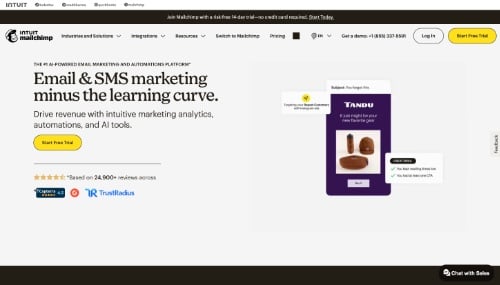
The most significant trend this week is the emergence of "Agentic AI" in marketing and analytics. Intuit Mailchimp has debuted its "Analytics AI," a conversational agent that allows marketers to query their data in natural language. Instead of manually parsing dashboards, merchants can now ask the platform to explain why campaign performance shifted and receive prescriptive advice on subsequent actions.
Parallel to this, Attentive has unveiled its next-generation agentic marketing platform. By integrating Predictive Analytics and "Brand Voice 2.0," Attentive is pushing toward a future where omnichannel marketing—across SMS, email, and RCS—is managed by a centralized intelligence that adapts to brand identity in real-time.
2. Streamlining the Path to Purchase
Amazon Web Services (AWS) is taking a proactive stance on the "agentic shopping" movement. By launching a platform that distills the expertise used to build "Alexa for Shopping" into a framework for third-party retailers, AWS is effectively enabling any merchant to deploy their own conversational shopping assistant. This allows retailers to compete with larger marketplaces by offering a bespoke, voice-or-text-guided shopping experience that matches their specific brand tone.
3. Logistical Expansion and Crowdshipping
Logistics remains the lifeblood of ecommerce. The long-term partnership between DHL eCommerce and the United States Postal Service (USPS) signals a commitment to maintaining last-mile reach, ensuring that DHL’s sorting and transport capabilities are bolstered by the USPS’s unmatched access to 170 million delivery points. Meanwhile, the European model of "crowdshipping"—pioneered by Shopopop—is aggressively targeting the U.K. market. This model, which utilizes local individuals to complete community deliveries, represents a potential paradigm shift in urban logistics, reducing reliance on traditional heavy-freight networks.
Chronology of Major Industry Developments
The recent wave of updates represents a coordinated push toward greater efficiency. The following timeline outlines the major announcements from late May through early June 2026:
- May 26: Attentive unveils its next-generation agentic AI marketing innovations, focusing on automated personalization and predictive modeling.
- May 28: Intuit Mailchimp launches Analytics AI, connecting email and SMS performance through a conversational interface. Simultaneously, Global-e announces the acquisition of Passport Global to bolster its cross-border logistics network.
- May 29: Reddit opens its Shopify integration to global advertisers, simplifying the path to Dynamic Product Ads.
- May 30: DHL eCommerce and USPS formalize a multi-year exclusive agreement for last-mile delivery services in the U.S.
- June 1: AWS releases its retail platform for AI-powered shopping assistants.
- June 2: SumUp introduces online booking for U.S. service-based businesses, expanding its financial ecosystem.
- June 3: Goflow launches an eBay listing publisher to streamline multichannel sales from a single catalog.
Supporting Data and Technical Infrastructure
The effectiveness of these new tools is contingent on data accessibility. The recent partnership between Stripe and Affirm in the U.K. serves as a case study in how financial technology is evolving to meet consumer expectations. By enabling flexible, buy-now-pay-later (BNPL) options directly through the Stripe checkout, merchants can reduce cart abandonment—a critical metric for any ecommerce storefront.

Furthermore, the launch of the "AI Buyability" platform by Selltonomy provides a necessary check on the quality of the modern storefront. As more AI agents crawl websites to assist users, technical debt—such as ambiguous inventory states or conflicting pricing signals—becomes a liability. Selltonomy’s audit capability acts as an essential diagnostic tool, ensuring that a merchant’s digital storefront is "AI-ready."
Selected Tool Performance Enhancements:
- Pic Copilot (Alibaba International): Integrated with Google Ads, it now allows one-click generation of display ads trained on real-world market scenarios.
- Taggbox: Updated its social media widgets to offer deeper customization, enabling brands to weave user-generated content (UGC) seamlessly into their site layouts.
- PixExact: The expansion of its AI Flyer Generator allows for the rapid creation of exact-size marketing assets, bypassing traditional, time-intensive design software.
Official Perspectives and Market Responses
Industry leaders have been vocal about the necessity of these shifts. Regarding the Global-e acquisition of Passport, leadership indicated that the move is a direct response to the increasing complexity of cross-border logistics. By integrating Passport’s multi-carrier network, Global-e aims to simplify the "last mile" for international merchants who struggle with fragmented shipping regulations.
On the AI front, the sentiment is equally clear. The collaboration between Stripe and Affirm, according to statements from both companies, is not merely about payment processing; it is about "the future of AI-powered commerce." By focusing on seamless, transparent, and agentic experiences, these companies are positioning themselves to lead the transition into a post-search era of commerce, where AI agents do the shopping on behalf of the consumer.

Implications for the Future of Retail
The cumulative effect of these announcements suggests a significant shift in power dynamics for merchants.
The Democratization of Enterprise Tech
Historically, tools like AI-driven analytics, sophisticated cross-border logistics, and automated ad-campaign management were reserved for the largest ecommerce players. The current wave of releases—specifically from companies like Goflow, Pic Copilot, and SumUp—effectively brings these capabilities to the SME sector. A small merchant can now utilize Goflow to sync their catalog across Amazon, Walmart, and eBay while simultaneously running AI-generated Google Ads through Pic Copilot.
The "Agentic" Standard
We are moving rapidly toward a period where "Agentic Commerce" will be the default expectation. Merchants who do not optimize their storefronts for AI agents—as evidenced by the rise of Selltonomy’s auditing services—will likely find themselves at a disadvantage as automated shopping assistants become the primary interface for consumer discovery.

Operational Resilience
The DHL-USPS agreement highlights a trend toward infrastructure stability. Despite the flashiness of AI marketing tools, the industry remains grounded by the physical reality of shipping. The reliance on established national carriers suggests that while the "front-end" of ecommerce is becoming increasingly virtual and intelligent, the "back-end" is doubling down on traditional, reliable partnerships to ensure that digital promises are met with physical deliveries.
Conclusion
The ecommerce ecosystem in mid-2026 is defined by a paradox: as interfaces become more invisible (via AI agents and conversational shopping), the underlying architecture—data, logistics, and infrastructure—must become more robust and integrated. Merchants who successfully adopt these tools will not only save time but will likely benefit from the predictive, automated nature of these new platforms, allowing them to focus on their core product strategy while their "agents" handle the tactical execution of sales and marketing.
For those looking to stay ahead, the mandate is clear: audit your digital infrastructure for AI readiness, integrate your data silos, and look toward omnichannel solutions that leverage the next generation of autonomous marketing tools.