In the contemporary media landscape, few cultural touchpoints command the raw, unbridled attention of a global audience quite like live sports. As streaming fragments viewership across entertainment genres, sports remain the "last stand" of appointment television—a rare domain where audiences are locked in, emotionally invested, and ready to engage in real-time.
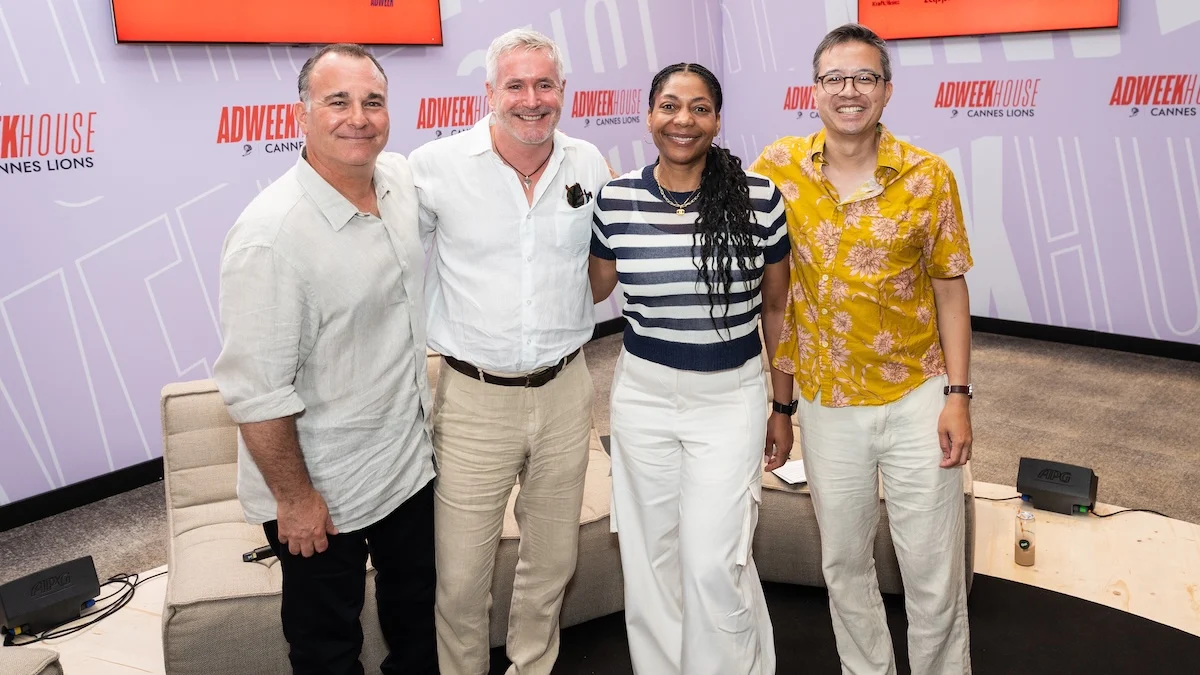
However, for major brands, the golden age of the simple logo placement is over. The era of the "billboard in the outfield" is rapidly being eclipsed by a demand for deeper, more nuanced, and highly creative brand integration. At the recent ADWEEK House during Cannes Lions, a panel of industry titans—including Kraft Heinz CMO Todd Kaplan, Mars Snacking CMO Gabrielle Wesley, and Zappi founder Steve Phillips—convened to dissect the shifting paradigm of sports marketing. Moderated by ADWEEK editor-in-chief Ryan Joe, the discussion signaled a definitive pivot: success in sports marketing is no longer about how many eyes you reach, but how deeply you resonate with the fan experience.
The End of the "Logo Slap" Era
For decades, the standard operating procedure for legacy brands entering the sports arena was straightforward: purchase sponsorship rights, plaster the brand’s logo on stadium signage, and wait for the impressions to roll in. But in a hyper-saturated market, this "logo slap" strategy is increasingly viewed as a relic of the past.
Todd Kaplan, CMO for North America at Kraft Heinz, was blunt in his assessment of the current landscape. "Awareness is not our issue," he noted. "So doing a logo slap—‘presented by X,’ ‘sponsored by Y’—that’s not success for us."
The challenge today is not visibility; it is relevance. Consumers are bombarded with thousands of brand messages daily, and they have become expert at filtering out passive advertising. When a brand simply inserts itself into a game without adding value, it risks being ignored or, worse, being perceived as an unwanted intrusion on the fan’s experience. To move the needle, brands must transition from being sponsors to being participants.
Chronology of a Paradigm Shift: From Broadcast to Conversation
The evolution of sports marketing has been inextricably linked to the rise of social media and digital interactivity.
- Pre-2010s: The "Broadcast Era." Brands relied on massive reach via traditional TV spots and static stadium signage. The communication was strictly one-way: Brand to Consumer.
- 2010–2020: The "Integration Era." Brands began experimenting with social media tie-ins, mobile apps, and second-screen experiences. Digital engagement became a KPI, but the core strategy remained tied to the official broadcast.
- 2020–Present: The "Engagement Era." With the rise of viral content, short-form video, and creator culture, the "official" broadcast is just the starting line. Modern sports marketing is defined by real-time participation in cultural moments, regardless of whether a brand holds a league-sanctioned sponsorship.
This shift marks a move from static, planned advertising to fluid, responsive engagement. As Gabrielle Wesley of Mars Snacking emphasized, "Consumers don’t want to be messaged; they want to engage. It’s a two-way conversation."
Supporting Data: The Psychology of the Fan
The necessity of this shift is backed by a changing psychological profile of the modern sports fan. According to insights shared by Zappi, fans are not merely watching a game; they are participating in a multi-platform ecosystem that includes pre-game analysis, live-game reactions, and post-game discourse.
When brands tap into this ecosystem, the results are quantifiable. For example, when Kraft Heinz executed its "unofficial stadium ketchup" campaign, the goal was not to purchase a massive, multi-million dollar official sponsorship. Instead, it was to identify a specific pain point or cultural quirk—the lack of high-quality condiments at certain venues—and solve it. By focusing on the fan experience, the brand generated higher levels of affinity than a passive sponsor might have achieved with ten times the budget.
Furthermore, Steve Phillips of Zappi highlighted that the most successful campaigns are those that demonstrate a "deep understanding of the fan experience." When Dove launched its World Cup-branded personal care line, it wasn’t just slapping a soccer ball on a bottle of deodorant. It was positioning the product as a tool for the fan, acknowledging the intensity of the event and the needs of the consumer during that high-energy period.
Official Responses and Strategic Pillars
The panelists identified three core pillars for brands looking to survive and thrive in the modern sports landscape:
1. Ownable, Distinctive Assets
Kaplan highlighted the "Wienie 500" as a masterclass in brand-led sports marketing. By racing the iconic Oscar Mayer Wienermobiles around the Indianapolis Motor Speedway, the brand created an event that was entirely their own. It leveraged the prestige of the Indy 500 while remaining authentically "Oscar Mayer." The result was billions of earned media impressions and genuine fan excitement, even manifesting in fan-led betting on platforms like DraftKings.
2. Radical Authenticity
Authenticity is often cited as a marketing buzzword, but in the context of sports, it is a survival mechanism. It means acknowledging the culture of the sport—its history, its rivalries, and its unique vernacular. Brands that fail to do this are quickly identified as "outsiders" trying to capitalize on a trend.
3. Cultural Agility
The viral nature of modern sports—such as the sudden rise of breakout stars like Alex Freeman—means that opportunities for engagement often appear with zero warning. Wesley argued that brands must be structured to react to these moments in real-time. "Those are engagements that are pure, that you can’t necessarily plan," she noted. "Making sure that you’re engaged in culture allows you to participate in those moments."
Implications for the Future of Brand Strategy
The implications of this shift are profound. For marketing departments, the era of the six-month campaign cycle is ending. To succeed in the sports vertical, teams must become more agile, data-driven, and culturally sensitive.
The Death of the "Safe" Bet
In the past, a massive sponsorship check was considered a "safe" marketing investment. Today, that investment is increasingly risky if it lacks a creative execution strategy. Brands are realizing that they can often achieve more impact with a smaller, highly creative, and "guerrilla" style activation than they can with a massive, generic sponsorship.
The Rise of the "Fan-First" Metric
Success is no longer measured solely by TV ratings or "eyeballs." Instead, brands are looking at sentiment, social shareability, and, most importantly, "brand-event alignment." The question is no longer "How many people saw our logo?" but rather "Did we make the fan’s experience better, or did we provide a moment that added to the fun of the game?"
Collaboration Over Consumption
The partnership between Zappi and ADWEEK to host this panel is itself a reflection of the industry’s trajectory. As brands seek to navigate these complex waters, the reliance on consumer insights and data-driven creative testing becomes paramount. The "guesswork" of the past is being replaced by rigorous testing of concepts to ensure that a brand’s attempt at "authenticity" doesn’t backfire.
Conclusion: Playing the Long Game
The future of sports marketing belongs to those who understand that they are guests in the fan’s world. Whether it is through limited-edition product lines, viral social moments, or creating "unofficial" events that capture the imagination, the brands that win will be the ones that foster a relationship.
As the industry looks toward 2026 and beyond, the message from Cannes is clear: The stadium is no longer just a place for an ad; it is a place for a dialogue. The brands that stop shouting at the crowd and start playing along with them are the ones that will secure their spot in the cultural history of the games we love. In this new era, the logo is secondary. The experience is everything.