It is often said that the most profound business insights come from the most unexpected places. For many, the unlikely intersection of digital content strategy and a recreational paddle sport—Pickleball—has become the latest source of professional inspiration. While the sport’s name may elicit a chuckle, its rapid ascent from a backyard hobby to a multi-billion dollar cultural phenomenon offers a masterclass in growth, community building, and adaptability.
For the modern blogger, the transition from the court to the content management system is more seamless than one might expect. As the digital landscape becomes increasingly saturated, the strategies employed by high-level pickleball players—precision, patience, and community-driven engagement—are proving to be the secret ingredients for sustainable blogging success.
The Chronology of a Phenomenon: From Bainbridge to the Big Screen
To understand why pickleball serves as a metaphor for digital success, one must look at its trajectory. The sport was born in 1965 on Bainbridge Island, Washington, when three fathers—Joel Pritchard, Bill Bell, and Barney McCallum—sought to alleviate their children’s boredom. Using scavenged equipment and a makeshift net, they inadvertently created a game that would become the fastest-growing sport in America.
The Growth Timeline:
- 1965: The inception of the game on Bainbridge Island.
- 1976: The first known pickleball tournament is held at the South Center Athletic Club in Tukwila, Washington.
- 1990s: The sport gains steady traction, moving from Washington state to retirement communities in Arizona and Florida.
- 2020–2024: The "Pandemic Boom." Accessibility, combined with social media visibility, catapults pickleball into the mainstream, with professional leagues (MLP) securing massive investment and broadcast deals.
The lesson for bloggers here is one of organic evolution. Like the sport, a blog does not start as a global media empire. It begins as a "backyard" project. The transition from a single, humble post to a thriving content hub is a marathon, not a sprint, requiring the same dedication to improvement that turned a suburban game into an international sport.
The Anatomy of Success: Strategic Parallels
1. Start Small, Think Big
The most successful blogs in existence today were once nothing more than a blank cursor on a screen. The "Bainbridge Model" suggests that you do not need a massive infrastructure to launch. Start with your current resources, identify your unique niche, and focus on the quality of your "serve." By starting small, you allow your voice to find its resonance before scaling your efforts into a broader content ecosystem.

2. The Power of the "Dink": Mastering Simplicity
In the fast-paced world of pickleball, the "dink"—a soft, controlled shot into the opponent’s non-volley zone—is often more effective than a powerful smash. In blogging, this is the art of simplifying complex information. Readers today are overwhelmed by noise. If you can take a complex subject and break it down into digestible, clean, and jargon-free prose, you win. The "dink" of the blogging world is clarity.
3. Finding the "Kitchen" (Strategic Boundaries)
The "kitchen" is the non-volley zone in pickleball, a place of restricted movement that dictates the flow of the game. For bloggers, your "kitchen" is your brand identity. It is the boundary where you engage deeply with your audience without compromising your integrity or "stepping over the line" into aggressive, low-value sales tactics. Finding this sweet spot—where you are accessible but professional—is the key to long-term audience trust.
4. Rallying Your Community
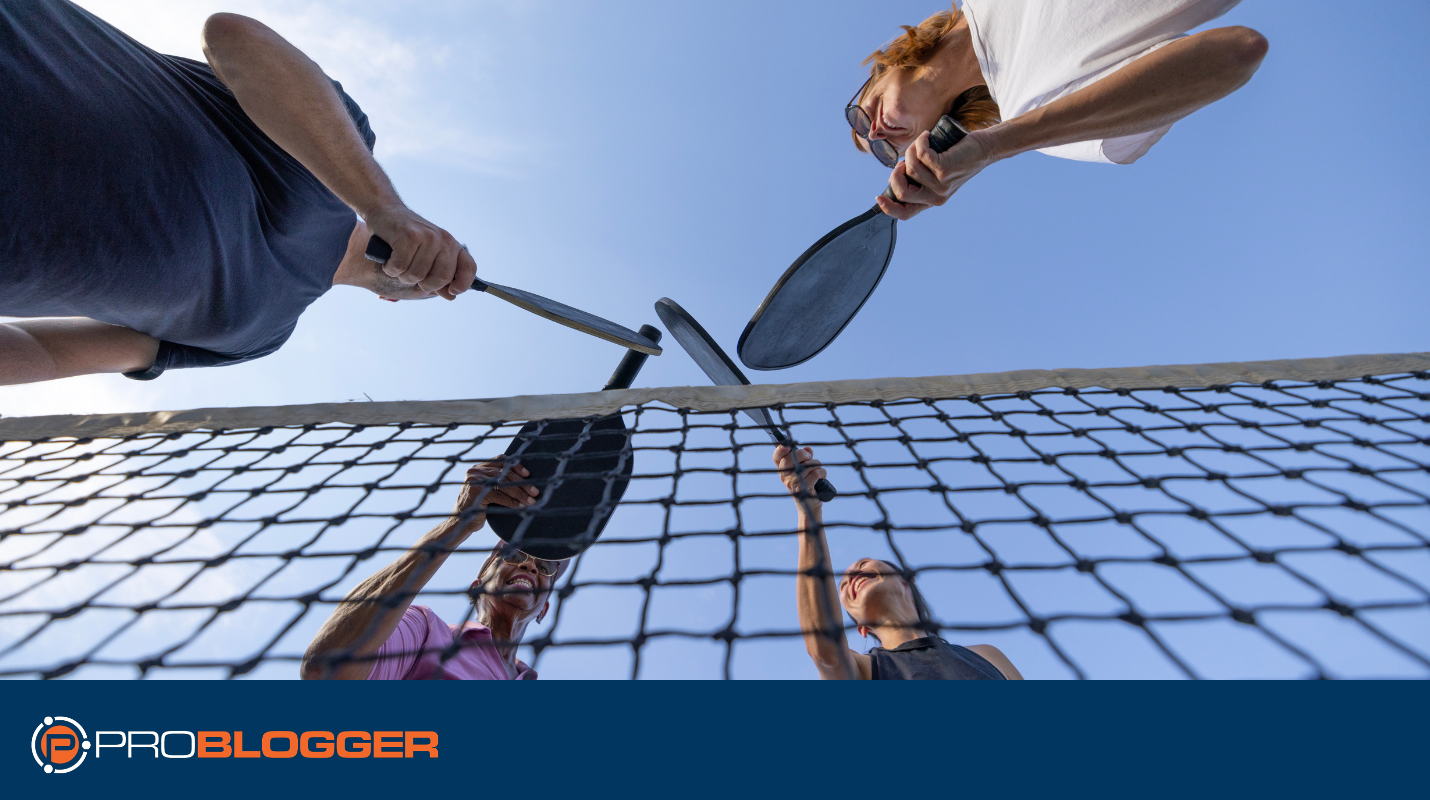
A pickleball rally is only as good as the players involved. If you stop hitting the ball back, the game ends. Similarly, blogging is a dialogue. Responding to comments, hosting Q&A sessions, and acknowledging reader feedback creates a "rally" that keeps visitors coming back. The longer you sustain the conversation, the deeper the loyalty of your community grows.
Data-Driven Insights: Why Engagement Matters
Industry analysis from recent content marketing studies indicates that blogs with active, two-way communication loops—comment sections, interactive polls, and social media integration—see a 40% higher retention rate than static, "broadcast-only" sites.
Furthermore, data suggests that the "simplicity factor" (our "dink" strategy) is statistically linked to lower bounce rates. When a user lands on a page and finds the information formatted for quick consumption—short paragraphs, bulleted lists, and clear headers—the time-on-page metrics increase by an average of 25%.
Professional Perspectives on Content Evolution
Experts in digital marketing often compare the current state of blogging to the professionalization of sport. "The era of ‘spray and pray’ blogging is over," says one industry analyst. "Just as pickleball players have moved from casual hobbyists to athletes who study film and practice specific drills, bloggers must move toward a data-informed, strategic approach to their content."
The consensus among successful creators is that adaptability is the highest form of intelligence. Just as a player must adjust their footwork when facing a stronger opponent, a blogger must be willing to pivot when an algorithm changes or a specific content pillar fails to perform.
Implications for the Modern Blogger
Embracing the "Whiffs"
In pickleball, a "whiff" (missing the ball entirely) is a humbling but necessary part of growth. In the digital space, every blogger will eventually publish a post that falls flat. The implication for creators is clear: do not let a poor-performing post deter you. Analyze the data, understand the failure, adjust the strategy, and move to the next serve.
The Necessity of Strategic Positioning
Just as a player positions themselves on the court to anticipate the ball’s trajectory, a blogger must position their content to meet the needs of the market. This requires deep research into your audience’s pain points. Ask yourself:
- Where is the gap in my niche?
- How can my unique voice solve a problem that others are ignoring?
- Is my "positioning" clear to a first-time visitor?
Keeping Your Eye on the Ball (The Purpose)
It is easy to get distracted by the "shiny objects" of the internet—new platforms, viral trends, and fleeting SEO hacks. However, the most successful blogs stay true to their core mission. Whether your goal is to educate, entertain, or provide a service, keeping your eye on the ball means ensuring every piece of content serves your overarching purpose.
The Element of Joy: The Competitive Advantage
Perhaps the most overlooked, yet vital, lesson from the court is that pickleball is fun. The sport grew so quickly because it was enjoyable, not because it was a chore. When a blogger approaches their work with genuine passion, it manifests in the writing. Readers can sense when a creator is simply "churning out content" versus when they are genuinely engaged with their subject matter.
Conclusion: The Final Serve
The parallels between a game played with a plastic ball and the craft of professional blogging are not as tenuous as they first appear. Both require discipline, strategic positioning, community engagement, and, above all, the courage to step onto the court.
As the digital landscape continues to evolve, those who treat their blogging career with the same intentionality as an athlete treats their sport will be the ones who stand the test of time. Whether you are writing to build a brand, share your expertise, or foster a community, remember to start small, think big, and—above all else—don’t forget to enjoy the rally.
Grab your "keyboard," focus your strategy, and prepare to serve. Your next "hit" might be just one post away.