By The Editorial Desk
Published: August 2026
Executive Summary & Main Facts
For decades, an unspoken ritual has played out in corporate boardrooms across the globe. Ask any B2B marketing team how their paid media campaigns are performing, and the response is swift, confident, and heavily decorated with platform metrics. Cost per click is down. Conversion rates are ticking upward. Return on ad spend (ROAS) looks exceptionally healthy on native dashboards.
However, ask that same marketing team a fundamentally different question—what tangible, dollar-denominated pipeline did paid media generate last quarter?—and the room frequently goes quiet.
This persistent silence highlights the most profound operational disconnect in modern enterprise marketing: the chasm between platform-level vanity metrics and the hard financial realities demanded by the C-suite. In a modern B2B buying environment where purchases are steered by committees of five to ten stakeholders, and sales cycles stretch across multiple months or even quarters, conversions do not happen on a single click. Yet, legacy marketing reports continue to treat them as though they do.
To survive scrutiny from CEOs, CFOs, and board members, B2B marketers must undergo a foundational shift. They must abandon isolated dashboard metrics, wire their campaigns directly into Customer Relationship Management (CRM) architectures before launch, deploy multi-layered attribution frameworks, and learn to speak the native language of finance.
The Anatomy of the B2B Measurement Crisis
To understand why finance teams routinely push back on marketing pipeline reports, one must examine how the modern enterprise buying journey has evolved.
Unlike consumer transactions, where a digital ad can trigger an immediate impulse purchase, enterprise B2B sales are complex, multi-touch journeys. When a Fortune 500 company is evaluating a multi-million-dollar software or logistics platform, the buyers are CEOs, Chief Financial Officers, Chief Information Officers, and department heads. They conduct asynchronous research, consume whitepapers, attend webinars, consult peer reviews, and engage in protracted internal debates over months.
Despite this, many digital marketing operations continue to rely on attribution models inherited from the B2C playbook—models that assign 100% of the credit to the last trackable click or touchpoint. When a deal closes six months later, marketing proudly claims credit based on a last-touch report, while the finance department, looking at organic inbound traffic and direct sales outreach, views marketing’s claimed pipeline with deep skepticism.
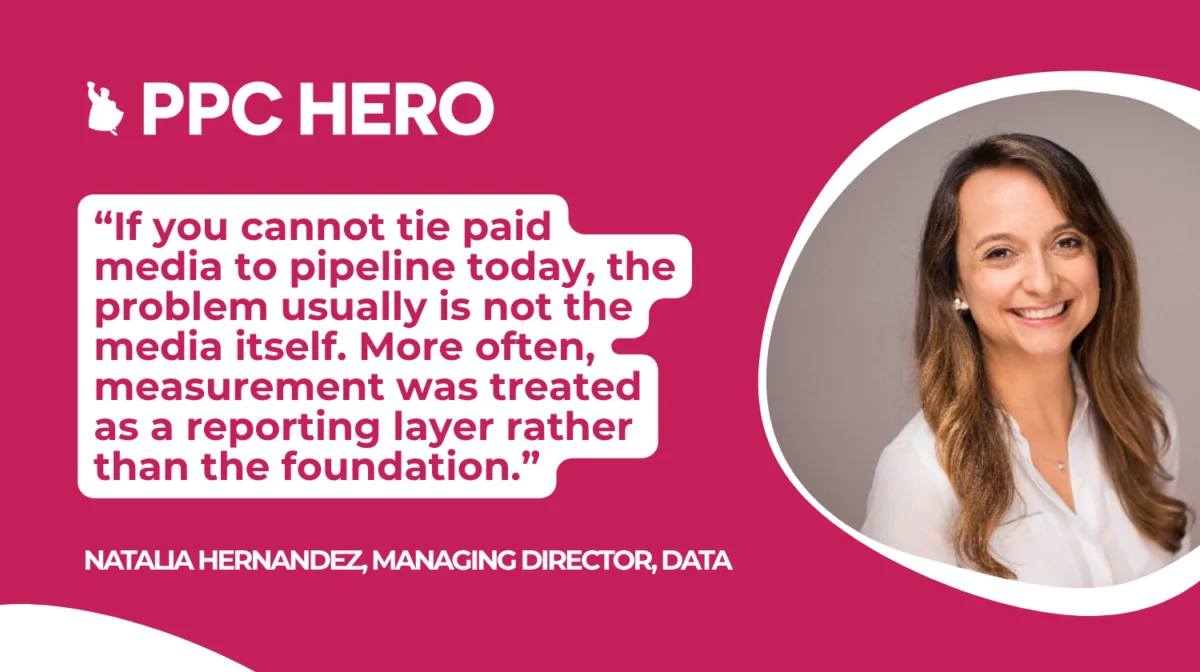
This mutual distrust stems from a foundational structural error: treating measurement as a reporting layer rather than a structural foundation. Too often, campaigns are launched, optimized for clicks and impressions, and only retroactively wired into Salesforce or HubSpot weeks or months down the line. By the time analytics teams try to stitch the user journey together, the digital breadcrumbs have gone cold.
Chronology of the Shift: From Clicks to Causal Modeling
The evolution of B2B marketing measurement has transitioned through three distinct eras over the past decade, each revealing the inadequacy of the last.
Phase 1: The Era of Platform Metrics (Pre-2020)
In the early days of programmatic advertising and advanced social media targeting, marketing teams were judged primarily on engagement. Success was measured in impressions, click-through rates (CTRs), and cost-per-click (CPC). Marketing operated in an independent silo, speaking a language of creative performance and algorithmic efficiency that had virtually no mathematical overlap with corporate financial statements.
Phase 2: The False Comfort of Single-Touch Attribution (2020–2023)
As data privacy regulations tightened and enterprise software matured, organizations demanded lead-level accountability. Marketing teams adopted basic CRM integrations and single-touch attribution (STA) or multi-touch attribution (MTA) models. While this was a step forward, it created a new illusion of precision. Single-touch models systematically over-credited paid search and retargeting while ignoring long-term brand awareness drivers. Finance teams quickly realized these models failed a basic "sanity check": if marketing turned off its paid channels, pipeline rarely dropped by the exact percentage the reports predicted.
Phase 3: The Integrated, Multi-Layered Reality (Present Day)
Today, sophisticated B2B enterprises are moving away from single "sources of truth" in favor of triangular verification. Recognizing that no single attribution model can account for dark social, word-of-mouth, and complex committee dynamics, forward-thinking organizations are combining multi-touch tracking, econometric causal modeling, and geo-based incrementality testing. Measurement is no longer an end-of-quarter afterthought; it is baked into campaign architecture from day zero.
Supporting Data and Technical Architecture
Fixing the pipeline attribution problem requires rigorous, unglamorous engineering before a single dollar of ad spend is allocated. According to recent enterprise marketing benchmarks, organizations that align their CRM data architecture with media platforms prior to campaign launch experience a dramatic reduction in attribution disputes with finance.
1. Wiring Media to the CRM Up Front
The technical baseline required for defensible pipeline reporting involves several non-negotiable steps:

- Rigorous Campaign Tagging: Every campaign, ad set, and creative variant must be systematically tagged at launch using standardized naming conventions and UTM parameters.
- Native CRM Integration: Lead and contact forms must sync automatically to CRM campaign objects, ensuring that initial form fills are permanently mapped to the specific ad interaction that inspired them.
- Full-Funnel Milestone Tracking: Conversion tracking within platforms like Google Ads and LinkedIn must be configured to pass downstream lifecycle milestones—Marketing Qualified Leads (MQLs), Sales Qualified Leads (SQLs), first meetings, and closed-won opportunities—back into the ad network algorithms.
Done correctly, this creates an unbroken data thread from the initial impression to the final revenue realization. It allows marketing leaders to trace how a specific ad group contributed not just to traffic, but to high-intent pipeline actions recognized by the sales team.
2. Triangulating the Truth: The Three-Layer Attribution Model
Any agency or analytics provider selling a single "source of truth" attribution model is offering an oversimplification. Defensible measurement requires three independent layers checking each other’s blind spots:
- Multi-Touch Attribution (MTA): Links ad interactions and self-reported attribution data directly to CRM outcomes. While useful for understanding channel touchpoints, MTA is inherently biased toward trackable digital clicks and struggles with privacy-restricted environments.
- Causal Modeling: Built on econometric and statistical methods, causal modeling measures each channel’s contribution to pipeline while actively controlling for external confounding factors such as seasonality, macroeconomic trends, and organic brand demand.
- Geo-Based Incrementality Testing: The gold standard of media validation. By running geo-holdout tests (suppressing ads in specific geographic markets while maintaining spend in others), organizations can definitively prove whether paid media drove net-new pipeline or simply took credit for demand that was already organically present.
When run in parallel, these three layers eliminate the individual weaknesses of each method, producing a conservative, highly defensible pipeline figure.
Official Responses and Industry Perspectives
Financial leaders and modern marketing executives have increasingly vocalized the need for a unified vocabulary.
"When I sit down with our CFO, terms like ‘cost-per-click’ or ‘engagement rate’ sound like noise," shares the Chief Marketing Officer of a global B2B SaaS enterprise. "Finance doesn’t run the business on clicks; they run it on contribution margins, customer lifetime value, and payback periods. If we cannot translate our digital campaigns into those exact units of measure, we deserve the budget cuts we get."
Corporate finance departments echo this sentiment. Enterprise financial analysts note that marketing budgets are often treated as discretionary line items precisely because marketing teams historically struggle to prove incremental return.
"If marketing comes to the table with a pipeline number that collapses under basic scrutiny—such as failing to account for organic baseline demand—we have to discount their projections by 50% just to be safe," notes a corporate finance director at a Fortune 500 technology firm. "When a marketing team brings us a model backed by geo-holdout testing and CRM-validated pipeline stages, the conversation changes entirely. That is when marketing transitions from a cost center to a predictable growth engine."
Implications for B2B Strategy and Operations
When measurement is elevated from a reporting afterthought to the foundational driver of campaign strategy, the operational impact across the enterprise is profound.
Case Study A: B2B SaaS Pipeline Optimization
An enterprise B2B SaaS organization recently restructured its paid search and content syndication programs to follow pipeline signals rather than traditional platform metrics. By wiring Salesforce lead scoring directly into their ad platforms and optimizing toward CRM-verified pipeline rather than raw lead volume, the company achieved remarkable results:
- Cost per MQL decreased by 27%.
- Overall conversion rates increased by 18%.
- Qualified traffic efficiency grew by 22%.
Case Study B: Global Technology Infrastructure Provider
A multinational technology infrastructure provider faced chronic friction with its finance division over quarterly marketing ROI. By implementing a hybrid measurement framework combining causal modeling with geo-holdout testing—and assigning concrete financial values to tiered CRM lead statuses—the organization unlocked unprecedented clarity. The direct result was a 138% increase in verifiable ROAS, achieved not through clever bidding hacks or budget inflation, but by rigorously cutting wasted spend on non-incremental channels and doubling down on pipeline-generating engines.
Conclusion and Future Outlook
The gap between marketing performance and financial validation is not a permanent fixture of corporate life; it is a structural failure of measurement architecture.
As digital privacy regulations continue to evolve and enterprise capital becomes more tightly rationed, the era of relying on platform-reported vanity metrics is drawing to a close. B2B marketing teams that refuse to adapt will find themselves perpetually sidelined during budget allocations, unable to defend their requests against rigorous CFO scrutiny.
Conversely, marketers who embrace the unglamorous, foundational work of wiring media to the CRM before launch, deploying multi-layered attribution frameworks, and reporting in the financial metrics of the boardroom will secure their seat at the table.
The next time the executive leadership team asks what paid media contributed to the bottom line, the answer will no longer be met with silence. It will be delivered with a precise, statistically sound number—and the confidence to defend it to the board.