The digital landscape in 2026 presents an increasingly complex paradox for website administrators, developers, and enterprise teams. On one hand, tools for building and scaling web properties have never been more intuitive or powerful. On the other, the foundational security posture of the web’s dominant content management system is facing unprecedented pressure.
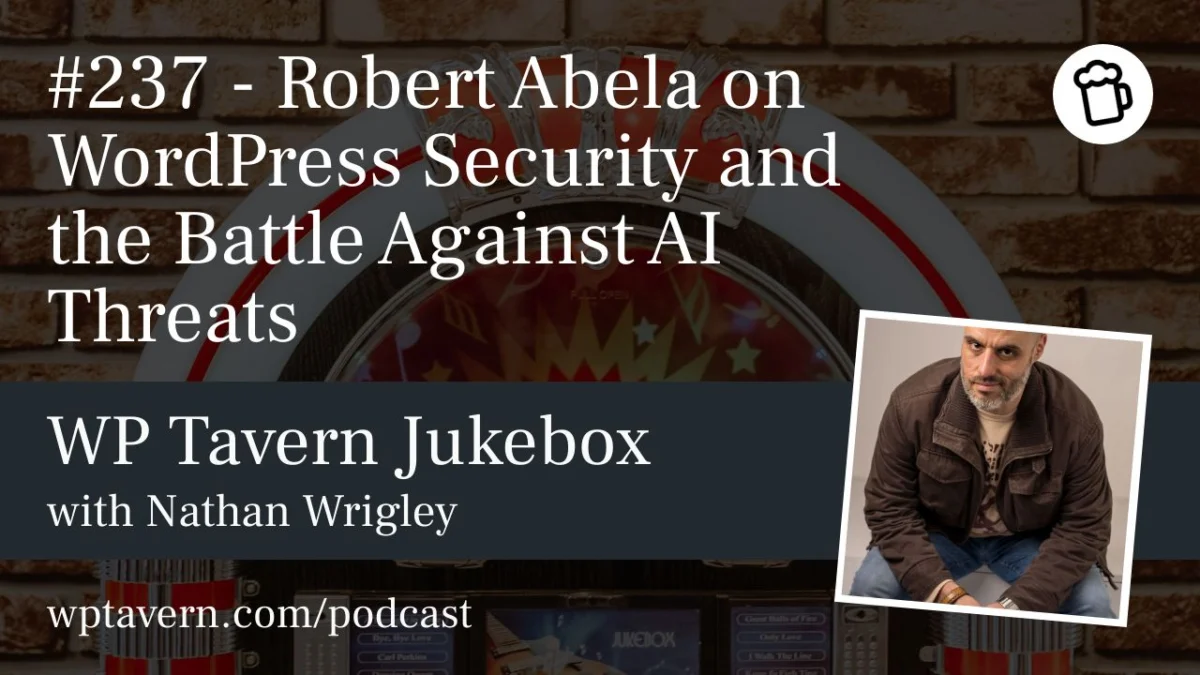
Recently, WP Tavern’s Jukebox Podcast host Nathan Wrigley sat down with Robert Abela, founder of Melapress and a 25-year veteran of the IT security industry. The central focus of their discussion was the release of the 2026 WordPress Security Survey, an annual research project now in its fourth or fifth year. The findings paint a sobering picture of an ecosystem grappling with high anxiety, frequent security incidents, and a rapidly escalating arms race driven by artificial intelligence.
Main Facts
The 2026 WordPress Security Survey gathered data from 219 carefully vetted respondents across a wide spectrum of the WordPress community—ranging from independent freelancers and agency developers to enterprise-level product owners.
Key high-level takeaways from the research include:
- High Anxiety Baseline: Nearly 79% of surveyed professionals express ongoing concern regarding the security of their WordPress websites.
- Widespread Incidents: A staggering 67.7% of respondents reported experiencing at least one security incident over the past year.
- The Repeat Target Problem: Over 13% of those affected are repeat targets, having suffered five or more security incidents.
- The AI Acceleration: The integration of AI into vulnerability discovery has triggered a massive, sudden influx of newly reported security flaws within the WordPress plugin and theme ecosystem.
Despite these alarming metrics, the data reveals a profound disconnect between the perceived threat level and the implementation of proactive safeguards, such as formal breach recovery plans and routine team training.
Chronology of an Evolving Threat Landscape
To understand where WordPress security stands in 2026, it is helpful to look at how threats and tooling have evolved over the past decade.
Historically, website security—particularly within open-source ecosystems like WordPress—centered heavily on perimeter defense. Developers relied on basic firewall rules, malware scanners, and password policies to keep malicious actors at bay. Defacement and brute-force login attempts were the primary concerns of the early 2010s.
Over the years, as WordPress grew to power more than 40% of the top 10 million websites, attackers sophisticated their methods. The focus shifted away from crude defacements and toward subtle backdoors, SEO spam injections, and database exfiltration.
By late 2025 and into 2026, a new inflection point emerged: the widespread weaponization of generative AI. Automated code-scanning models, readily available to both security researchers and malicious actors, began parsing millions of lines of plugin and theme code in fractions of a second. This technological leap caused a dramatic spike in vulnerability disclosures throughout mid-2026, overwhelming traditional triage systems and forcing the developer community to rethink how code is audited prior to release.
Supporting Data: What the 2026 Survey Reveals
The Melapress survey dives deep into the operational realities of managing WordPress at scale. The statistics offer a granular look at what worries administrators, how breaches occur, and the downstream consequences of a compromised site.
1. What Site Owners Fear Most
While general security anxiety sits at roughly 78.5%, the specific outcomes that keep administrators awake at night vary depending on the core function of the website:
- Website Availability (55.8%): Primarily the chief concern for content-heavy news sites and digital magazines where downtime equates to an immediate loss of audience and ad revenue.
- Defacement and Reputational Damage (54.2%): A persistent worry for brands whose public image relies on unblemished digital storefronts.
- Data Theft and Financial Loss (46.4%): Dominated by e-commerce operators and membership platforms dealing with sensitive user information, payment details, and regulatory compliance pressures.
2. The Preparedness Gap
Perhaps the most concerning data points in the survey center around preparedness. While concern is high, foundational risk management remains low:
- Only 27.9% of respondents maintain a documented breach recovery plan.
- Only 26% provide structured security training for their teams.
- Less than 40% actively monitor and analyze activity logs.
3. Reactive vs. Proactive Detection
When a security incident does occur, how do site owners find out? The survey shows that detection leans heavily toward the reactive side of the spectrum:
- 42.6% discover issues through ordinary website behavior observed by their team or clients.
- 38.4% catch anomalies via log analysis or automated log alerts.
- 35.6% are notified by their web hosting provider.
- 30% rely on third-party malware scanner alerts.
4. Downstream Consequences
When an incident is left unchecked, the fallout can be severe. The survey highlights that 68.4% of incidents result in website downtime. Furthermore, nearly half of affected sites experience a drop in search engine rankings. Client trust evaporates rapidly, and in worst-case scenarios, businesses face substantial revenue losses and legal liabilities due to privacy non-compliance.
Official Responses and Expert Perspectives
Analyzing the data during his interview on the WP Tavern Jukebox Podcast, Robert Abela emphasized that human behavior and post-login visibility remain the weakest links in the security chain.
Drawing on his 25 years in IT security and his decade running Melapress—a company specializing in user visibility, activity logs, and multi-factor authentication (2FA)—Abela noted that technical sophistication directly correlates with peace of mind.
"The more informed someone is, the more involved they are in the tech aspect of the website, the less concerned they are," Abela explained. "If you are a developer with an understanding of sessions, cookies, and passwords, you feel a bit more in control of how you can protect your website."
Abela also addressed the common criticism that WordPress is inherently insecure. He pointed out that WordPress suffers largely from a "popularity tax." Because it powers such a massive share of the internet, it attracts disproportionate attention from automated scanners and bad actors. Custom-built applications running on proprietary infrastructure frequently suffer from severe vulnerabilities as well, but because they lack a centralized plugin ecosystem, their flaws rarely make industry-wide headlines.
Regarding the explosive growth of AI-driven vulnerability reports in 2026, Abela offered a pragmatic perspective. While malicious actors are leveraging AI to unearth flaws faster than ever before, software developers and security vendors are utilizing the exact same technology to audit their own codebases proactively.
Implications for the WordPress Community
The findings of the 2026 WordPress Security Survey carry profound implications for everyone operating in the WordPress space, from solo freelancers to enterprise engineering leads.
Moving Beyond Perimeter Security
The historical reliance on firewalls and basic malware scanning is no longer sufficient. Because modern threats frequently exploit valid user accounts, privilege escalation, and complex logic flaws, visibility after a user logs in has become paramount. Implementing comprehensive activity logs, robust 2FA, and strict passkey authentication—as advocated by firms like Melapress—helps bridge the gap between perimeter defense and internal oversight.
The Necessity of Proactivity
The data clearly shows that organizations with dedicated in-house teams and mature security protocols fare significantly better than casual site owners. Smaller agencies and freelancers must adopt a similar mindset by standardizing their maintenance agreements, establishing clear incident response playbooks, and automating security notifications before an emergency occurs.
Managing the Narrative
As AI tools continue to accelerate the pace of vulnerability discovery, the public perception of WordPress will face ongoing tests. Industry professionals must actively work to educate clients and stakeholders—distinguishing between theoretical, hard-to-exploit vulnerabilities and active, high-risk exploits.
Ultimately, the 2026 security landscape serves as a call to action. While the tools available to attackers have grown sharper, the defensive capabilities of the WordPress community have evolved in parallel. Success in this new era hinges not on achieving an impossible 100% security guarantee, but on building resilient, monitored systems capable of rapid detection, recovery, and adaptation.