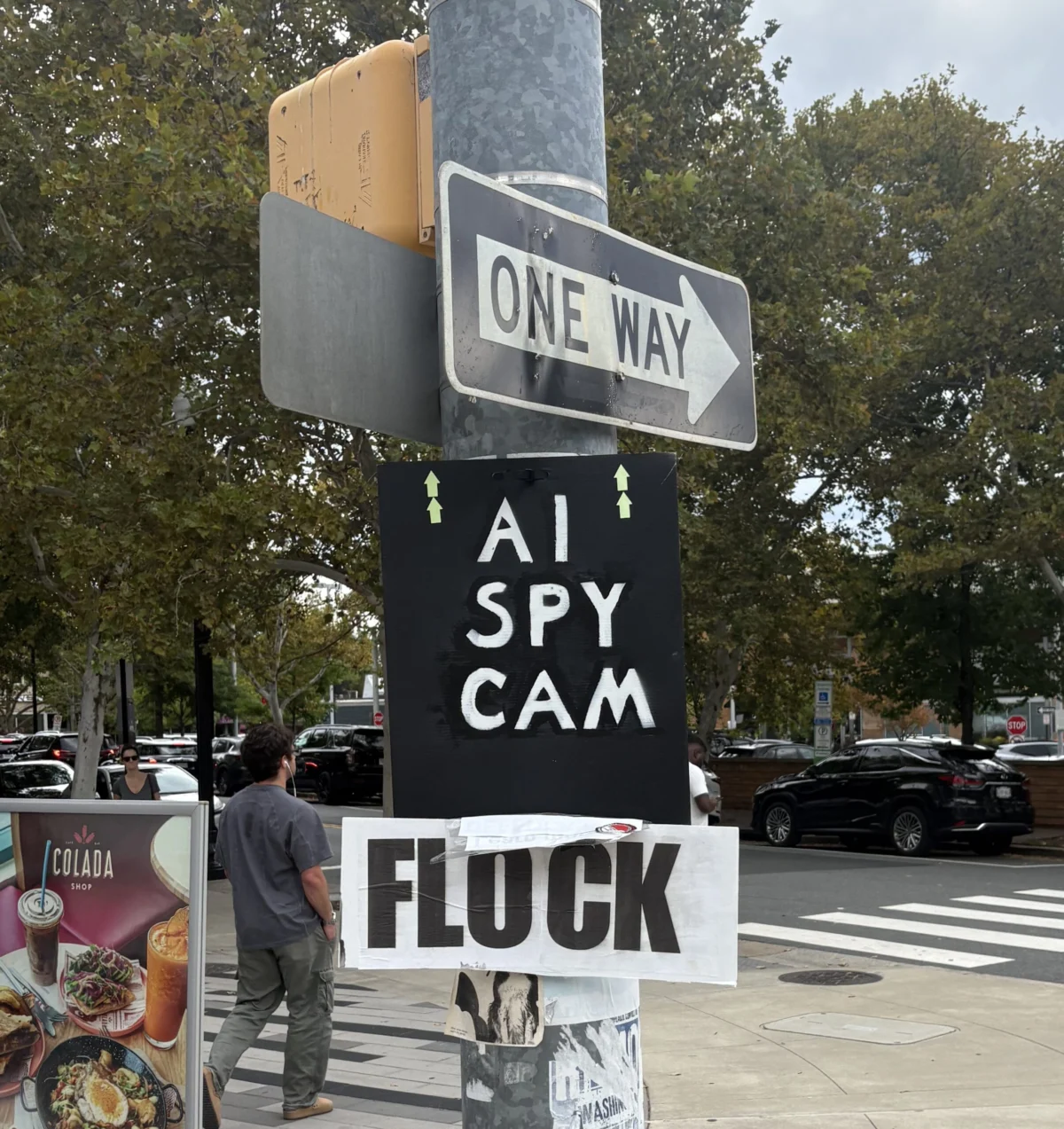
The rapid proliferation of automated surveillance technology across American municipalities has reached a legislative breaking point. On Friday, Senator Bernie Sanders (D-Vermont) introduced the "Ban Flock Act," a sweeping piece of legislation that seeks to fundamentally dismantle the federal government’s reliance on automated license plate readers (ALPRs). While the bill’s title specifically targets the industry titan Flock Safety, its reach is broad, aiming to prohibit federal agencies from utilizing any ALPR systems or accessing the vast troves of data generated by private and local police networks.
As cities grapple with the tension between public safety and the erosion of individual privacy, this legislative move marks the most significant federal challenge yet to the $8 billion surveillance startup. With support from Representative Alexandria Ocasio-Cortez (D-N.Y.) and Senator Jeff Merkley (D-Ore.), the bill signals a growing bipartisan—or at least high-profile—appetite for curbing the reach of "big data" policing.
The Mechanics of the "Ban Flock Act"
Despite the provocative name, the legislation is technically agnostic in its drafting, targeting the infrastructure of ALPRs as a category rather than a specific company. However, the intent is clear: to sever the financial and operational umbilical cord between federal law enforcement and the massive surveillance networks that have become fixtures on American street corners.
The bill outlines a strict prohibition: federal agencies would be barred from operating ALPR systems or procuring data collected by third-party private firms or local police departments. The only exceptions carved out in the text are for automated toll collection systems and specific, narrowly defined uses that would require future congressional approval. Even in those rare instances, the bill mandates a strict 48-hour data retention limit, a drastic reduction from current industry standards.
Perhaps the most potent aspect of the bill is its "financial stick." To compel compliance, the legislation threatens to withhold federal grants from state and local governments that refuse to dismantle their ALPR networks. Departments currently reliant on funding from the Justice Department and the Department of Homeland Security would face a stark choice: maintain their surveillance apparatus or risk the loss of critical federal financial support. Furthermore, the bill introduces a private right of action, allowing citizens to sue the federal government for privacy violations, while empowering state attorneys general to act as enforcers of the new federal mandate.
A Chronology of Rapid Expansion and Growing Backlash
The rise of Flock Safety is a case study in the rapid integration of Silicon Valley technology into the public sector. Founded nine years ago, the company has grown from a startup into a behemoth, currently valued at over $8 billion by venture backers.
- The Early Growth Phase: Flock Safety successfully marketed its "neighborhood watch" technology to thousands of municipalities, promising that its cameras could identify stolen vehicles, missing persons, and suspects in real-time. By leveraging a subscription model, the company made it easy for local police departments to rapidly scale their surveillance networks.
- The Data Explosion: As of mid-2026, the company reported that its network of more than 120,000 cameras processes over 20 billion vehicle reads each month. This represents an unprecedented level of tracking for private citizens moving about their daily lives.
- The Privacy Tipping Point: As the network grew, so did the scrutiny. Throughout 2026, a wave of public protests swept through various cities. Privacy advocates began sounding the alarm on "mission creep," where data collected for minor traffic infractions was being used for broad surveillance, immigration enforcement, or political monitoring.
- The Institutional Retreat: By July 2026, the backlash resulted in tangible policy shifts. Notably, the Los Angeles Police Department (LAPD) suspended its use of Flock cameras amid mounting privacy concerns. Shortly thereafter, a trend emerged of cities canceling their contracts with the vendor at a record pace throughout August, marking a significant reversal of fortune for the company.
Data and Surveillance: The Privacy Dilemma
The primary criticism leveled against Flock Safety and its competitors is the lack of oversight regarding how law enforcement officers utilize the data. The system is designed to provide rapid, actionable intelligence, but it has historically lacked the guardrails to prevent abuse.
One of the most damaging incidents occurred in Milwaukee, where a former officer pleaded guilty to misconduct after using the Flock platform to conduct 179 unauthorized searches on his then-partner and her ex-husband. Despite the searches being clearly personal in nature, the officer categorized them as "investigation" within the system’s logs. This incident provided a chilling example of how easily powerful surveillance tools can be weaponized by rogue actors.
In response to such scandals, CEO Garrett Langley has been forced to shift from a stance of "local control" to one of mandated oversight. In August, the company introduced a new default data retention period of seven days—a significant step down from the previous 30-day window. Additionally, the company is implementing automated audit tools that lock officers out of the system if their search patterns flag as "unusual," effectively creating a digital circuit breaker to prevent abuse.
During a recent podcast interview, investor Jason Calacanis suggested a "double-key" system, where two separate users must approve any search request before the system releases data. Langley confirmed that this concept is currently "on the whiteboard," indicating that the company is desperate to regain public trust.
Official Responses and Corporate Strategy
The political pressure on Flock Safety is mounting, and the company’s leadership is preparing for a high-stakes conversation. With the "Ban Flock Act" looming, the company is attempting to frame itself as a partner in reform rather than an antagonist.
However, the political coalition behind the bill suggests that the "reform" window may be closing. Senator Sanders has positioned the bill as a defense of the Fourth Amendment in the digital age. By targeting the federal funding that facilitates these networks, the legislation aims to reach into the heart of local law enforcement budgets, forcing a national conversation about the necessity of constant, automated tracking.
For Flock Safety, the timing is critical. As they head into the industry-leading TechCrunch Disrupt event in San Francisco this October, they will face a tech community that is increasingly divided. While some investors view the $8 billion company as a gold standard for public safety tech, others are beginning to question the sustainability of a business model that relies on the perpetual, non-consensual monitoring of the American public.
Implications for the Future of Policing
The implications of the "Ban Flock Act" extend far beyond the balance sheet of one startup. If passed, the legislation would represent a seismic shift in how the U.S. federal government regulates the intersection of private technology and public safety.
- Constitutional Challenges: The bill forces a legal showdown over the "third-party doctrine," the long-standing legal principle that individuals have no reasonable expectation of privacy for information voluntarily disclosed to third parties. By regulating the data collection of private vendors, Congress would be asserting that modern surveillance is different in kind, not just degree.
- The Chilling Effect on Innovation: Opponents of the bill argue that it will stifle innovation in law enforcement, preventing police from using effective tools to solve violent crimes. They argue that the focus should be on internal policy reform rather than a wholesale ban on the technology.
- Local vs. Federal Autonomy: The bill sets up a potential constitutional clash over federalism. By tying federal grants to the prohibition of specific local technologies, the federal government is effectively using the "power of the purse" to override local ordinances. This has historically been a point of contention between state governments and Washington, D.C.
- The Normalization of Privacy: Ultimately, the debate highlights a cultural shift. Americans are becoming increasingly aware of the "surveillance state" in their daily lives. Whether through the lens of political activism or personal privacy, the demand for transparency and accountability in how data is collected, stored, and accessed is reaching a fever pitch.
As the legislative debate unfolds, the industry will be watching closely to see if the "Ban Flock Act" gains traction in committee. Regardless of whether the bill becomes law, the conversation regarding automated surveillance has been permanently altered. The era of unchecked, silent, and invisible surveillance of the American public is facing its most significant challenge in the modern era, setting the stage for a protracted fight over the future of privacy in the digital age.