
By Business and Entrepreneurship Desk
Published in-depth analysis on modern enterprise strategy and wealth creation.
Main Facts: The Blueprint of an Unlikely Empire
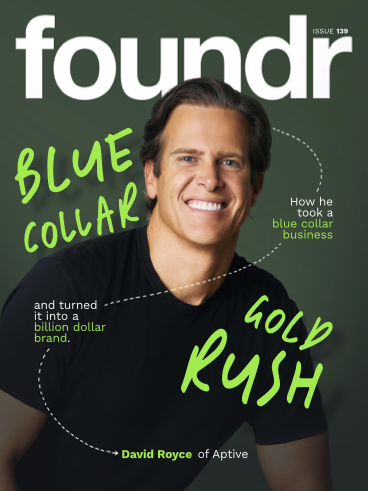
David Royce does not fit the conventional mold of a Silicon Valley tech billionaire. He doesn’t write code, he didn’t found an artificial intelligence startup, and his primary domain—residential pest control—is an industry most finance graduates wouldn’t touch with a ten-foot pole. Yet, Royce is the founder and chairman of Aptive, currently ranked as the third-largest residential pest control service provider in North America.
Over a career spanning more than two decades, Royce has engineered three separate eight- and nine-figure business exits to the same strategic buyer. Following those successes, he scaled Aptive past the monumental threshold of $500 million in annual revenue.
Royce’s foundational business philosophy rejects conventional wisdom. He argues that sustainable success has little to do with picking a trendy industry, possessing a prestigious university degree, or pursuing opportunities that look glamorous on paper. Instead, his metric for success is far simpler, albeit more demanding: Are you willing to do the work nobody else wants to do, for long enough to become the absolute best at it?
Sitting down with Foundr CEO Nathan Chan, Royce peeled back the layers of a career that transformed a self-described struggling student into one of the stealthiest and most effective wealth builders in American commerce. His journey offers critical insights into cash flow management, corporate culture design, strategic asset structuring, and the art of stepping aside when the business outgrows its founder.
Chronology: From McDonald’s Floors to a Nine-Figure Empire
To understand David Royce’s meteoric rise, one must trace a timeline defined by stubborn persistence, calculated pivots, and an uncanny ability to extract high-level business lessons from humble beginnings.
1. The Early Lessons: Overcoming Adversity
Growing up, Royce struggled academically. Unable to focus unless emotionally invested in a subject, he grew up believing he simply wasn’t smart—a common plight for children with undiagnosed attention deficit hyperactivity disorder (ADHD).
That trajectory shifted in the sixth grade when a teacher named Mrs. Luft recognized his potential and believed in him before he believed in himself. Royce began working relentlessly to achieve strong academic standing. Years later, after discovering his ADHD diagnosis as an adult, Royce reframed the condition: in boring environments, it is a liability; in environments he cares about deeply, it functions as a superpower. Sales and entrepreneurship became the first domains where his unique cognitive wiring felt like an asset.

This resilience was tested early. At age fifteen, after being let down by a pizza parlor job, Royce ended up working at McDonald’s because they were the only employer willing to hire anyone. It was beneath his teenage ego, yet it was there that he learned the operational value of strict standard operating procedures and best practices—foundational elements that would later protect his multi-million-dollar enterprises.
2. The Crucible of Door-to-Door Sales
Royce entered the pest control industry purely by accident during his college years. Hearing that a friend had earned $25,000 over a single summer selling pest control door-to-door, Royce drove out to Sacramento, California.
The beginning was brutal. Operating on a 100% commission-only structure, Royce didn’t sell a single account during his entire first week. While teammates closed one to four sales a day, Royce spent five consecutive days executing what he jokingly calls "free cardio."
Rather than calling home in defeat, Royce spent that weekend at a bookstore purchasing half a dozen sales guides. He instituted a strict 90-minute daily study routine. By the end of that summer, out of a cohort of 200 representatives, Royce emerged as the top sales rookie in the entire company. His takeaway: Persistence is genius in disguise.
3. The Pivot to Entrepreneurship
As Royce completed his finance degree, he naturally gravitated toward investment banking, planning a career in Mergers and Acquisitions (M&A). However, when he asked his pest control boss for a letter of recommendation, the mentor posed a paradigm-shifting question: Why would you work 80 to 100-hour weeks making someone else rich when you could start your own pest control company?
Initially constrained by the blue-collar stigma of the industry, Royce quickly realized that image and opportunity are rarely aligned. His mentor had just sold his own startup to Terminix for $10 million after four years of operation and offered Royce the operational blueprint.
Using $300,000 in personal savings—accumulated over four summers of making roughly $225,000 per season (equivalent to half a million dollars today) and originally earmarked for an MBA—Royce launched his first venture.
Supporting Data: The Mechanics of Scale and Cash Flow
Royce’s rapid ascent was not without severe operational friction. During his first year operating out of Los Angeles, Royce experienced a harrowing reality that plagues hyper-growth enterprises: A company can be booming on paper and simultaneously dying in the real world.
The Cash Flow Crunch
Royce had projected acquiring 4,000 to 5,000 new customers in his inaugural year. Instead, his sales machine shattered expectations, bringing in 7,500 new clients—a volume previously unheard of for a single branch in the industry.
However, the prevailing business model required paying out sales teams’ commissions in advance of the recurring customer revenue actually hitting the bank account.
“Revenues are vanity. Profits are sanity. But cash flow is reality.” — David Royce
Faced with a severe liquidity crisis, Royce approached his top sales leaders. He asked for an extension of one to two months on their bonus checks, incentivizing their patience by offering an extra 10% interest on their money. Because the sales team had enjoyed a phenomenal summer, they agreed. This near-bankruptcy taught Royce a structural lesson on financing growth that he embedded into all subsequent business models.
The Asset Deal Structure
Royce’s exit strategy across his early companies was a masterclass in capital preservation. Instead of executing traditional stock sales that diluted equity or brought in restrictive outside investors, Royce utilized asset-only deal structures.
- What was sold: Only the customer base and the technicians servicing them—the exact assets strategic buyers desired to bolster their existing geographic footprints and recurring revenue streams.
- What was retained: Royce carved out his core leadership team, operations managers, and elite salesforce.
He then took the accumulated capital, teamed up with his trusted inner circle, and launched subsequent companies in new markets with stronger capitalization. No venture capital, no equity dilution—just the same core family on a progressively bigger stage.
The Aptive Growth Engine
When Royce eventually founded Aptive, the company scaled seven to ten times faster than the industry average due to three primary competitive advantages:
- A Codified Sales Machine: A rigorous training regimen built on option closes, the "RAC" framework (Resolve a doubt, drop an Ace, Close), and mastering body language. Reps switching from competitors routinely saw a 70% increase in seasonal output.
- Field-Tested Service Features: Drawing from over 60,000 doors knocked, Royce deeply understood homeowner pain points, tailoring service features to match real-world frustrations.
- Proprietary Software Integration: Seventeen years ago, investing heavily in a custom sales app that gamified nationwide tournaments was unheard of for a blue-collar company, yet it boosted productivity by up to 30%.
Official Responses & Industry Implications: Why Boring Is Beautiful
Royce’s insights shed light on broader macroeconomic shifts currently transforming the American economic landscape.

The Blue-Collar Wealth Shift
According to data cited by The Wall Street Journal, among the top 0.1% of U.S. income earners (those making $2.3 million annually or more), roughly 43% operate in unsexy, blue-collar industries.
Furthermore, a massive generational wealth transfer is underway. Millions of baby boomer owners of essential service businesses are reaching retirement age without succession plans. Because these businesses feature reliable, essential, recurring revenue models, they remain largely immune to macroeconomic downtowns.
“Recessions come and go. But bugs don’t read The Wall Street Journal.” — David Royce
The AI Proofing of Physical Labor
In an era where artificial intelligence threatens to automate white-collar tasks, code writing, and legal document analysis, Royce notes that blue-collar operations possess a unique technological moat:
- “AI can write code or analyze documents, but it isn’t unclogging your toilet anytime soon. It can’t climb on your roof, and it definitely can’t treat the termites in your walls.”
Culture, Design, and Employee Ownership
Aptive’s corporate headquarters famously features NCAA basketball courts, golf simulators, and lavish company retreats ranging from skydiving to racing Ferraris. However, Royce is quick to clarify that perks are merely "sugar, not protein." The true magnet for top talent was always the unparalleled earning potential fostered by world-class training.
More importantly, Royce backed his culture with equity. When Aptive crossed $500 million in annual revenue, Royce and his leadership team allocated 25% of the company to their employees. With businesses in the pest-control sector commanding valuations between one and three times annual revenue, this translated into a nine-digit payout distributed directly to team members.
Employees used these windfalls to pay off mortgages, clear student debt, and buy cars for their parents. For Royce, ownership proved to be an infinitely more powerful retention tool than any office ping-pong table.
The Danger of the Wrong Executive Hire
Even master builders experience setbacks. During an ambitious process to sell half of Aptive at a valuation between $1 and $1.6 billion, Royce hired a high-profile Chief Financial Officer with a background at a billion-dollar tech company.
On paper, the hire was flawless. In practice, the executive was accustomed to large layers of bureaucracy and struggled to manage localized expense structures. Aptive began missing financial forecasts month after month, causing prospective buyers to withdraw one by one.
Royce summarized the painful lesson with three core takeaways:
- Trust, but verify. Resumes do not run companies; people do.
- Never miss a forecast during an active sales process. Doing so hands absolute leverage to prospective buyers.
- Rejection is data. Approximately 50% of sellers fail to close a deal on their first market run; it serves as a diagnostic tool to tighten operations before trying again.
Conclusion: The Ultimate Measure of Success
After four companies, twenty years of intense scaling, and building a billion-dollar empire in an overlooked industry, David Royce’s definition of success has evolved.
Reflecting on conversations with fellow entrepreneurs obsessed with "their number"—the magical financial figure signaling enough is enough—Royce realized that the human brain perpetually moves the finish line.
“Entrepreneurship isn’t really about a big exit or financial freedom. It’s the expertise, discipline, and character you develop along the way. If you don’t enjoy the climb, the summit is going to disappoint you.”
Echoing the wisdom of Mahatma Gandhi, Royce measures his ultimate legacy not by valuation metrics, but by the leaders he helped cultivate. By stepping aside, empowering his longtime protégé to take the CEO seat, and shifting his role from a daily "hero" to a strategic "architect," Royce proved that the most enduring enterprises are those designed to outlast their founders.
For the aspiring entrepreneur, David Royce’s journey serves as a stark reminder: The most lucrative opportunities in the market rarely look impressive at first glance—and true genius is often disguised simply as stubborn, unrelenting persistence.