In the rapidly evolving digital landscape of 2026, the conversation surrounding web accessibility has shifted dramatically. For years, accessibility was viewed primarily as a moral imperative or a box-ticking exercise for legal compliance. However, a new narrative is taking hold—one driven by hard data, search engine performance, and significant financial opportunity.
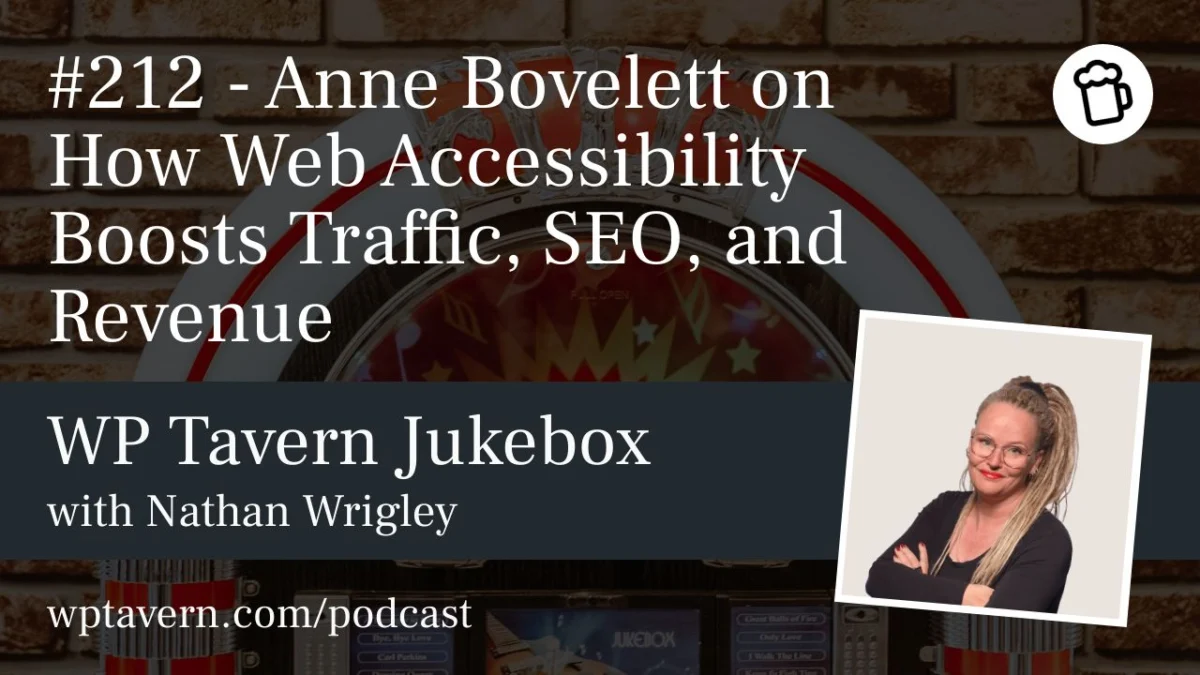
In a recent episode of the WP Tavern Jukebox Podcast, host Nathan Wrigley sat down with seasoned accessibility strategist Anne Bovelett to discuss a transformative perspective: accessibility is not just a social responsibility; it is a powerful strategic advantage. By ignoring the needs of users with disabilities, businesses are effectively leaving substantial revenue on the table.
The Evolution of the Web: From Semantic Roots to Over-Engineered Barriers
To understand why the internet suffers from such pervasive accessibility issues, one must look at the history of web development. According to Bovelett, the early days of the web were actually more "accessible" by default because developers relied heavily on semantic HTML.
"In the beginning, all we had was semantic HTML," Bovelett explained. "It was great for screen reader users and other assistive technologies. But then, as the web became more complex, developers started over-engineering."
This phenomenon, which Bovelett calls verschlimmbesserung—a German term for a "supposed improvement that actually makes things worse"—saw the industry move away from semantic elements toward "div" and "span" tags. While these tags are flexible for styling, they act as "useless chameleons" for accessibility, requiring heavy JavaScript reliance to function correctly. This shift favored visual aesthetics over functional inclusion, creating a digital environment where the "majority" experience became the default, effectively excluding millions of users who rely on screen readers, keyboard navigation, or simplified interfaces.
The Data: Why Compliance is a Catalyst for Growth
For businesses skeptical of the ROI of accessibility, recent research provides a compelling counter-argument. A comprehensive study conducted by Semrush and AccessibilityChecker.org, which analyzed 10,000 websites, has provided the empirical evidence that many in the industry have long awaited.
The findings are stark:
- Organic Traffic: Sites with higher accessibility compliance saw an average 23% increase in organic traffic.
- Keyword Rankings: Compliant websites ranked for 27% more organic keywords compared to their less accessible counterparts.
- Authority Scores: There was a staggering 90% boost in authority scores for sites that prioritized accessibility.
These statistics debunk the myth that accessibility and SEO are separate domains. In reality, search engines are increasingly prioritizing "human-centric" design. If an assistive technology cannot parse a website, a search engine crawler often struggles to interpret it as well. By cleaning up code, properly labeling links, and ensuring a logical site structure, businesses are not just helping users with disabilities—they are signaling quality and clarity to search algorithms.
The Economic Imperative: The "Click-Away" Cost
Perhaps the most persuasive argument for accessibility lies in the financial realm. The "Click-Away Pound Report," which has tracked consumer behavior in the UK for years, highlights the staggering amount of money lost by businesses that fail to accommodate disabled users.
In 2019, it was estimated that the "click-away" loss reached £17 billion. Bovelett suggests that today, that number is likely even higher. "The economic case is simple," she noted. "If you are a business, you are effectively stealing from your own wallet by not making your e-shop accessible."
The financial impact extends beyond mere traffic. A significant 75% of disabled customers have reported that they are willing to pay more for a product from an accessible website rather than struggle through a cheaper, inaccessible one. For these users, the value proposition is not just the product; it is the dignity and independence of being able to complete a transaction without seeking outside assistance.
Breaking the Cycle: Beyond the "Sheep with Five Legs"
Despite these clear benefits, many organizations struggle to implement change. Bovelett points to a structural failure in how companies manage accessibility. Often, it is delegated to a single, overworked "accessibility officer" or a lone developer, leading to inevitable burnout.
"We need to create a culture where design, development, and content teams communicate," Bovelett stated. "If a developer sees a design that will cause accessibility issues, they shouldn’t just build it because they were asked to. They should feel empowered to speak up, and there should be a workflow that supports that dialogue."
The goal is to move beyond "compliance" and toward "empowerment." When a government agency or a large retailer simplifies their user flow to be accessible, they don’t just help a small demographic; they reduce support costs across the board. By enabling users to solve their own problems—whether they have visual impairments, dyslexia, or are simply struggling with a complex interface—businesses see a marked decline in support tickets and customer service inquiries.
The Future of Digital Inclusion
As AI-driven search becomes the norm, the importance of accessible, semantic code will only grow. AI models are trained on existing web content; if that content is built on "voodoo" JavaScript and non-semantic structures, the AI will fail to interpret it accurately, potentially leading to lower visibility in future search results.
For the modern business leader, the message is clear:
- Stop viewing accessibility as a cost. View it as a conversion optimization project.
- Audit your user flows. Are you forcing users to jump through unnecessary hoops?
- Invest in clean, semantic development. It is the foundation of both accessibility and superior SEO.
The "moral" argument for accessibility will always remain, but in a competitive marketplace, the "financial" argument is becoming impossible to ignore. Whether you are a small business owner or a stakeholder in a large corporation, the path forward is one where every user—regardless of their physical or cognitive ability—is treated as a valued customer.
By removing the barriers that exist on your website today, you aren’t just opening your doors to a larger audience; you are building a more efficient, profitable, and authoritative digital presence for the future. As Anne Bovelett emphasized, the companies that thrive in the coming years will be those that realize the most common sense business strategy is, quite simply, to make the world—and the web—accessible to everyone.