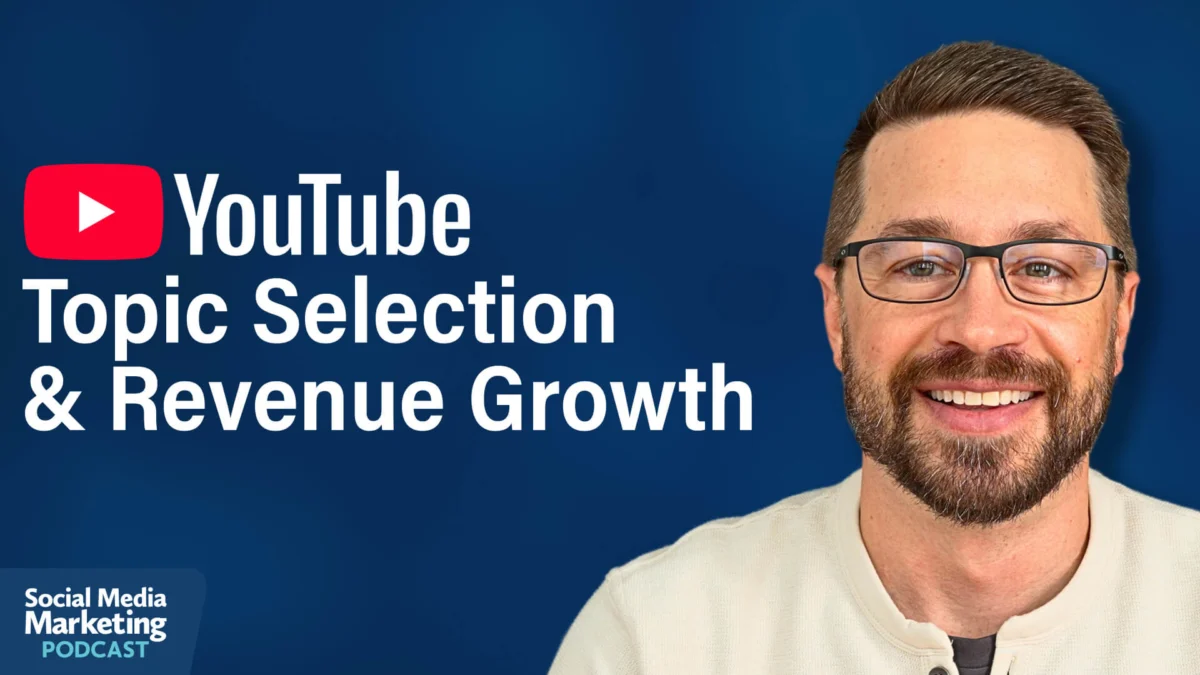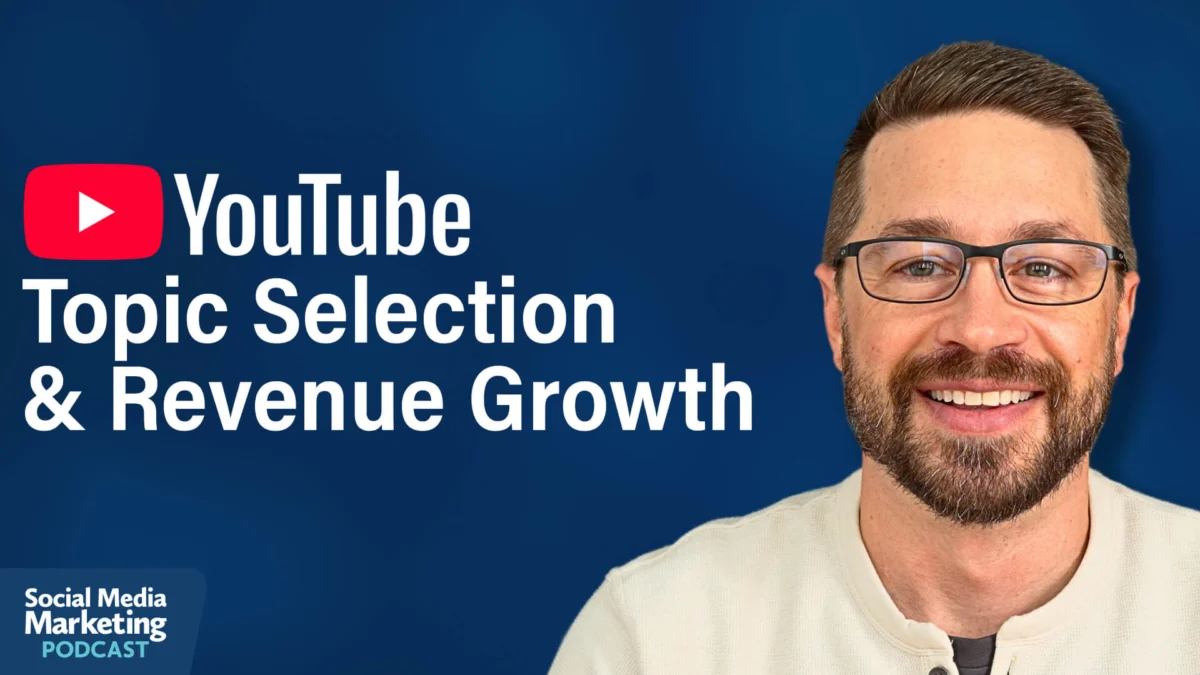
For many midlife professionals and business owners, the landscape of YouTube feels like a closed shop—a digital space reserved for high-energy Gen-Z personalities or those who spent the last decade building a cult following. Yet, according to YouTube growth coach Ty Myers, this perception is not only inaccurate; it is the primary reason many talented experts fail to leverage the most powerful marketing engine in existence.
In a comprehensive breakdown co-created with Michael Stelzner, Myers argues that YouTube is not a platform for performers, but a utility for educators. By shifting focus from "being a creator" to "solving a specific problem," professionals can build a sustainable, high-conversion channel, even if they are starting from zero in a crowded market.
Main Facts: The New Paradigm of YouTube Growth
The fundamental shift required for business owners entering YouTube is the move away from vanity metrics—like viral potential or subscriber counts—toward business-aligned metrics. Myers emphasizes that the algorithm is not a gatekeeper but a matching engine. It is designed to connect a specific viewer with a specific solution.
If you are a consultant, coach, or service provider, your "bubbly" persona is irrelevant. Your authority, rooted in years of professional experience, is your greatest asset. The goal is to provide a clear, actionable solution to a problem your ideal client is actively searching for. When you signal exactly who the video is for through titles, thumbnails, and precise language, you trigger the algorithm to serve your content to the people most likely to become paying clients.
Chronology: The Four-Phase Startup Framework
Myers advocates for a systematic, four-phase approach to building a channel. Crucially, the first two phases occur entirely offline, before a camera is ever turned on.
1. Defining the Mission and Goals
Ambiguity is the death of growth. Before filming, you must determine your objective: Is the channel for lead generation, building domain authority, selling a specific product, or establishing a personal legacy? By clearly defining your "why," you eliminate the tendency to create content that tries to appeal to everyone and, consequently, appeals to no one.
2. Identifying the Avatar
You must define the specific person you are helping. What are their deepest professional fears? What are their desired outcomes? This specificity must permeate every element of your content. When your title and thumbnail speak directly to a specific person’s pain point, your click-through rate increases because the viewer feels seen and understood.
3. The "Repetition" Phase
The third step is simply producing content. Many high-achieving professionals are paralyzed by perfectionism, waiting for the perfect setup or lighting. Myers advises that the first 15 videos should be treated as "reps" at the gym. They won’t be perfect, but they are essential for developing your on-camera presence. Around the 15th video, most creators stop worrying about the camera and begin to let their natural professional voice emerge.

4. The Pivot to Strategy
Once the workflow is established, the focus shifts from quantity to quality. This is the stage where you stop being a "video creator" and start being a "data analyst." You begin studying the platform as a distribution system, identifying what works in your niche and applying those structural frameworks to your own unique expertise.
Supporting Data: The Pre-Production Ratio
One of the most counterintuitive findings in the Myers framework is the allocation of time. Most creators spend 80% of their energy on filming and editing. Myers flips this on its head: 80% of a video’s success is determined by the topic, the title, and the thumbnail.
If you have 10 hours a week for YouTube, Myers suggests spending six of those hours on pre-production. This includes:
- Keyword Validation: Using tools like VidIQ to verify that your topic has search volume and is currently being consumed by an audience.
- The "Outlier" Analysis: Searching for high-performing videos in your niche and analyzing their "view trajectory." If a topic has a history of sustained growth rather than just a quick spike, it is a proven subject worth your time.
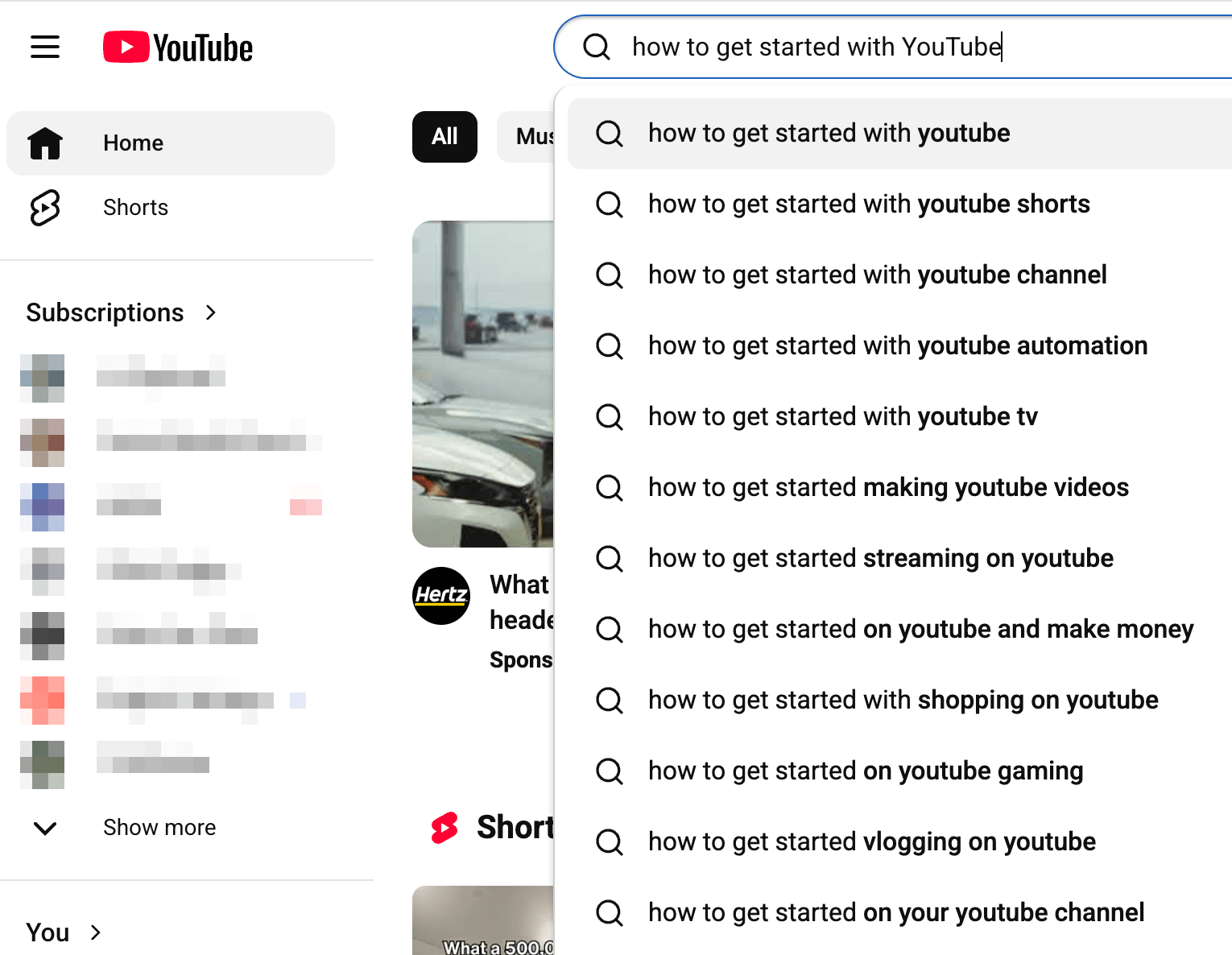
- Autocomplete Research: Using YouTube’s own search bar to see how users phrase their problems. This provides the exact language your audience uses, which should be mirrored in your video titles.
Official Guidance: Leveraging AI for Authenticity
While many fear that AI will sanitize their brand, Myers uses it to enhance credibility. He recommends using tools like Google NotebookLM to synthesize complex reports and Claude to act as a research partner.
The key to keeping the content "human" is the scripting process. Instead of asking AI to write a script, Myers has the AI interview him. By feeding the AI his specific professional anecdotes, analogies, and case studies, the output remains deeply rooted in his personal experience. This process ensures that while the structure is optimized for YouTube’s algorithm, the content remains uniquely proprietary.
Implications for Conversion: From Viewer to Client
The final stage of the funnel is the transition from "viewer" to "client." Myers distinguishes between two types of Calls to Action (CTAs):
- The Explicit Mid-Roll: A direct mention in the middle of the video that the topics being discussed are the same ones covered in your professional coaching or consulting program. This reaches the viewer when they are already receiving value.
- The Subtle Signal: Throughout the video, referencing real-world examples from client engagements. This acts as "social proof," showing the viewer that you are not just a talking head, but a practitioner who works with real clients to solve these specific problems.
To maximize the "session duration"—a critical ranking factor for YouTube—Myers advises against traditional sign-offs. Instead of ending with "thanks for watching" or outro music, he transitions directly into a question that leads the viewer to the next relevant video. This creates a loop of engagement that keeps the viewer on the platform, signaling to YouTube that your channel is a high-value destination.
Equipment: The "Less is More" Philosophy
Finally, the barrier to entry is lower than ever. The "non-negotiable" piece of equipment is not a $2,000 camera, but a high-quality microphone. Myers filmed over 100 videos using an iPhone 15 and a Shure MV7+ microphone.

"Poor audio is the fastest way to lose a viewer," Myers notes. By investing in clear, crisp audio and utilizing natural window lighting, professionals can create a studio-grade look and feel without the friction of complex gear.
Conclusion
Building a YouTube channel in the current climate does not require a change in personality or a massive production budget. It requires a commitment to a professional framework: define your audience, validate your topics, front-load your pre-production, and speak directly to the problems your clients are trying to solve. By treating YouTube as a strategic business asset rather than a vanity project, professionals in their mid-career can successfully tap into an audience that is already searching for exactly what they have to offer.
As the digital landscape continues to evolve, the demand for high-trust, expert-led content is growing. For the professional ready to trade perfectionism for process, the timing to start is not yesterday—it is today.