For years, the tech industry has promised that smart glasses would eventually replace the smartphone as our primary interface for the digital world. Yet, as we navigate the mid-2020s, the reality remains tethered to the pocket: even the most sophisticated eyewear relies heavily on the constant, sometimes fragile, connection to a smartphone.
The Even Realities G2 smart glasses serve as a quintessential case study in this ongoing transition. They are sleek, lightweight, and intentionally devoid of cameras and speakers, positioning themselves as a tool for "heads-up" productivity rather than a lifestyle accessory for content creation. However, as the company reaches a significant milestone—achieving a $1 billion valuation—the question remains: can these glasses move beyond being a novelty for early adopters and become a daily necessity?
The Evolution of Even Realities: A Chronology of Hardware
The journey of Even Realities began with the G1, a foundational but limited entry into the smart eyewear space. Released a few years ago, the G1 set the stage with a 1,000-nit display and a modest 20Hz refresh rate. While it introduced the concept of a neon-monochrome heads-up display (HUD), it was hampered by connection stability and a limited display area.
The G2 represents a significant iterative leap. Released as the company’s sophomore effort, it boasts a brighter 1,200-nit display, a 75% increase in display real estate, and a much smoother 60Hz refresh rate. Perhaps most importantly, the company has spent the months following the G2’s launch refining the software. Early users reported frequent disconnections and sync issues, but a series of firmware and app updates have transformed the device from a frustration into a more stable companion.
Anatomy of the Device: Design and Ergonomics
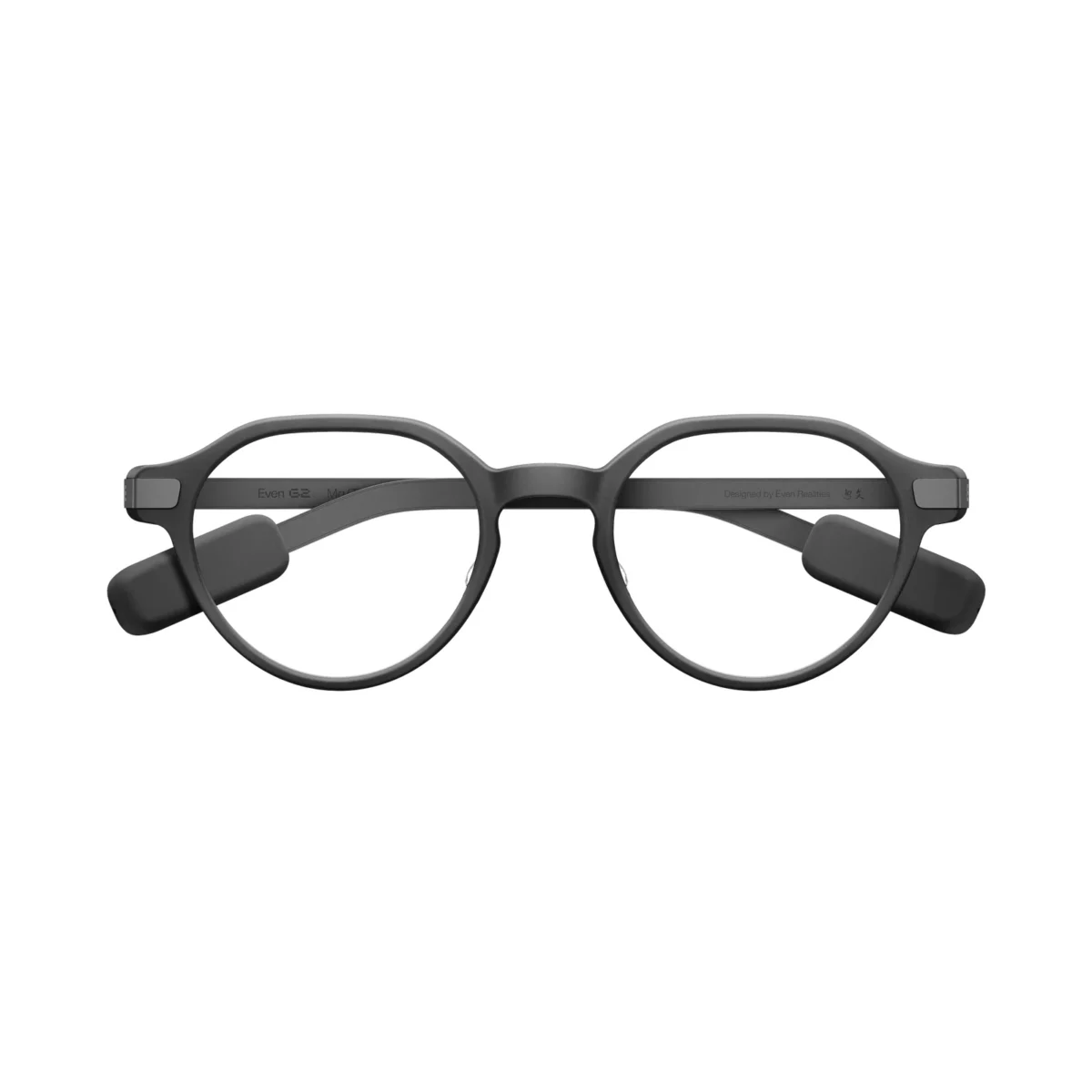
At just 35 grams, the G2 is a masterclass in industrial design. By utilizing a magnesium alloy for the frame and titanium for the temples, Even Realities has managed to create a device that feels like a premium pair of optical frames rather than a piece of bulky tech hardware.
The design philosophy is minimalist. By omitting cameras and speakers, the G2 avoids the "creepy" factor associated with devices like the Meta Ray-Bans. There is no risk of surreptitious recording, which makes them far more socially acceptable in boardrooms and sensitive professional environments. For the user, the experience is strictly personal: information appears as a "neon-style" green overlay, visible in various lighting conditions, though manual brightness adjustments are currently relegated to the smartphone app—a minor ergonomic inconvenience.

Productivity and Feature Set: Where the G2 Shines
The G2 is explicitly marketed toward professionals—people in back-to-back meetings, international travelers, and presenters. Its feature suite is designed to keep the user’s eyes focused on the world, not their phone screen.
Real-Time Translation and Teleprompting
The "Translate" feature is arguably the G2’s strongest selling point. During high-stakes environments, such as the recent Global Connect Show (GCS) in China, the glasses provided real-time translations for the wearer. Whether communicating in Chinese, French, or Spanish, the HUD allows the user to follow along with a conversation without breaking eye contact or looking down at a translation app.
Similarly, the "Teleprompt" feature is a boon for public speakers. By projecting notes directly into the line of sight, the glasses eliminate the need for podium-bound cue cards or wandering glances at a laptop, allowing for more natural eye contact with an audience.
The AI Assistant and Contextual Awareness
At the heart of the G2 is "Even AI," a voice-activated assistant. When it works, it is a revelation. The "prep notes" feature is particularly impressive; it allows the AI to ingest meeting documents beforehand and provide contextual "explainer bubbles" during a discussion. For instance, in a complex briefing about sustainable energy, the glasses might surface a definition for "Green Hydrogen" as the term is spoken.
However, the experience is not without friction. Even AI frequently struggles with long-form responses, which scroll across the display in a way that is difficult to skip or interrupt. Furthermore, despite the inclusion of four microphones, the voice recognition struggles in noisy, real-world environments—a critical oversight for a device intended for mobile professionals.
The R1 Ring: An Over-Engineered Accessory
Alongside the G2, Even Realities launched the R1 ring, a $249 controller intended to manage the glasses via touch input. While the ring is well-built and responsive, it faces an identity crisis. The G2’s own touch-sensitive temples already handle navigation quite effectively.

Furthermore, the R1 attempts to double as a fitness tracker, monitoring heart rate, SpO2, and sleep. In a market dominated by dedicated health-tracking giants like Oura and Ultrahuman, the R1’s health features feel like an unnecessary, high-cost "add-on" that complicates the user experience. For most, the R1 remains an optional—and likely unnecessary—investment.
Implications: The Unicorn Challenge
The recent $150 million funding round, led by tech giants Meituan and Tencent, has pushed Even Realities into "unicorn" status. This financial backing brings with it higher expectations. The hardware is solid, and the vision of a "distraction-free" productivity tool is compelling, but the company is currently caught in a transition period.
The G2 is a "nice-to-have"—a gadget for the tinkerer who enjoys exploring the bleeding edge of hardware. However, it lacks the "killer app" that would make it an essential daily driver for the average white-collar worker.
Key Areas for Future Growth:
- Software Ecosystem: The current reliance on first-party tools is restrictive. To achieve mainstream adoption, Even Realities must aggressively expand support for third-party integrations (e.g., direct support for Google Maps or standardized calendar apps).
- Hardware Refinement: The lack of an ambient light sensor, which forces the user to open an app to adjust brightness, is a friction point that should be resolved in future iterations.
- Voice Processing: For a device that prides itself on being a "productivity assistant," the AI must be better at handling ambient noise and managing complex, multi-turn conversations.
Conclusion: A Vision for the Future
The Even Realities G2 is a testament to the fact that we are nearing a future where the smartphone is no longer the sole gatekeeper of our information. By stripping away the cameras and focusing on the heads-up display, the company has carved out a distinct niche.
However, the jump from a $599 niche gadget to a ubiquitous professional tool requires more than just better hardware. As the company scales, it must prioritize the development of a robust software ecosystem that makes the glasses feel like a natural extension of the user’s cognitive process. Until then, the G2 remains a fascinating glimpse into the future—one that is bright, green, and neon, but still waiting for its moment of true indispensability.