In the high-stakes world of global enterprise, where companies operate across 75 countries and manage multi-million dollar budgets, the difference between a thriving brand and a corporate cautionary tale often comes down to one thing: how you measure success.
Years ago, during a strategic consulting engagement for a global powerhouse, I encountered a philosophy so fundamentally flawed it nearly derailed their growth trajectory. The marketing team identified their primary success metric as "Cost Per Session" (CPS). In my decades of experience—spanning the authorship of two bestselling analytics books and the invention of new data tools—I had never encountered a metric so dangerously disconnected from business reality.
As the marketing landscape shifts toward an AI-driven future, the obsession with vanity metrics like CPS or simple impressions isn’t just inefficient; it is a direct threat to corporate profitability.
The Fallacy of Activity-Based Metrics
Marketing departments have long been plagued by the siren song of "Activity" metrics. Impressions, views, and, yes, Cost Per Session, are not true metrics; they are simply "things." They represent noise.
When a marketing organization fixates on minimizing the Cost Per Session, they are effectively asking their team to prioritize traffic volume above all else. The logic is simple but disastrous: Shovel as much traffic as possible into the top of the funnel, and do it as cheaply as possible. This approach ignores the fundamental question of what happens after the click. Does that session result in a sale? Does it build brand equity? Does it contribute to the bottom line?
If you find yourself in a situation where you are pressured to report on these low-level metrics, you are likely failing to protect your CMO from the CFO. The CFO does not care how much you paid to get a user to your landing page; the CFO cares about incremental business impact.
Chronology of an Analytics Evolution
To transform your marketing department into a growth engine, you must move through three distinct stages of analytical maturity: Activity, Outcomes, and Accountability.
Stage 1: The Activity Trap
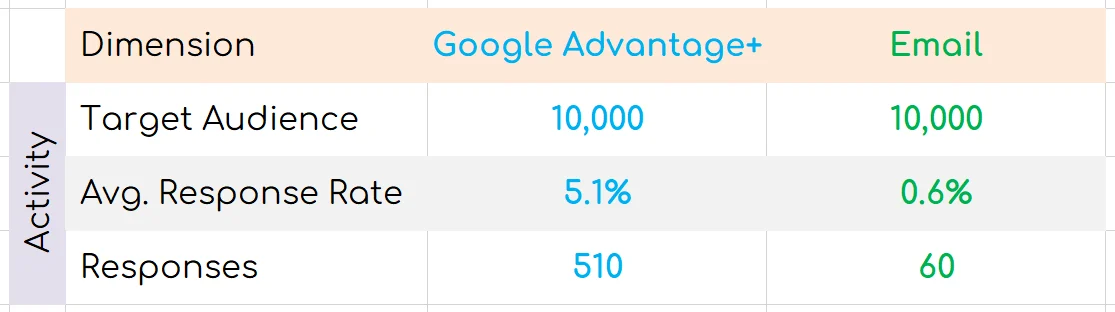
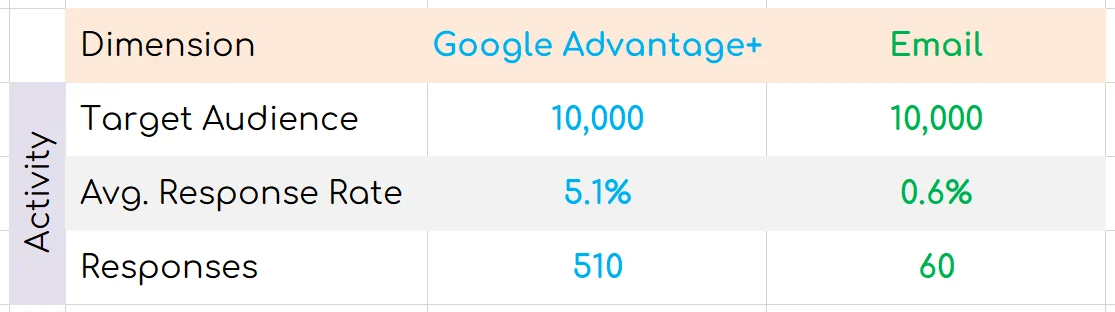
Most companies start here. They celebrate spikes in traffic, higher click-through rates on automated campaigns (like Google Advantage+), and lower costs per engagement. While tools like Google Advantage+ are highly effective at driving volume, relying on them without further analysis is a recipe for stagnation. When you only look at activity, you are essentially paying for "busyness" rather than business growth.
Stage 2: The Outcome Pivot
The second stage requires shifting focus to Outcomes. Even in B2B or complex sales environments—such as pharma, where the outcome is a doctor writing a prescription—you must bridge the gap between traffic and results. If you cannot track direct site outcomes, use micro-conversions. By multiplying these by an average lead-to-conversion rate and an average outcome value, you create a proxy for success that is 85% accurate—far superior to the 0% accuracy of measuring "sessions."
Stage 3: The Accountability Threshold
This is where the magic happens. A CFO who truly cares about marketing will want to fund it to the maximum, but only if that marketing can be held accountable for profit. This requires looking at the inputs: Campaign Cost and Cost of Goods Sold (COGS).
When you subtract these from your revenue, you arrive at the true profitability of your marketing spend. This is the moment where many teams realize that their "successful" high-volume campaigns are actually eroding company profit.
Supporting Data: When ROAS Lies to You
The industry standard for many remains Return on Ad Spend (ROAS). However, ROAS is a deceptive metric because it gives marketing full credit for revenue without accounting for the actual cost of the goods sold or the campaign overhead.
Consider a scenario where Google Advantage+ generates $17,000 in revenue with a $7,000 campaign cost, while an email marketing campaign generates a fraction of that revenue. A standard ROAS view might make the Google campaign look efficient, but when you transition to Profit on Investment (POI), the story flips.
- The POI Reality Check: In one specific case study, while Google Advantage+ drove 173 orders compared to email’s 14, the POI for the Google campaign was negative. For every $1 spent, the company was losing money. Conversely, the email campaign was generating $5.70 in profit for every $1 spent.
The lesson is stark: A 12x increase in revenue is meaningless if the cost of acquiring that revenue exceeds the profit margin.
Official Guidance: The AI-Driven Future of SEO
If the financial argument isn’t enough, consider the technical shifts occurring in search. Google has recently provided explicit guidance for succeeding in an AI-search environment. Their directive is clear: Understand the full value of your visits.
Google’s AI Overviews are designed to provide context and support, creating a higher-quality visitor who is more likely to engage deeply with your site. If you continue to optimize for "clicks" or "sessions," you are actively working against the intent of modern search algorithms. Google is essentially telling marketers: Don’t optimize for one-night stands.
If you don’t shift your strategy to value-based outcomes, you will find your search traffic dwindling as AI-powered interfaces prioritize content that delivers actual user utility over those that simply "game" the traffic metrics.
Implications: A Roadmap for Change
If your organization is currently hooked on Cost Per Session, the time for an intervention is now. Here is your five-step plan to pivot toward profitability:
- Stop the Bleeding: Immediately pause spend on campaigns that show a negative POI. It will be uncomfortable, and traffic numbers will drop, but profit will begin its recovery.
- Open the Floor: Invite your agencies, internal teams, and platform reps to present a strategy that delivers green POI, not just vanity metrics.
- Activate Intent-Based Strategy: Re-evaluate your ad platform usage. Are you using the AI-powered features to match audience intent, or are you just dumping cash into a black box?
- Execute and Scale: Once you have a campaign that demonstrates positive POI, scale it aggressively. Until then, keep your hand off the throttle.
- Re-define Success: If you absolutely must use a session-based metric, switch to Cost Per Non-Bounced Session. By filtering out users who "came, puked, and left," you gain a slightly more realistic view of what your spend is actually buying.
Conclusion: The Path to an AI-Proof Career
The shift from Activity to Accountability is undeniably difficult. It requires complex math, difficult conversations with stakeholders, and the courage to stop "successful" campaigns that are actually destroying value.
However, for the marketing professional, this is the ultimate career insurance. In an era where AI can automate the mundane tasks of ad buying and creative generation, the human ability to connect marketing spend to tangible business outcomes is the most valuable skill you can possess.
Prioritize Outcomes over Activity, and Accountability over Outcomes. Do this, and you will not only satisfy your CFO—you will build a strategy that is resilient, profitable, and ready for the next generation of digital competition. Carpe diem.