In the current professional landscape, the rapid ascent of Artificial Intelligence (AI) has sparked a pervasive sense of anxiety among creative professionals. From graphic designers and UX researchers to writers and strategists, the fear that their core job functions might be rendered obsolete by automated tools is palpable. As AI-powered platforms gain the ability to generate sophisticated images, write clean code, and synthesize data in seconds, the question looms: Is human creativity becoming a legacy skill?
While AI is undeniably a breakthrough in computational efficiency, the assumption that it can replace designers stems from a fundamental misunderstanding of what design actually is. Design is not merely the production of artifacts—it is a cognitive and emotional process. By exploring the concept of "designerly" behaviors—a term coined by design educator Nigel Cross—we find that the most impactful work humans do relies on traits AI cannot replicate: curiosity, observation, empathy, advocacy, visual communication, and collaboration.
A Case Study in Human-Centricity
To understand the limitations of AI, consider a project undertaken at the onset of the COVID-19 pandemic. A team was tasked with redesigning a tablet app for sales representatives at a global food and beverage giant. The designers, having never walked in the shoes of a field sales representative, could not rely on data sets alone. They initiated a "Know Thy User" campaign, moving from digital interviews to direct, on-site observation in retail environments as soon as health restrictions permitted.

The difference between a digital report and a physical visit was stark. Watching a sales representative struggle with multiple devices, paper printouts, and technical glitches inside a low-lit, freezing-cold storage unit provided a level of insight no algorithm could have surfaced. This was not a task of data processing; it was a task of emotional resonance and contextual understanding. The team utilized these insights to create a solution that resonated deeply with users, proving that the human element is the ultimate arbiter of success.
The Chronology of Artificial Intelligence Development
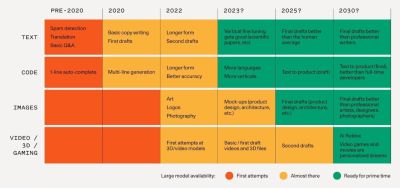
The current frenzy surrounding AI is fueled by aggressive timelines and "guesstimates" regarding the automation of creative tasks. According to projections from firms like Sequoia Capital, we are witnessing a rapid maturation of generative AI across text, code, image, and video generation.
- Phase 1 (The Foundational Era): Initial AI focused on basic pattern recognition and simple predictive modeling.
- Phase 2 (The Generative Shift): The emergence of Large Language Models (LLMs) and diffusion models allowed AI to synthesize existing data into "new" outputs.
- Phase 3 (The Integration Era): The current period, where AI is being embedded into professional workflows, leading to heightened anxiety about job displacement.
However, these milestones represent the advancement of mimicry, not intelligence. While AI is superior in processing vast quantities of data—the equivalent of the entire Library of Congress—it remains an engine of probability, not a sentient observer.
Supporting Data: Why "Designerly" Skills Prevail
The distinction between human designers and machines lies in the "Head, Heart, and Hands" framework, a model often used in transformative learning.
The Head: Thinking and Curiosity
AI is programmed to find the "best" answer based on a weighted average of its training data. This is an anti-curiosity mechanism. Curiosity, in its most powerful form, is not about finding an answer; it is about exploring the right question.
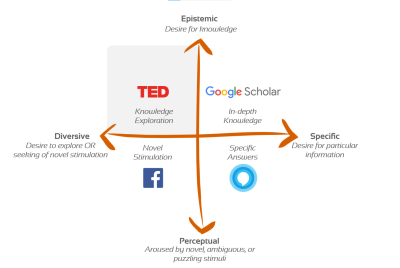
Humans possess "Epistemic Curiosity"—a desire for knowledge that isn’t just about stimulation, but about meaning-making. When we practice "divergent" thinking, we draw connections between unrelated fields. AI can only draw connections that already exist within its training set. To cultivate this, professionals must treat curiosity as a deliberate habit: dedicating 20 minutes a day to learning outside one’s comfort zone, thereby broadening the mental framework required for true innovation.
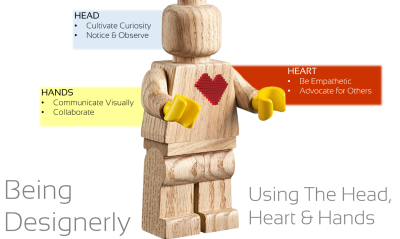
The Heart: Empathy and Advocacy
Empathy is frequently cited in tech, but rarely understood. It is not just "feeling for" someone; it is the act of stepping into their perspective to guide ethical action. There are three types of empathy—cognitive, emotional, and compassionate. The latter is the bedrock of design.
AI can be trained to recognize facial expressions or sentiment in text, but it cannot experience the vulnerability of a human in distress. Because AI lacks a consciousness and a personal history, it cannot perform "compassionate empathy." When a designer advocates for a user, they are making a moral choice to prioritize a human need over a technical or business constraint. This is an ethical judgment call, and AI is inherently incapable of making moral decisions without a human "pilot."
The Hands: Communication and Collaboration
Design is fundamentally a communicative act. Visual communication—sketches, prototypes, and diagrams—does not just convey information; it creates a shared reality for stakeholders. When a designer draws a process on a whiteboard, they are aligning the group’s mental models.
Furthermore, collaboration is a social negotiation. It requires navigating ego, organizational politics, and shifting priorities. Collaboration is about the ability to adapt to a "live" environment where feedback changes the direction of the project mid-stream. While AI can draft a contract or suggest a logo, it cannot negotiate a compromise between stakeholders or read the room to understand when a team is losing morale.
Official Perspectives and Ethical Implications
The ethical implications of relying on AI for design are significant. As noted in various industry reports, AI models often hallucinate—presenting false information with high confidence. For instance, when asked about professional credentials, AI models have been known to invent false biographies, misattributing books and teaching roles to individuals.
If designers rely on AI as a primary source of truth, they risk eroding their own credibility. The role of the designer is shifting from "creator of the basic artifact" to "curator and orchestrator." Just as a head chef plans a menu and oversees a kitchen, the modern designer uses AI to handle the tactical "heavy lifting" (transcription, data analysis, repetitive rendering), while reserving their cognitive energy for the strategic, high-level synthesis that defines a product’s success.

Conclusion: Augmentation, Not Replacement
The fear that AI will render designers redundant is based on the flawed premise that design is a commodity. If design is defined as "making a pixel-perfect image," then AI is a significant threat. But if design is defined as "solving complex human problems through empathy, observation, and collaboration," then AI is merely an advanced set of brushes.
To thrive in this new era, designers must lean into their "designerly" nature. By focusing on the aspects of their work that require intuition, cultural context, and human connection, they can leverage AI as a powerful assistant. We must stop viewing AI as a competitor and start viewing it as a tool that—when guided by a human heart and a curious head—can help us design a more thoughtful, efficient, and equitable world. The advantage, ultimately, remains with the human.