
In the modern digital landscape, the distinction between User Interface (UI) and User Experience (UX) design is often blurred—much to the detriment of business outcomes. While UI designers meticulously craft the visual and interactive elements of a product, UX designers are tasked with something far more expansive: the architecture of the entire user journey. Nowhere is this distinction more critical, or more frequently misunderstood, than in the complex world of Business-to-Business (B2B) sales.
As digital strategist Paul Boag argues, true UX design does not end at the screen. To improve the user experience, designers must look past pixels and wireframes to understand the entirety of the customer journey, including offline interactions, long-term sales cycles, and the often-neglected human element.
The Complex Architecture of B2B Sales
To understand why B2B requires a more holistic approach, one must first recognize the fundamental difference between B2B and B2C transactions. While B2C is often characterized by impulse, emotion, and relative simplicity, B2B is defined by complexity, long-term commitment, and multi-stakeholder decision-making.
A B2B purchase rarely happens overnight. It is common for months to pass between the initial point of contact and the final signing of a contract. During this protracted period, a client might engage in a variety of touchpoints: researching white papers, attending webinars, engaging in email threads, participating in discovery calls, and reviewing formal proposals.

A UI designer might focus on the aesthetic of the website where these white papers are hosted. A UX designer, however, must consider the cumulative effect of these interactions. They must ask: Does the content on the website align with the tone of the sales pitch? Is the transition from a digital inquiry to a human sales call seamless, or does it feel disjointed?
Chronology of the B2B Journey: A Strategic Map
The B2B journey is not a linear path but a series of interconnected events. To manage this effectively, UX designers lean heavily on Customer Journey Mapping. This practice involves visualizing every interaction a prospect has with a brand, from initial awareness to post-purchase support.
1. The Discovery Phase
In the early stages, prospective clients are rarely ready to buy. They are looking for solutions to specific problems. A poorly timed "hard sell" or an intrusive pop-up offering a discount before the user has even grasped the value of the product can alienate them instantly. UX designers must map these stages to ensure the right content—such as educational blog posts or industry insights—is served at the right time.
2. The Nurturing Phase
Once a lead is captured, there is often a "dead zone" where the prospect is evaluating options. This is where the risk of losing the lead is highest. UX designers play a pivotal role here by advocating for CRM integrations and automated pipeline management that keep the communication flow relevant, consistent, and empathetic.
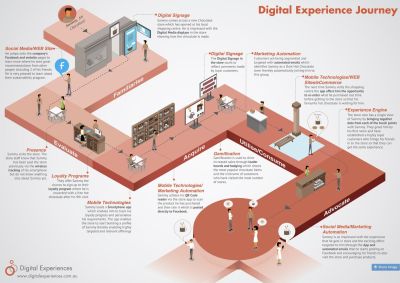
3. The Human-to-Human Transition
As the prospect moves closer to a decision, the experience shifts from interface-based to human-led. This is the stage where most digital-first designers feel their work is done, but for a UX professional, this is a critical juncture. If a sales team is provided with inconsistent messaging or if the CRM data doesn’t reflect the user’s previous digital interactions, the "experience" breaks down, and trust is eroded.
Supporting Data and Evidence: Why Gaps Cost Money
The "gaps" in the user journey—those moments where a customer is forced to repeat themselves or transition between disconnected systems—are the primary culprits for high churn rates and lost sales.
Data consistently shows that friction is the enemy of conversion. When a user switches from a mobile device to a desktop only to find that their form progress has been wiped, they are unlikely to restart the process. Similarly, when a customer is transferred between departments and must re-verify their identity, the perceived value of the organization drops.
Smart organizations are now using "gap analysis" to identify these points of failure. For example, banking apps that now allow users to call support directly from a logged-in state—eliminating the need for secondary security questioning—are effectively "plugging" a legacy gap in the user journey. By focusing on these friction points, UX designers can achieve more significant conversion gains than they ever could through a website redesign alone.

Official Perspectives: The Role of the Designer
There is a growing consensus among design leaders that the traditional job description for a UX designer is dangerously narrow. If a designer is only tasked with producing wireframes, they are being treated as a production asset rather than a strategic partner.
Paul Boag and other industry advocates argue that the role of the UX designer is evolving into something closer to a "Customer Experience Architect." This role requires:
- Systems Thinking: The ability to see how an app, a website, and a salesperson’s email script all function within a single ecosystem.
- Empathy for the Human Element: Recognizing that technology often creates barriers to connection. If a digital tool makes a person feel like a "number" rather than a partner, the UX has failed.
- Cross-Departmental Advocacy: The courage to suggest process improvements that exist outside of software, such as training sales teams in digital communication etiquette.
Implications for Future Business Strategy
What does this mean for companies looking to scale their B2B operations? It implies that the siloed approach to "Design" must end.
Breaking Down Silos
Organizations that continue to treat UI, UX, Marketing, and Sales as separate entities will inevitably create a fractured experience for the customer. A unified approach—where the designer is present at the strategy table—ensures that the brand promise made on the landing page is the same promise delivered during the final sales negotiation.

The Rise of "Human-Centric" Tech
As AI and automation become more prevalent in B2B sales, the "human factor" becomes a competitive differentiator. UX designers who can design workflows that leverage technology to enhance human connection—rather than replace it—will be at the forefront of the industry. This means designing for accessibility, clarity, and, above all, the reduction of unnecessary cognitive load for the user.
Redefining Success
Success in UX can no longer be measured solely by click-through rates or conversion metrics on a single page. It must be measured by the lifetime value of the customer and the efficiency of the entire sales funnel. When a company stops looking at its website as a "shop window" and starts looking at it as one part of a multi-year conversation, the results speak for themselves.
Conclusion: Expanding the Scope
To be a truly effective UX designer in the B2B space, one must possess the audacity to look beyond the screen. It requires the professional maturity to recognize that a beautifully designed button means nothing if the human on the other end of the transaction is being ignored or frustrated by a broken process.
The path forward for UX design is one of integration. By mapping the journey, plugging the gaps, and honoring the human element of every interaction, designers can move from being "interface creators" to "experience architects." This shift is not just an professional upgrade for the individual designer; it is a business imperative for any organization aiming to thrive in an increasingly complex and competitive digital marketplace.
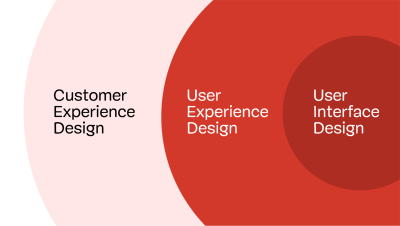
The work of a UX designer is never truly "done" as long as a customer is interacting with a brand. By embracing this broader mandate, designers can ensure that every touchpoint, whether digital or human, contributes to a cohesive, satisfying, and successful customer experience.