The Architecture of Alignment: Why Design Patterns Must Precede Elements in Modern Product Development
SAN FRANCISCO — In the high-stakes ecosystem of digital product development, the chasm between engineering and design is a well-documented hazard. Countless teams have floundered in silos, wrestling with fragmented component libraries, endless alignment meetings, and the dreaded "handoff bottleneck."
However, a growing cohort of industry practitioners argues that the root cause of these systemic failures lies in a flawed foundational premise: building isolated design elements—such as buttons, chips, and cards—before establishing cohesive design patterns.
By shifting the focus from atomic elements to reusable, product-specific design patterns, cross-functional teams can unlock parallel workflows, eliminate communication friction, and build scalable design systems that directly drive business value.
Main Facts: Shifting the Paradigm from Elements to Patterns
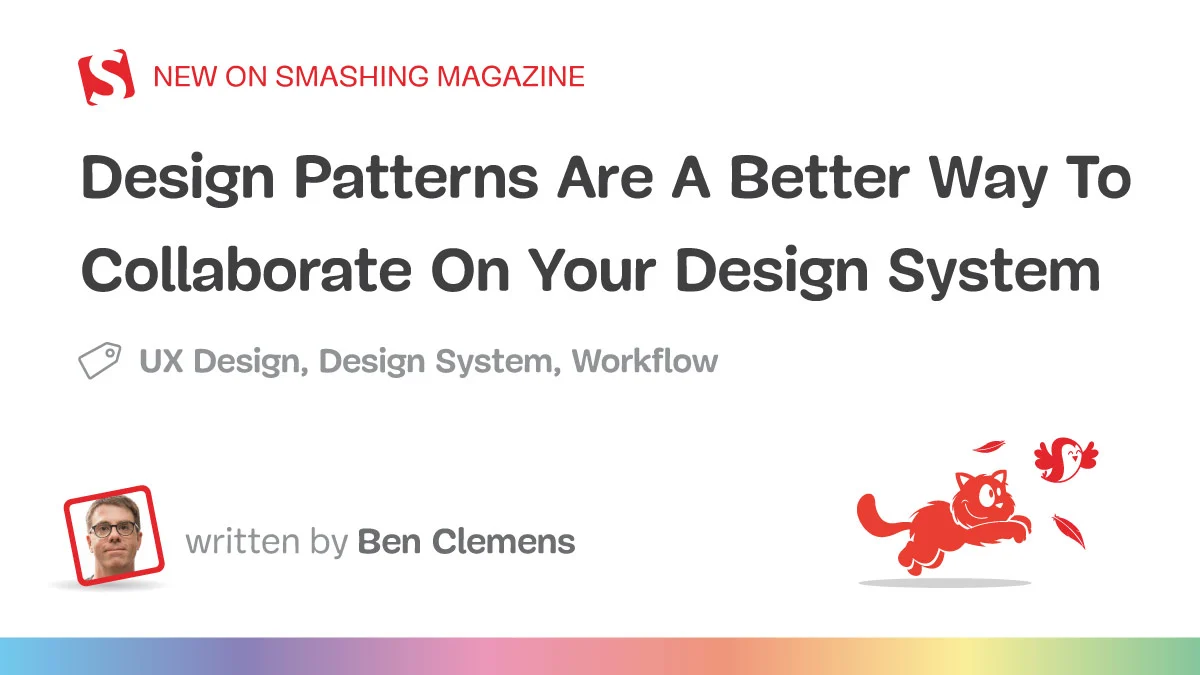
For decades, the standard playbook for creating a design system involved cataloging foundational UI elements. Corporations invest immense resources into standardizing typography, color tokens, and isolated components like drop-downs and input fields. Yet, industry data and anecdotal evidence consistently reveal a frustrating truth: possessing a robust set of UI elements does not automatically guarantee team alignment, nor does it significantly accelerate feature delivery.
The Element Fallacy: Isolated components do little to solve complex user experiences or implement core features. They are merely the raw ingredients, not the recipe.
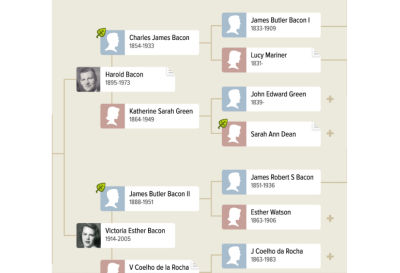
The Pattern Advantage: A design pattern is a reusable combination of elements designed for a specific purpose—a modular building block capable of carrying out a distinct product experience on its own.
The Collaborative Catalyst: By defining patterns collaboratively before writing production code or finalizing high-fidelity mockups, teams can establish a shared mental model that empowers engineers and designers to work in tandem rather than sequentially.
According to veteran product strategists, treating a design system as a product with its own internal users requires shifting away from top-down organizational mandates. Instead, teams must adopt bottom-up, pattern-driven methodologies that align how a product is conceptualized with how it is engineered.
Chronology: The Evolution of "WeTrip"—A Case Study in Pattern-Driven Development
To understand how pattern-first development operates in practice, consider the lifecycle of a hypothetical cross-functional team building a group travel coordination app named "WeTrip."
Phase 1: Identifying Seed Objects and Abstract Patterns
Tasked with building a minimum viable product (MVP) under tight deadlines, the WeTrip team—comprising product owners, front-end engineers, and designers—vowed to avoid the traditional waiting game where engineering stalls until design mockups are fully rendered.
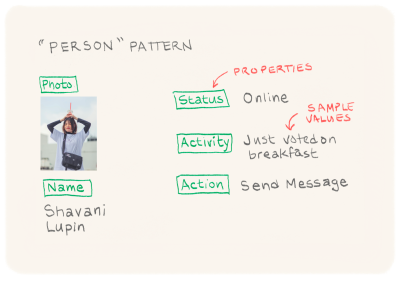
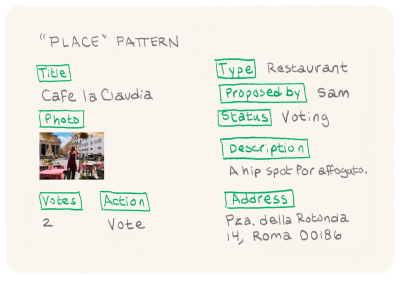
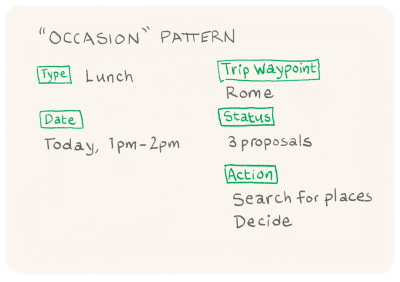
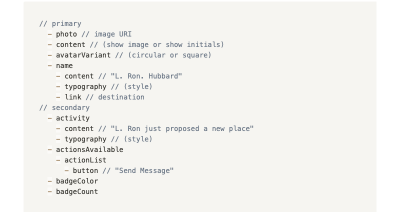
Instead, the team gathered around a collaborative workspace to establish a shared vocabulary. They identified fundamental domain objects:
Person: A traveler participating in trip logistics and voting.
Place: A prospective geographical location or venue.
Occasion: A scheduled group activity, such as a group dinner or sightseeing tour.
Rather than leaping straight into Figma or TypeScript, the team mapped these out as rough, abstract outlines and text-based property lists.
Phase 2: Integrating Existing Design Systems
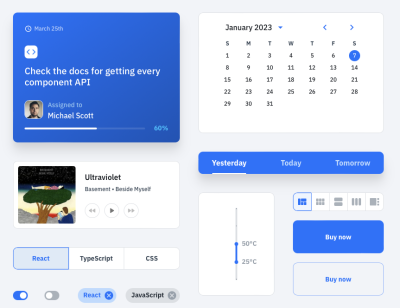
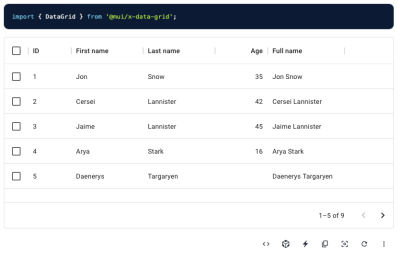
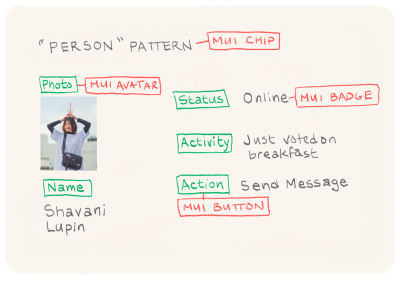
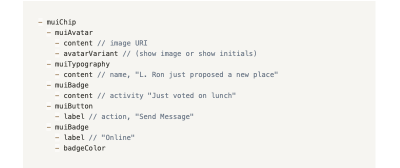
Recognizing the value of not reinventing the wheel, the team integrated restyled elements from established component libraries (such as Material-UI / MUI). They mapped standard component attributes (like color, padding, and state) directly onto their nascent pattern definitions.
Using shared documentation platforms (such as Notion), the team maintained a living dictionary of pattern properties. Crucially, adding a potential property to a pattern document did not require immediate finalization; it merely established a low-stakes framework for what could be included.
Phase 3: Parallel Execution and Real-Time Iteration
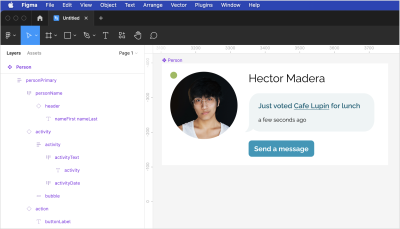
With the core patterns defined, engineers began stubbing out TypeScript components while designers concurrently fleshed out Figma variants. Because the boundaries and properties were mutually agreed upon, neither discipline blocked the other.
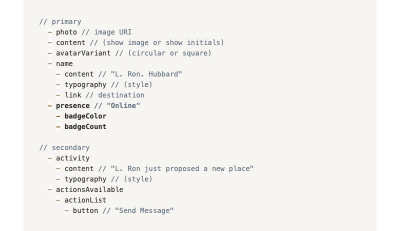
As development progressed, engineers identified overlooked requirements—such as adding a presence property to the Person pattern to handle real-time notifications. Rather than triggering a costly redesign cycle, the engineer updated the shared documentation, and the design team seamlessly incorporated a corresponding presence indicator into their layout variants.
Phase 4: Scaling into Full Views and Repositories
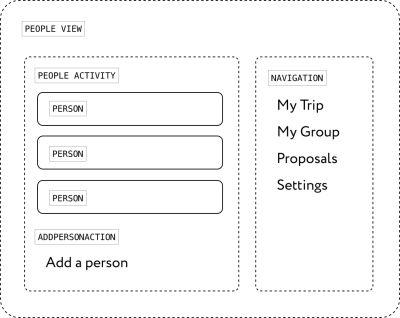
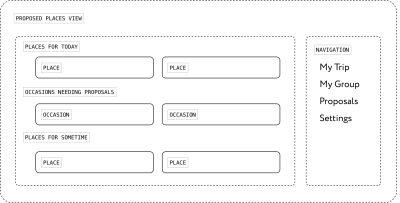
In subsequent planning sessions, the team assembled these core patterns into high-level product views: a People List, a Schedule View, and a Proposals Board. Because the atomic patterns (Person, Place, Occasion) were already standardized, building these complex views required minimal effort.
Ultimately, the final UI design served as a polished skin applied over a structurally sound, pre-aligned pattern architecture.
Supporting Data: The Economics of Reusability
While traditional metrics for design systems often focus superficially on component adoption rates, mature pattern-driven development introduces rigorous, quantifiable efficiencies into the software engineering lifecycle.
Reduced Handoff Latency: Teams utilizing collaborative pattern definitions report a reduction in ambiguity-driven rework. When designers and developers co-author property lists, the need for exhaustive specification documents drops precipitously.
Metric-Driven Reuse: Just as modern software engineering tracks test coverage to ensure code resilience, pattern-driven systems allow organizations to track reuse metrics. Patterns that prove successful in early modules (such as a scrolling list of venues) can be systematically extracted, promoted to standalone APIs, and reused across secondary features like search results.
Integration with Modern Toolchains: At enterprise scale, mature patterns naturally integrate into advanced architecture paradigms, such as federated module builds (e.g., Webpack 5 Module Federation), bridging the gap between design tokens and production micro-frontends.
Official Responses and Industry Perspectives
Reaction from the broader software engineering and product design community highlights a growing weariness with bureaucratic, heavy-handed design system governance.
"Having a good set of elements doesn’t help you get the value out of a design system, save you much time, or by itself ensure designers and engineers are aligned," notes leading design system consultants.
Industry veterans emphasize that organizational friction often stems from treating design systems as static graphic asset libraries rather than dynamic software products. When design patterns are prioritized:
Engineers gain architectural foresight, understanding why components are structured a certain way before writing code.
Designers are liberated from pixel-pushing micro-adjustments early in the cycle, allowing them to focus on holistic user flows and systemic problem-solving.
Product Managers benefit from accelerated velocity, as parallel workflows shorten the runway from concept to deployment.
Implications: The Future of Cross-Functional Harmony
The widespread adoption of pattern-first methodologies carries profound implications for how digital products will be built in the coming decade.
Democratization of Architecture: Design systems are no longer the exclusive domain of dedicated design technologists. By utilizing low-fidelity outlines, shared documents, and collaborative object-naming exercises, non-technical stakeholders can actively participate in system architecture.
Erosion of Silos: The traditional wall between "design" and "development" begins to dissolve when both disciplines contribute to the same foundational pattern repository.
Sustainable Scalability: As products grow, organizations that anchor their design systems in reusable patterns rather than fleeting UI elements will find themselves uniquely positioned to pivot, rebrand, and scale without incurring crippling technical debt.
Ultimately, the shift toward design patterns offers an alternate reality for product teams—one where collaboration is frictionless, development occurs in parallel, and the design system acts not as a bureaucratic gatekeeper, but as a genuine accelerator of business value.