Bridging the Chasm: How B2B Marketers Can Finally Defend Their Pipeline Numbers to Finance
By the B2B Analytics & Strategy Desk Published: August 2026
Main Facts: The Great B2B Marketing Divide
Ask any B2B marketing team how their paid media campaigns are performing, and you will likely receive an immediate, confident response. They will point to a flurry of positive platform-level metrics: cost-per-click (CPC) is trending downward, conversion rates are climbing, and return on ad spend (ROAS) looks healthy on the surface.
However, ask that exact same team how many dollars of verified pipeline those paid media efforts actually generated in the previous quarter, and the room typically goes quiet.
This persistent silence highlights the core disconnect plaguing modern enterprise marketing. In the complex world of business-to-business sales, buyers rarely convert on a single click. Decision-making committees span CEOs, CFOs, Chief Information Officers, and HR leaders who weigh multiple vendors over sales cycles lasting months—sometimes quarters—with buying teams running five to ten people deep.
Yet, traditional marketing reporting often stops at platform metrics. It measures the medium, not the enterprise impact. The fundamental issue is not that paid media fails to work; rather, it is that marketing departments frequently fail to measure the right things in a language that corporate finance can audit, trust, and defend.
Chronology: The Evolution of Pipeline Attribution
To understand how modern marketing departments arrived at this accountability crisis, it helps to examine the historical timeline of digital attribution and its collision with corporate finance.
The Early 2010s (The "Last-Click" Era): As digital advertising matured, B2B marketers heavily relied on simple analytics platforms. Last-touch attribution ruled supreme. Whichever ad or keyword secured the final click before a form fill claimed 100% of the credit. This era created a false sense of security, as marketing teams reported inflated lead counts that rarely aligned with actual sales revenue.
The Mid-to-Late 2010s (The Multi-Touch Awakening): As CRM adoption deepened through platforms like Salesforce and HubSpot, companies realized that enterprise buyers interacted with dozens of touchpoints before speaking to a sales rep. Multi-Touch Attribution (MTA) tools emerged, promising to distribute credit across every interaction. However, privacy regulations, cookie deprecation, and cross-device tracking soon crippled traditional MTA, leaving marketers with fragmented data and unverified attribution models.
The Early 2020s (The Friction Between Marketing and Finance): With economic headwinds tightening corporate budgets, CFOs began demanding strict accountability for every marketing dollar spent. Vanity metrics such as impressions, clicks, and even standard Marketing Qualified Leads (MQLs) were rejected by finance departments that only cared about top-line growth, contribution margins, and pipeline velocity.
The Present Day (The Era of Triangulated Measurement): Today, forward-thinking organizations are abandoning single-source attribution entirely. They are adopting a multi-layered measurement framework that combines econometric causal modeling, geo-based incrementality testing, and deep CRM data integration to establish a pipeline number that can withstand rigorous financial audits.
Supporting Data: Real-World Case Studies in Pipeline-Led Strategy
When companies shift their measurement infrastructure from a trailing reporting layer to the foundational strategy of their operations, the results are transformative. Recent case studies demonstrate the profound impact of aligning paid media with pipeline data from day one.
Case Study 1: B2B SaaS Search Optimization
An enterprise B2B SaaS provider was struggling to prove the value of its broad search campaigns to its executive board. By restructuring its tracking infrastructure, the company stopped optimizing for raw click volume and instead directed budgets toward actual pipeline signals.
Cost per MQL: Dropped by 27%.
Conversion Rate: Increased by 18%.
Qualified Traffic: Grew by 22%.
Takeaway: Allowing budget allocation to follow true pipeline signals rather than platform-level vanity metrics drastically improved unit economics.
Case Study 2: Global Technology CRM Integration
A global technology hardware and software enterprise bridged the gap between ad platforms and sales execution by wiring Salesforce lead-scoring data directly back into Google Ads. By assigning real, quantified dollar values to distinct lead tiers rather than treating all form fills equally, the organization optimized its bidding strategies for high-intent business actions.
Return on Ad Spend (ROAS): Surged by 138%.
Takeaway: Connecting top-of-funnel ad algorithms directly to bottom-of-funnel CRM outcomes transforms generic traffic into predictable, high-value pipeline.
Official Responses and Industry Perspectives
Industry leaders, chief financial officers, and marketing technologists agree that the era of treating marketing analytics as a siloed reporting function is over.
"When a CFO asks for a pipeline forecast, they are not asking for an estimate based on how many people clicked a banner ad last Tuesday," explains a veteran enterprise Chief Financial Officer. "They want to see a clear chain of custody from capital allocation to net-new pipeline, factoring in seasonality, organic market demand, and historical sales velocity. If marketing cannot provide that chain, their budget is the first thing on the chopping block during a downturn."
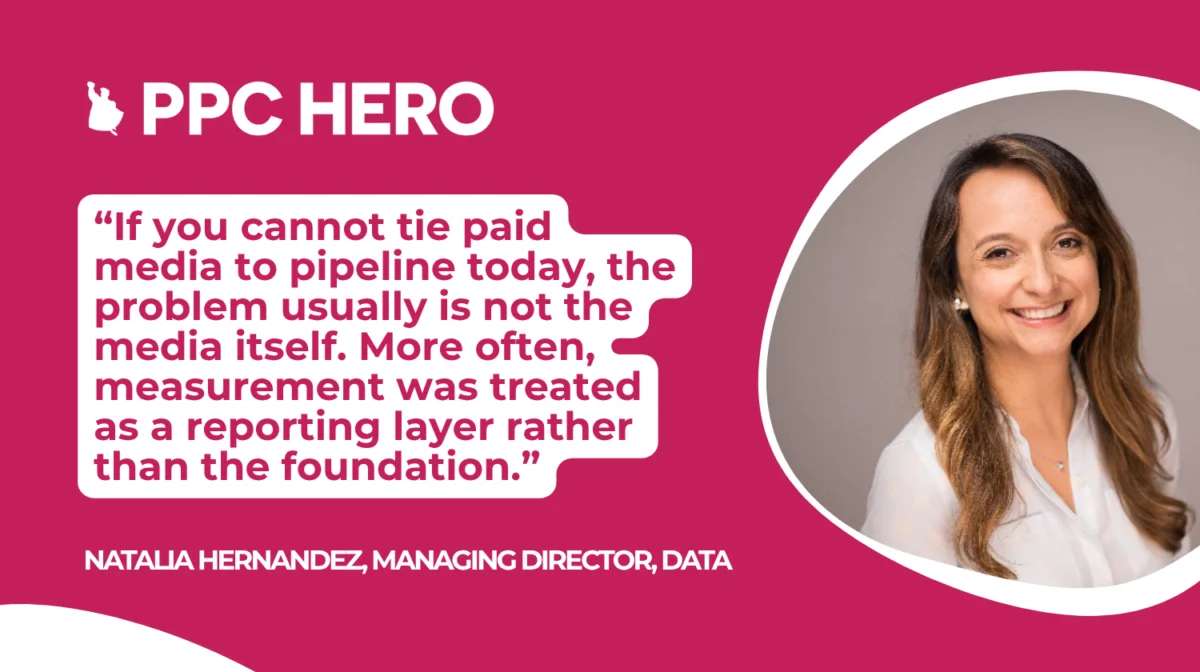
Marketing measurement experts echo this sentiment, emphasizing that the failure is rarely rooted in the media channels themselves.
"Most measurement problems are fundamentally tracking and architecture problems that nobody fixed before launching the first campaign," notes a leading B2B growth strategist. "If campaign IDs are never securely tied to your CRM, if UTM tags are added inconsistently or weeks late, and if lead forms fail to sync natively with campaign objects, your trail has gone cold before the sales team even makes the first call. Measurement must lead strategy, not trail it."
Implications: How to Build a Defensible Pipeline Number
Transforming how your organization measures and defends its pipeline requires a structural overhaul across three critical pillars: technical architecture, attribution methodology, and financial translation.
1. Wire Media to the CRM Before Touching a Campaign
The unglamorous work of marketing attribution always happens up front. Before a single ad goes live, technical scaffolding must be firmly established:
Rigorous Campaign Tagging: Every campaign, ad group, and asset must be uniformly tagged using strict taxonomy rules at launch.
Native CRM Integration: Lead forms must sync seamlessly to CRM campaign objects (such as Salesforce Campaigns).
Full-Funnel Event Tracking: Conversion tracking within Google Ads, LinkedIn, and other programmatic channels must connect directly to downstream pipeline outcomes—tracking MQLs, Sales Qualified Leads (SQLs), first meetings, and CRM-defined lead quality.
Done correctly, this foundation allows marketing teams to trace an account’s entire journey from initial brand touch to closed-won revenue, matching the exact mental model already utilized by the sales organization.
2. Abandon the Myth of the Single Attribution Model
No single attribution model can accurately capture the entirety of a complex B2B buying journey. Anyone attempting to sell a "single source of truth" is offering an oversimplification. Instead, modern organizations must deploy a three-layered verification matrix:
Multi-Touch Attribution (MTA): Links ad interactions and self-reported buyer data to CRM outcomes. While useful, MTA inherently suffers from tracking bias and gives excessive credit to whatever it can easily monitor.
Causal Modeling (Econometric Methods): Measures each channel’s true contribution to the pipeline while controlling for external confounders such as market seasonality, macroeconomic shifts, and organic brand demand. In complex B2B environments, causal approaches often provide the only reliable foundation for budget decisions because they isolate baseline performance from marketing-driven lift.
Geo-Based Incrementality Testing: Proves definitively whether paid media generated net-new pipeline or simply took credit for brand demand that already existed in the market.
Running these three layers in tandem neutralizes individual blind spots, delivering a defensible read on performance rather than a flattering one.
3. Translate Metrics into the Language of Finance
A measurement framework is useless unless the CFO believes in it. Marketing teams must discard platform jargon and report in the financial metrics used to run the overarching enterprise:
Contribution Margin
Lifetime Value to Customer Acquisition Cost (LTV:CAC)
Payback Period
Cost Per First Meeting & Cost Per Pipeline Dollar
Impressions, clicks, and engagement rates are, at best, directional signals. They have no place in a high-stakes pipeline review with executive leadership. By leveraging Marketing Mix Modeling (MMM) to tie spend directly to pipeline generation through CRM data, and utilizing geo-holdout testing to verify regional responsiveness, marketers can finally present a number they are fully prepared to defend in front of the board of directors.
Conclusion
The persistent gap between marketing self-assessment and financial scrutiny can no longer be ignored. When B2B marketing teams take ownership of their measurement infrastructure—wiring ad platforms directly to the CRM, embracing multi-layered attribution, and reporting in the financial terminology of the boardroom—the narrative changes entirely.
When the next quarterly review arrives and leadership asks what paid media contributed to the pipeline, the silence in the room will vanish. In its place will be a robust, data-backed figure that marketing and finance can proudly stand behind together.