LONDON — The COVID-19 pandemic served as an unprecedented stress test for the global digital economy. Overnight, physical interactions ground to a halt, shifting the entirety of commerce, communication, education, and banking into digital spaces. While society scrambled to adapt, this sudden paradigm shift illuminated a stark underlying reality: for millions of disabled and vulnerable individuals, inaccessible digital architecture acts as an immediate barrier to survival.
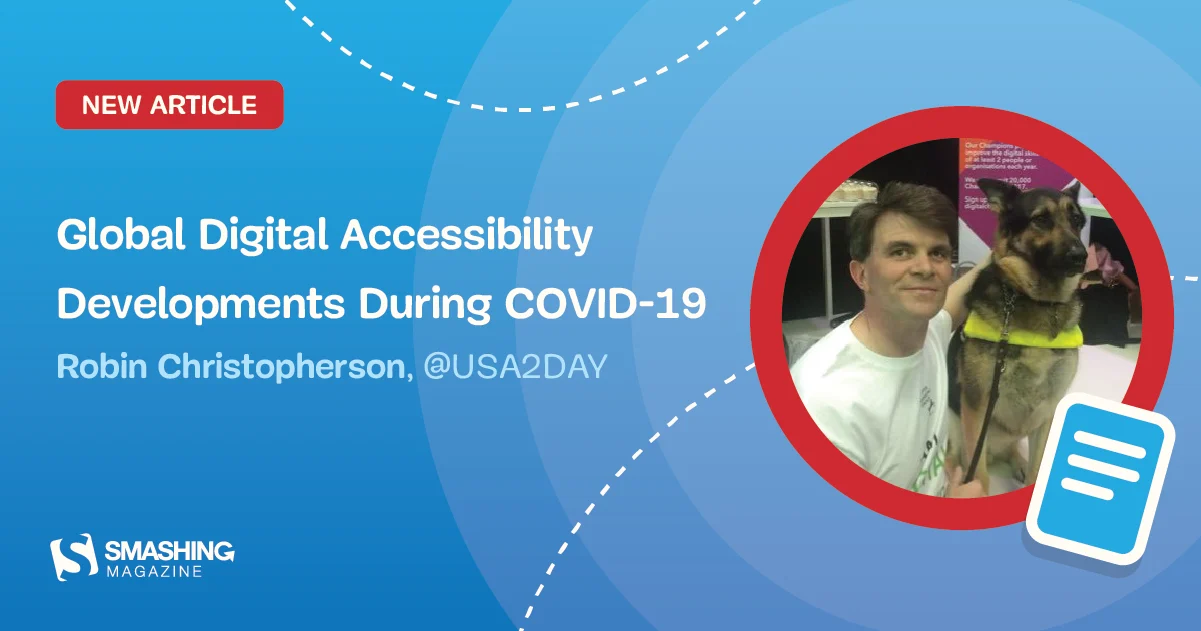
Amidst this global upheaval, Robin Christopherson MBE, Head of Digital Inclusion at UK-based tech experts AbilityNet, launched a monthly webinar series titled Accessibility Insights. Bringing together senior accessibility leaders from international powerhouses such as Microsoft, ATOS, Barclays, and Sainsbury’s, the series explored how organizations pivoted during the crisis, the challenges and opportunities that arose, and why digital inclusion is no longer a peripheral corporate checkbox, but a core operational necessity.
Main Facts: The Pandemic’s Digital Inclusion Imperative
The intersection of a global health crisis and mandatory remote living thrust digital accessibility into the international spotlight. Key developments from the AbilityNet webinar series highlight a monumental shift in how major enterprises view inclusion:

- Surging Demand for Support: Microsoft’s Disability Answer Desk witnessed support ticket volumes double overnight post-lockdown, sustaining a 200% to 300% increase over pre-pandemic baselines.
- Mainstream Adoption of Inclusive Features: Remote working tools integrated features like AI-powered captions and "hand raise" icons—originally designed for accessibility and neurodiversity—which quickly became essential for the broader workforce.
- Proactive Adaptation: Financial institutions like Barclays and retailers like Sainsbury’s fast-tracked digital solutions, ensuring remote banking and online grocery deliveries remained accessible to elderly, disabled, and shielding demographics.
- The Lived Experience Deficit: Organizations with C-level advocacy and leadership roles held by individuals with "lived experience" of disability navigated the remote transition with significantly fewer friction points.
Chronology: The Evolution of Workplace and Consumer Accessibility
When national lockdowns were implemented across the UK and the globe in early 2020, companies found themselves on vastly different footings depending on their pre-existing accessibility maturation.
Phase 1: The Emergency Pivot (March – May 2020)
As offices closed, companies had to rapidly scale remote operations. For businesses with established flexible-working cultures, such as IT titan ATOS, the transition was technologically smooth. However, the human element presented profound challenges. Disabled employees suddenly found themselves without physical support networks, such as on-hand sign language interpreters or colleagues able to assist with visual cues.
Simultaneously, customer demand for digital services skyrocketed. Barclays saw a massive migration toward its mobile app and website, requiring immediate optimization for newly digital customers. Sainsbury’s noted that iOS font-scaling usage jumped to 30% during the initial months of lockdown, reflecting an immediate need for flexible, readable digital layouts.

Phase 2: Systemic Scaling and Support (Summer 2020 – 2021)
As the pandemic prolonged, organizations moved from reactive fixes to systemic support.
- Barclays proactively reached out to vulnerable customers, offering priority phone-banking access alongside NHS workers, and introducing innovative products like top-up contactless wearables and "Cash to the Doorstep" services.
- Microsoft relied on its 20-year accessibility foundation to quickly roll out remote enhancements for Microsoft Teams, emphasizing that early-stage integration prevents the costly need to retrofit accessibility later.
- ATOS accelerated its apprenticeship programs, collaborating with AbilityNet, Shell, and Barclays to establish a formalized Level 4 Accessibility Specialist apprenticeship standard to combat a severe market shortage of skilled talent.
Phase 3: The Hybrid Future and Workplace Restructuring
By late 2020 and beyond, organizations began evaluating return-to-office strategies. Crucially, accessibility leaders argued that the planning phase must incorporate diverse employee voices rather than relying solely on senior executives working from spacious home offices. Post-pandemic workspaces face redesigns that could permanently benefit disabled employees through improved wheelchair accessibility and reduced ambient noise levels.
Supporting Data and Expert Insights
The insights shared by industry leaders during Christopherson’s webinars underscore the tangible business value and operational necessity of digital inclusion.

Jenny Lay-Flurrie, Chief Accessibility Officer, Microsoft
As a deaf executive utilizing American Sign Language (Sign Language), Jenny Lay-Flurrie’s transition to remote work highlighted the fragility of inaccessible systems.
"The limelight the pandemic has put on the need for access has been pretty humbling and one hell of a learning journey," Lay-Flurrie noted.
She emphasized that Microsoft’s long-standing multi-decade investment in accessibility meant they had the structural foundation required to elevate remote support tools overnight. Furthermore, features engineered for neurodiversity—such as the Microsoft Teams hand-raise feature designed to mitigate anxiety around interrupting conversations—delivered massive innovation boosts for the entire user base.

Paul Smyth, Founder of Digital Accessibility, Barclays
Paul Smyth, a fellow MBE recipient leading digital accessibility at Barclays, stressed that accessible customer service rests on five pillars: flexibility, choice, personalization, responsiveness, and responsibility.
Barclays responded to branch closures by ensuring its online banking platforms—accredited by AbilityNet—remained fully optimized. Recognizing that millions were forced online for the first time, Barclays paired technological compliance with plain-language digital guides, ensuring senior and vulnerable customers could navigate online financial services independently.
Neil Milliken, Global Head of Accessibility, ATOS
Neil Milliken addressed the psychological and technical toll of remote work, warning against the pitfalls of "Zoom fatigue." For dyslexic and neurodiverse individuals, the microsecond video lags and visual overstimulation of endless video calls create severe cognitive strain.

Milliken also championed long-term talent cultivation: "It’s actually quite hard to find enough people to address the scale of the problem… so we determined a few years back that we needed to grow our own skills and we started doing apprenticeships."
Bryn Anderson, Accessibility Specialist, Sainsbury’s
Living with albinism and visual impairment, Bryn Anderson highlighted the grass-roots power of corporate employee resource groups. Sainsbury’s internal "Enable Network" brings together 190,000 employees, connecting logistics staff directly with UI/UX designers to test internal and external digital applications.
Anderson offered a stark warning against shortcut solutions: "There are solutions out there saying… we will bring you 100% compliance, you only have to pay £1,000 a month. Completely limited solutions… band-aid solutions. There is nothing clever about them."

Official Responses and Strategic Steps for Organizations
The collective consensus from Microsoft, Barclays, ATOS, and Sainsbury’s is unequivocal: accessibility cannot be achieved through automated software band-aids or isolated retrofitting. It requires top-down policy commitment and bottom-up employee engagement.
For organizations seeking to audit and improve their digital properties in alignment with international standards and the UK Equality Act 2010, accessibility experts recommend five foundational steps:
- Hide Your Mouse to Check Keyboard Accessibility: Ensure your website can be navigated entirely via a keyboard, featuring a highly visible focus indicator and a logical reading order for screen readers.
- Avoid Poor Contrast: Use testing tools like Tanaguru’s Contrast Finder or the Paciello Group’s Contrast Analyser to verify that text meets visual readability standards early in the design phase.
- Conduct Free Accessibility Checks: Utilize automated online scanners like WebAIM’s WAVE tool during development to flag technical markup errors, while keeping in mind that automated tools must be paired with manual testing.
- Publish an Accessibility Statement: Create a dedicated accessibility page detailing your compliance measures and providing a friction-free communication channel for users to report barriers.
- Prioritize Plain-Language Content: Eliminate unnecessary jargon, structure copy with clear headings and bullet points, and cater to diverse learning styles through mixed media (text, video, and illustrated guides).
Implications: Building the Inclusive Workspace of Tomorrow
The COVID-19 pandemic permanently altered the social contract between employers, enterprises, and digital consumers. It exposed a hard truth: when physical mobility is restricted, digital exclusion is effectively social and economic exclusion.

However, the silver lining of the crisis has been an unprecedented acceleration of empathy and innovation. Companies that embedded accessibility into their corporate DNA prior to 2020 were uniquely positioned to weather the storm, turning inclusion into a driver of enterprise-wide resilience.
As organizations design the hybrid workplace and digital storefronts of the future, the mandate is clear. Accessibility can no longer be delegated to an isolated team operating in a silo. By amplifying diverse voices, investing in targeted training and apprenticeships, and prioritizing human-centric design from the ground up, businesses can ensure that the post-pandemic digital world leaves no one behind.