In the fast-evolving landscape of digital entrepreneurship, few founders possess the longitudinal perspective of Brian Casel. With a career spanning 20 years as a designer, developer, founder, and operator, Casel has witnessed the dot-com aftermath, the rise of the mobile app ecosystem, the SaaS boom, and now, the generative artificial intelligence revolution.
In a recent episode of the Niche Pursuits podcast, Casel sat down to discuss the genesis, execution, and scaling of his latest venture, Builder Methods. Rather than chasing ephemeral internet trends, Casel is leveraging two decades of operational experience to demystify AI agents and software building for a new generation of non-technical founders, operators, and creators.
Through a carefully calibrated funnel spanning YouTube, an email newsletter, a vibrant community, and an annual membership program, Builder Methods represents a masterclass in modern digital business building.
Main Facts: The Blueprint of Builder Methods
At its core, Builder Methods is an educational and community-driven ecosystem designed to help business owners build software, implement AI agents, and automate operational workflows without needing a traditional computer science degree.
The enterprise is anchored by several core pillars:
- The Founder’s Pedigree: Casel brings two decades of deep-seated experience, having previously founded and scaled Audience Ops (a productized content marketing service operating from 2015 until its successful acquisition in 2020) and Clarityflow (an asynchronous video, audio, and text messaging SaaS platform launched in 2021).
- The Traffic Engine: A high-performing YouTube channel focusing on AI building, Claude Code, and spec-driven development, which serves as the primary top-of-funnel acquisition channel.
- The Nurture Layer: A focused, weekly email newsletter delivering free insights, tools, and resources.
- The Monetization Core: Builder Methods Pro, an annual membership program featuring an expansive library of tactical training videos, courses, and a peer-to-peer community.
- The Paradigm Shift: A deliberate pivot in target audience—moving away from strictly targeting professional software developers toward empowering non-technical business operators who already excel at creating Standard Operating Procedures (SOPs) and repeatable processes.
Chronology: A 20-Year Evolution Leading to an AI-First Venture
To understand the architecture of Builder Methods, one must examine the chronological milestones that shaped its founder.
The Early Decades: Design, Development, and Bootstrapping
Casel’s journey began in the trenches of web design and development. Over the years, he transitioned from a freelance service provider into a bootstrapped entrepreneur. Along the way, he forced himself to master the non-design disciplines critical to survival: marketing, sales, content creation, and day-to-day operations.
2015–2020: The Audience Ops Era
A major inflection point in Casel’s career was the launch of Audience Ops in 2015. Operating as a productized content marketing service, it taught him the immense value of productizing professional services—transforming chaotic agency work into a streamlined, repeatable assembly line. After five years of steady growth and refinement, Casel successfully exited the company in 2020.
2021: Launching Clarityflow
In 2021, Casel launched Clarityflow, a SaaS product tailored specifically for coaches and consultants who rely on asynchronous communication. Clarityflow remains operational today, anchoring his continuing expertise in software-as-a-service metrics and customer retention.
2024–2025: Slower SaaS Growth and the AI Pivot
By 2024, Casel encountered a familiar plateau familiar to many veteran bootstrapped SaaS founders. While Clarityflow was stable, its growth trajectory had settled into a steady, linear climb rather than an explosive breakout.
Simultaneously, the generative AI landscape was exploding. Rather than forcing incremental updates to mature software, Casel began experimenting heavily with emerging AI coding assistants, spec-driven development methodologies, and LLM-driven workflows. By early to mid-2025, this experimentation crystallized into a new direction: Builder Methods.
Supporting Data: YouTube Traction, Funnel Metrics, and Community Scale
While Casel’s transition to AI might look seamless from the outside, the operational reality is built on rigorous content production and strategic funnel design.
The YouTube Growth Curve
Casel had been uploading weekly videos to YouTube for roughly two years before AI became the channel’s central theme. Early iterations focused on Ruby on Rails tutorials and software experiments. However, the pivot to AI tools—particularly Claude Code, spec-driven workflows, and practical agent building—unlocked massive organic demand.
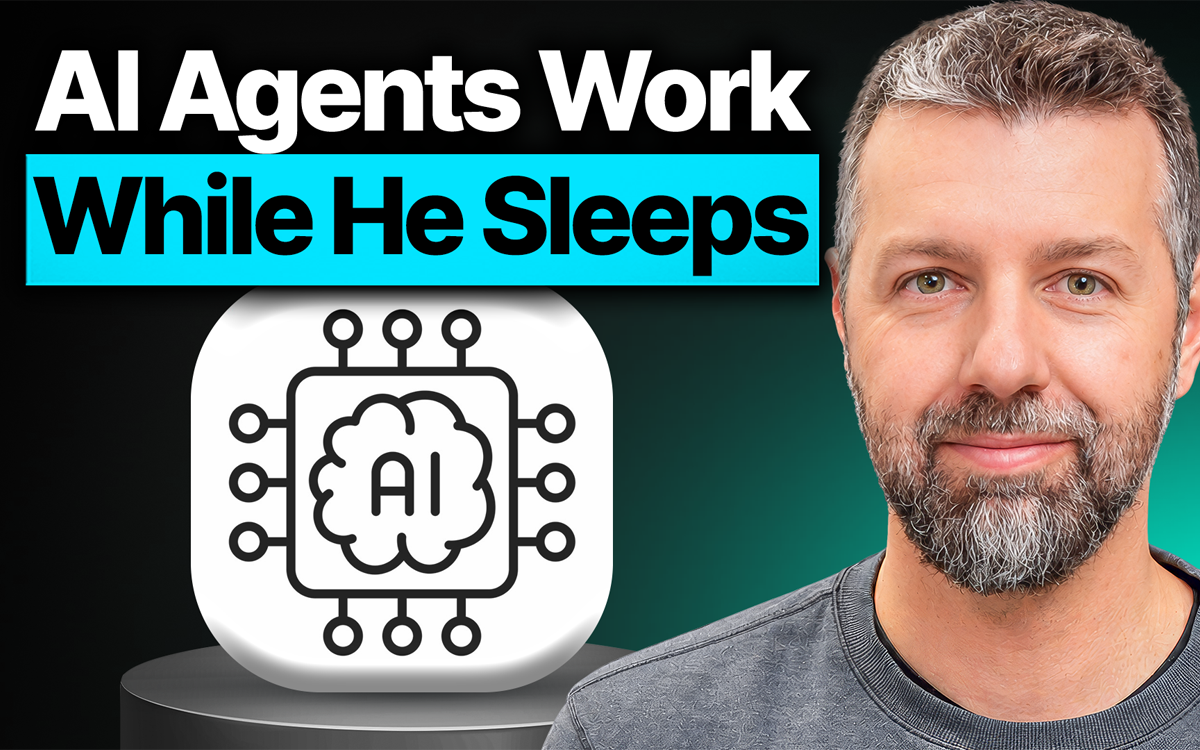
- High-Impact Breakouts: In March 2025, a dedicated video covering OpenClaw achieved viral status, pushing his channel’s cumulative reach toward the coveted one-million-view milestone—an extraordinary feat for a niche technical topic.
- Mid-Tier Consistency: Regular tutorials covering advanced AI coding tools regularly pull in 50,000 to 60,000 views.
- The Long-Tail Baseline: Even smaller, highly specialized videos capturing 1,000 to 3,000 views within their first couple of weeks consistently deliver high-intent prospects who convert into newsletter subscribers and community members.
Production-wise, Casel treats each 15-to-20-minute YouTube video as a major media asset, dedicating multiple full-time days to ideation, scripting, production, and editing, while heavily utilizing AI assistants to streamline his internal publishing workflow.
Funnel Mechanics and Conversion Rates
Casel utilizes a classic, highly effective funnel architecture:
- Top of Funnel (YouTube): Captures broad attention among builders and curious operators. Initially, promotional calls-to-action for his newsletter appeared within the first 30 seconds of videos. However, testing revealed that repositioning calls-to-action to the middle or later sections of videos yielded higher-intent signups, as viewers needed time to absorb the technical context first.
- Middle of Funnel (Email): A clean, unbloated email sequence delivers weekly newsletters featuring free tools and insights.
- Bottom of Funnel (Builder Methods Pro): An annual membership program that serves as the primary revenue engine. At the time of the podcast interview, the platform housed over 100 meticulously organized training videos across multiple structured courses.
Official Insights: The Paradigm Shift in AI Literacy
A standout theme from the discussion was Casel’s evolving philosophy regarding who can—and should—build custom software and AI agents.
Moving Beyond the Traditional Developer Avatar
Initially, the messaging behind Builder Methods spoke directly to professional developers who needed to adapt their coding workflows to AI-accelerated environments. While software engineers still comprise a segment of the community, Casel’s target demographic has shifted definitively toward non-technical business owners and operators.
Casel argues that non-technical operators often possess a hidden advantage: a rigorous systems mindset.
"Building AI agents isn’t about traditional coding syntax; it’s about articulating repeatable processes," Casel notes.
Business owners who have spent years documenting workflows, writing SOPs, training virtual assistants, and managing recurring tasks already possess the exact mental frameworks required to deploy AI agents effectively. They intuitively understand how to:
- Break down complex business processes into sequential steps.
- Identify bottlenecks in customer service, billing, and content generation.
- Set clear guardrails and verification steps for automated systems.
Implications: Practical Applications Across Industries
The implications of Casel’s work extend far beyond software startups and creator economy niches. By reframing AI agents as digital coworkers rather than complex programming projects, local and service-based businesses can unlock unprecedented operational efficiency.
Real-World Use Cases for AI Agents
During the podcast, Casel highlighted real-world examples from his community, including a California-based dental practice owner learning to build custom internal software for case management, accounting, and bookkeeping.
Across various industries, the operational applications of structured AI agents include:
- Service Businesses & Agencies: Automated client onboarding, project milestone tracking, and initial intake questionnaire sorting.
- Local Practices: Appointment follow-ups, inventory re-ordering alerts, and internal documentation queries.
- Content Creators & E-commerce: Automated content repurposing pipelines, customer support triage, and inventory status reporting.
The common denominator across all these applications is process repetition. Wherever repeatable work exists, an agent-supported workflow can be designed to shoulder the operational burden.
Conclusion
Brian Casel’s journey with Builder Methods offers a masterclass for modern entrepreneurs. By combining two decades of hard-won SaaS and productized service experience with a timely, execution-focused approach to artificial intelligence, he has built a sustainable business model that relies on value creation rather than internet hype.
The core lesson is clear: long-term digital success is forged at the intersection of deep operational experience and strategic content distribution. For business owners looking to step into the future of work, the barrier to entry is no longer learning how to code—it is simply learning how to clearly define the processes they already manage every single day.