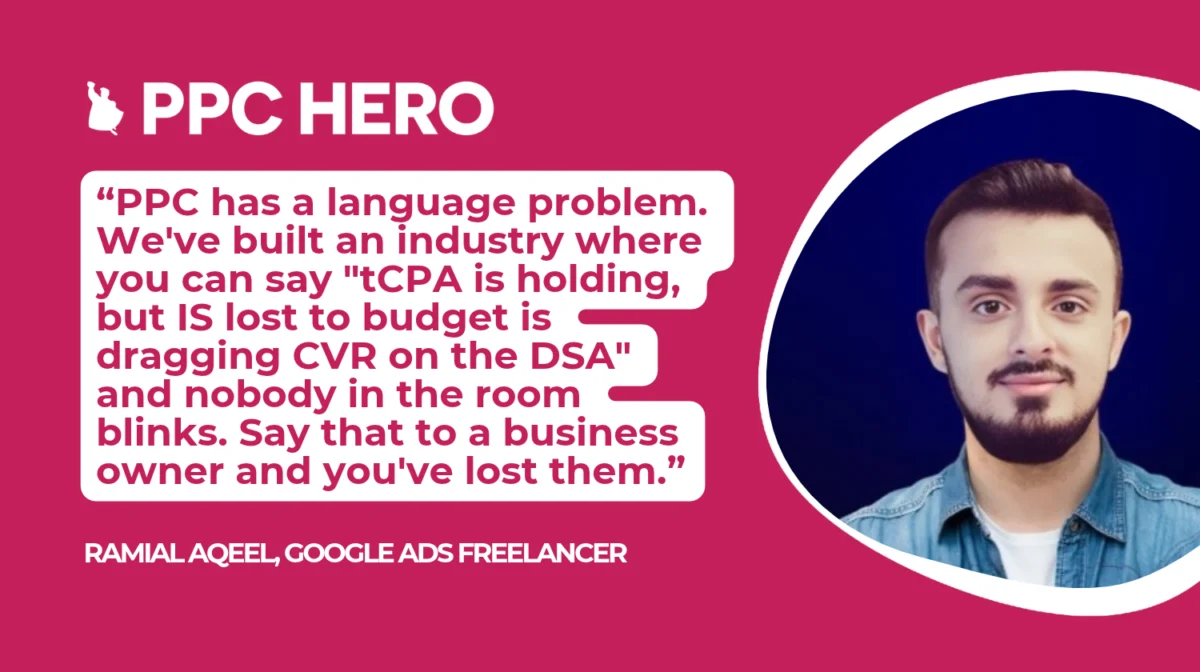
LONDON — Modern digital marketing has developed its own distinct dialect. Mention to a seasoned agency specialist that “tCPA is holding steady, but IS lost to budget is dragging down CVR on the DSA,” and they will nod approvingly. Say that exact same sentence to a business owner or a chief financial officer, however, and you will likely be met with a blank stare.
Pay-Per-Click (PPC) advertising has an acute language problem. Over the past two decades, as search engines and programmatic ecosystems have grown exponentially more complex, the industry has responded by wrapping every new feature, bidding algorithm, and diagnostic metric in a shroud of shorthand. While acronyms are designed to save time in internal Slack channels and agency briefings, the unchecked proliferation of jargon has created a dangerous chasm between technical practitioners and the stakeholders funding the campaigns.
Industry analysts warn that this is more than an aesthetic communication issue. When digital marketers use loose definitions or hide behind opaque terminology, it frequently leads to expensive strategic miscalculations, misaligned expectations, and wasted ad spend.
Main Facts: The Anatomy of a Jargon-Heavy Industry
At its core, PPC is no longer just about buying top-of-funnel text ads on Google Search; it is an umbrella term for paid digital media spanning search engines, social feeds, video platforms, and automated shopping inventories. Yet, the foundational terminology remains heavily fragmented.
The confusion typically stems from three overlapping categories:
- High-level foundational metrics that dictate overall visibility.
- Automated bidding shorthand that hands control over to machine learning black boxes.
- Attribution and business intelligence acronyms that attempt to tie ad spend back to actual revenue.
For instance, consider the distinction between SEM (Search Engine Marketing) and PPC. While SEM historically encompasses both paid search and organic search engine optimization (SEO), practitioners often use it interchangeably with paid media alone. Similarly, metrics like ROAS (Return On Ad Spend) measure top-line revenue generation rather than bottom-line profitability, a nuance that frequently shocks executives when they realize high ROAS campaigns can still result in a net business loss once product margins and overhead are factored in.
Chronology: How PPC Evolved into an Acronym Minefield
To understand how the industry reached this linguistic saturation point, one must look at the historical evolution of search engine advertising over the last twenty years:
- The Early 2000s (The Foundation): The landscape was simple. Advertisers bid on keywords manually. Terms were limited to basic metrics like CPC (Cost Per Click) and CTR (Click-Through Rate).
- The 2010s (The Data Explosion): As platforms like Google AdWords (later Google Ads) matured, sophisticated tracking mechanisms emerged. Terms like GA (Google Analytics), GCLID (Google Click Identifier), and QS (Quality Score) became standard lexicon as algorithms began factoring landing page relevance and user experience into ad auctions.
- The Late 2010s to 2020s (The Automation Era): Google and Meta introduced automated smart bidding strategies. Manual CPC gave way to complex machine-learning directives like tCPA (Target Cost Per Action) and tROAS (Target Return On Ad Spend). Campaigns evolved from simple text formats to Responsive Search Ads (RSAs) and eventually automated cross-channel powerhouses like Performance Max (PMax).
- The Present Day (The AI Integration): With the phasing out of traditional formats—such as Dynamic Search Ads (DSAs) transitioning into AI Max systems—the volume of algorithmic metrics has accelerated. Terms like DDA (Data-Driven Attribution), EC (Enhanced Conversions), and OCT (Offline Conversion Tracking) are now mandatory components of modern tracking stacks, further alienating non-technical leadership.
Supporting Data: The Cost of Communication Failures
A recent informal survey of digital marketing agencies and enterprise marketing directors revealed a striking disconnect: over 65% of C-suite executives admitted they do not fully understand the performance metrics reported by their digital agencies, yet less than 20% ask for clarification out of fear of appearing uninformed.
| Category | Key Acronyms | Common Misconception / Risk |
|---|---|---|
| Bidding & Budgeting | tCPA, tROAS, TIS | Treating automated targets as rigid rules rather than probabilistic guidelines; failing to cap max CPC on Impression Share bids. |
| Valuation & Revenue | ROAS, POAS, MER, LTV | Confusing gross revenue (ROAS) with net profit (POAS); mistaking short-term conversion volume for long-term customer lifetime value (LTV). |
| Attribution & Tracking | GA4, DDA, EC, OCT | Assuming Google Analytics 4 "key events" match actual backend ad conversions; relying on incomplete data streams without Enhanced Conversions. |
When communication breaks down around these data points, budgets suffer. For example, when an agency reports that “Impression Share Lost to Budget is running high,” an uninformed client might simply authorize a budget increase. However, if the underlying issue is poor Quality Score (QS) or bloated keyword match types, pouring more money into the campaign merely subsidizes inefficient traffic.

Official Responses and Industry Perspectives
Thought leaders across the digital marketing space are increasingly pushing back against industry-wide gatekeeping through jargon.
Sarah Jenkins, a veteran enterprise PPC consultant, argues that the reliance on technical shorthand is often a crutch for poor strategic insight. "Nobody is genuinely impressed by how many acronyms an account manager can rattle off in a quarterly review," Jenkins notes. "If you cannot explain a performance dip without hiding behind terms like ‘algorithmic volatility’ or ‘fluctuating DDA weighting,’ you aren’t doing your job as a strategic partner."
Agency executives are also beginning to overhaul their client-facing reporting templates. Leading firms are banning internal shorthand from executive summaries, replacing cryptic data readouts with plain-English business translations.
For instance, rather than telling a board of directors that “Abs. Top IS dropped by 15% due to aggressive competitive bidding,” progressive agencies are translating the insight: "We are losing the absolute top ad position on 15% more searches because competitors are out-bidding us. We recommend adjusting our impression share targets or refining our ad copy to improve relevance."
Implications: Moving Toward Transparent Digital Marketing
The shift away from impenetrable jargon carries profound implications for the future of client-agency relationships and internal marketing team dynamics.
1. The Rise of the Translator-Marketer
As AI tools and automated campaign types (such as PMax and AI Max) shoulder more of the heavy lifting in campaign execution, the value of a digital marketer is shifting away from tactical button-pushing. The most successful professionals moving forward will be "translators"—experts who can synthesize complex algorithmic data streams into clear, actionable business strategies for executive decision-makers.
2. Heightened Accountability for Spend
When business owners fully comprehend terms like MER (Marketing Efficiency Ratio) and POAS (Profit On Ad Spend) instead of being blinded by vanity metrics like high CTR or massive impression volumes, budget allocation becomes far more disciplined. Agencies that rely on opaque reporting to obscure mediocre performance will find it increasingly difficult to retain clients.
3. Better Alignment Across Departments
Marketing silos often exist because sales teams speak the language of SQLs (Sales Qualified Leads) and CRMs, while digital marketers speak the language of GCLIDs, UTMs, and SERPs. Bridging this linguistic divide ensures that lead-generation campaigns are optimized not just for digital form fills, but for actual closed revenue—closing the loop between marketing spend and bottom-line business growth.
The Final Word
Ultimately, the goal of performance marketing is not to master a complex lexicon of marketing shorthand, but to drive profitable growth. By stripping away unnecessary acronyms and committing to radical transparency, digital marketers can build higher-trust relationships with the businesses they serve—ensuring that every dollar spent is clearly understood, efficiently deployed, and securely tied to real-world results.