Main Facts: The Great Creative Anxiety of the Digital Age
The explosive arrival of generative Artificial Intelligence tools—capable of generating text, code, high-fidelity imagery, and even video in seconds—has triggered a wave of existential dread across the global creative economy. From copywriters and graphic designers to software engineers and UX researchers, professionals are increasingly worried that their livelihoods are facing imminent obsolescence. Headlines routinely forecast a future where machine learning models outperform human creators across nearly every metric of productivity and content generation.
However, this prevailing narrative rests on a fundamental misconception: the false equivalence of human and artificial intelligence. While AI models are exceptionally powerful at processing vast datasets, recognizing patterns, and optimizing predefined metrics, they operate entirely through the mimicry of human intelligence. They lack consciousness, physical sensory experience, emotional depth, and intuition.

True innovation in design and creative fields relies on a specialized suite of non-technical competencies known as "designerly" skills—a term originally coined by design researcher and educator Nigel Cross to describe the underlying cognitive and behavioral patterns of human designers. When organized through the holistic framework of the Head, Heart, and Hands (drawing from transformative learning models), it becomes clear that human creators retain an insurmountable advantage over algorithms. Rather than replacing human designers, AI is destined to serve as a powerful workflow accelerator, freeing creators to focus on the deeply human aspects of problem-solving.
Chronology: From Pandemic Realities to the Generative AI Frenzy
To understand the friction between human capability and machine efficiency, it is instructive to look at how designers operate in the physical world.
- Early 2020 (The Onset of the COVID-19 Pandemic): Organizations faced sudden, unprecedented disruptions. Product teams were forced to rethink digital tools under strict remote-work mandates. For instance, when tasked with redesigning a complex tablet application for sales representatives of a multinational food and beverage corporation, lead designers confronted a profound knowledge gap. Having never worked a sales route, the design team adhered to the core tenet of human-centered design: Know Thy User.
- Mid-2020 (Field Research Amid Restrictions): As soon as pandemic safety protocols cautiously permitted, researchers bypassed digital-only walkthroughs and conducted in-person field visits. Masked and socially distanced, designers walked "a mile in the user’s shoes" through active grocery store dairy, pet food, and freezer aisles.
- Late 2020 to 2021 (Synthesis and Launch): Direct observation uncovered critical operational hurdles—such as sales reps juggling multiple devices, struggling with touchscreens inside low-lit, sub-zero walk-in freezers, and navigating harried shoppers up to 30 times a day. Armed with these contextual insights, the team prototyped, tested, and launched a redesigned app that earned glowing reviews from field staff and corporate stakeholders alike. This real-world triumph underscored that deep insights are born from physical presence and empathy, not algorithmic data scraping.
- 2022–Present (The Generative AI Explosion): Following the public rollout of foundational models like OpenAI’s GPT series and advanced text-to-image generators, public anxiety shifted from general tech disruption to direct job displacement. Industry discourse became dominated by timelines predicting precisely when artificial intelligence would achieve human-level proficiency across creative verticals, amplifying calls for caution and regulatory oversight.
Supporting Data: The Anatomy of Machine Limitations vs. Human Strengths
To evaluate the threat of AI displacement, industry analysts examine the sheer scale of modern machine learning infrastructure against the nuanced realities of human cognition.
- The Data Scale of AI: Modern large language models (LLMs) are trained on unfathomable quantities of text and media—by some estimates, data volumes equivalent to a quarter of the Library of Congress.
- Performance Asymmetry: AI excels at tasks requiring speed, consistency, rationality, and high-volume data analysis. However, it operates strictly within the boundaries of its training corpus. It cannot experience the world through physical senses (sight, sound, touch, taste, smell), nor can it independently sense environmental variables outside its programmed inputs.
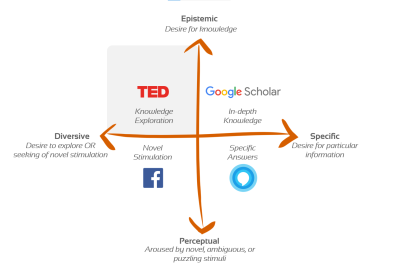
- The Four Dimensions of Human Curiosity: In the 1950s, psychologist Daniel Berlyne established a framework dividing curiosity into perceptual (driven by environmental stimulation) and epistemic (driven by a desire for knowledge), alongside diversive and specific exploration behaviors. Humans uniquely synthesize diversive-epistemic curiosity—using the intrinsic joy of open-ended exploration to discover entirely novel paradigms, a behavior no algorithm can autonomously initiate without a pre-existing prompt.
- Error Rates and Hallucinations: Empirical tests demonstrate that AI tools frequently output inaccurate biographical data, false citations, and flawed logic (such as fabricated academic histories or incorrect professional credentials). This highlights the absolute necessity of human oversight, editorial judgment, and critical thinking.
Official Responses and Industry Perspectives
Tech executives, venture capitalists, and design leaders have increasingly weighed in on the delicate balance between automation and human labor.
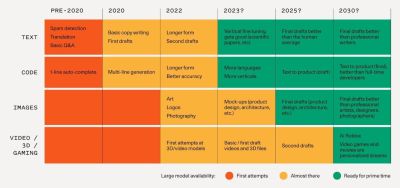
Venture capital firms, through market maps and technology timelines (such as widely circulated reports by Sequoia Capital on Generative AI), project rapid integration of AI across creative workflows. These reports emphasize that while generative tools will dramatically lower the barrier to execution for routine tasks, they simultaneously elevate the value of strategic direction, taste, and emotional intelligence.
Design theorists and educators emphasize that technical mastery—such as learning software shortcuts or coding syntax—is only half the equation. The true impact of a designer emerges from non-technical behaviors. As industry leaders note, treating AI as a replacement for human intellect assumes machines possess the capacity for moral reasoning, contextual adaptation, and emotional resonance. Because AI operates without consciousness, regulatory bodies and ethics boards stress that human beings must remain firmly at the center of accountability, particularly regarding algorithmic bias, data privacy, and user advocacy.
Implications: The Head, Heart, and Hands Framework
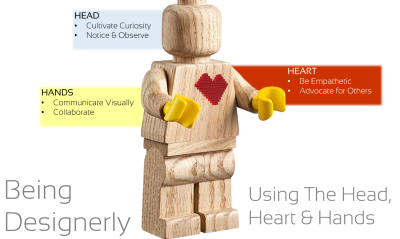
To thrive in an era defined by artificial intelligence, creators must consciously cultivate the specific, un-replicable competencies grouped under the Head, Heart, and Hands framework.
1. The Head: Thinking Like a Designer
- Cultivate Curiosity: Move beyond seeking immediate, programmed answers. Dedicate 10 to 20 minutes daily to diversive-epistemic exploration—reading cross-disciplinary summaries, studying unfamiliar domains, and asking open-ended questions free from the fear of not knowing.
- Notice and Observe: While noticing is passive, intentional observation is an active, immersive discipline. By stepping away from screens and observing human behavior in everyday environments (such as coffee shops or transit hubs), designers uncover hidden friction points and recurring behavioral patterns that algorithms miss entirely.
2. The Heart: Feeling Like a Designer
- Be Empathetic: True empathy, particularly compassionate empathy (as defined by Daniel Goleman and Roman Krznaric), bridges emotional understanding with concrete action. It requires stepping imaginatively into another person’s lived reality. Because AI possesses no personal history, emotional state, or self-awareness, it can simulate empathy through text patterns but cannot genuinely feel or care.
- Advocate for Others: In complex organizational ecosystems, human designers serve as user advocates—giving a voice to the end-user amid competing corporate interests. AI can follow rigid guardrails, but it cannot make moral judgments or weigh ethical trade-offs in ambiguous real-world scenarios.
3. The Hands: Acting Like a Designer
- Communicate Visually: Storytelling bridges abstract concepts and shared understanding. Whether through rough whiteboard sketches, simple flowcharts, or rapid prototypes, visual communication slashes the ambiguity inherent in purely text-based instructions. AI can generate images from prompts, but it cannot "read the room," adapt to real-time audience reactions, or formulate spontaneous visual metaphors tied to a specific cultural context.
- Collaborate: Human collaboration relies on navigating complex social dynamics, negotiation, empathy, and compromise. Multi-disciplinary teams bring diverse psychological and cultural backgrounds to problem-solving. While AI tools function brilliantly as computational assistants—automating transcriptions, accelerating video editing, or suggesting layout variations—they remain dependent participants within a human-led workflow.
Conclusion: The Chef and the Recipe
The most accurate parallel for the future of creative work is found in the culinary arts. A master chef can cook meals independently, but their true value lies in strategic menu planning, overseeing kitchen staff, improvising based on fresh ingredients, and applying the final, intuitive touches before a dish is served. While kitchen appliances and automated recipe software have transformed food preparation, they have never replaced the chef.

Similarly, Artificial Intelligence is revolutionizing how we work by optimizing efficiency, generating rapid ideation variations, and analyzing data at scale. However, it will augment rather than eradicate the human creative process. By harnessing our unique designerly skills—our curiosity, observation, empathy, advocacy, visual communication, and collaborative spirit—human creators can leverage AI not as a master, but as a powerful instrument, ensuring that the future of design remains proudly, distinctively human.