By Sharon Atefi
Published in partnership with Foundr and Omnisend
In the modern digital economy, the standard playbook for email marketing has long been written in the language of conversion rates, click-through percentages, and automated funnels. For decades, direct-to-consumer (DTC) brands and e-commerce enterprises have treated the inbox as a digital storefront window—a place to announce flash sales, recover abandoned carts, and push transactional updates.
While this infrastructure remains vital for driving short-term revenue, industry leaders are increasingly realizing that it is fundamentally incomplete.
As digital advertising costs rise and social media algorithms become more volatile and unpredictable, brands are waking up to a stark reality: viewing subscribers merely as a collection of targets for monetization creates a brittle business model. When a cheaper alternative pops up on a customer’s social media feed, transactional loyalty evaporates.
The brands building durable, anti-fragile businesses are taking a radically different approach. They are leveraging the one direct channel that bypasses algorithmic gatekeepers—email—to transform passive subscribers into active, emotionally invested communities.
Main Facts: The Shift from Transactions to Relationships
At its core, the evolution from an email list to an email community hinges on a fundamental mindset shift. A list is a database of email addresses gathered through pop-ups, lead magnets, and checkouts. A community, by contrast, is a collective of individuals who share a common identity, feel a sense of belonging, and view a brand as more than just a purveyor of goods.
According to modern marketing strategists, email remains the most potent tool for this transformation because of its intimacy. Unlike social media feeds cluttered with competing content, algorithmic throttling, and sponsored distractions, the email inbox is a quiet, personal space. When a consumer hands over their email address, they are granting direct, unmediated access to their digital home.
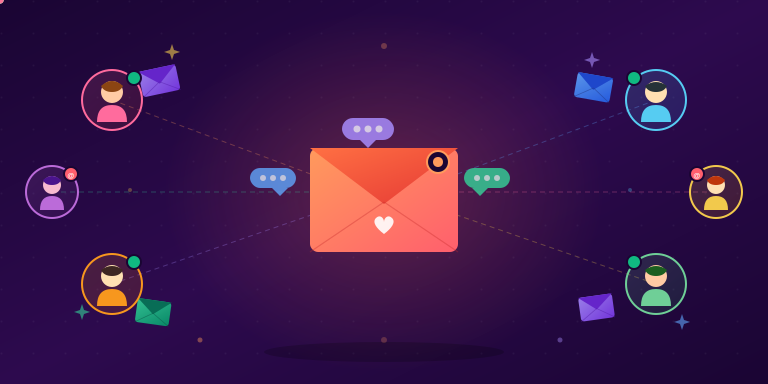
However, most businesses squander this privilege by reducing every communication to a sales pitch. True community-building brands treat the inbox as a relationship channel first and a revenue channel second. They recognize a counterintuitive truth: when you prioritize connection over immediate conversion, the revenue becomes more sustainable, predictable, and repeatable.
Chronology: The Evolution of E-Commerce Communication
To understand where email marketing stands today, it is helpful to look back at how the channel has evolved over the past twenty years:
- The Early 2000s (The Blast Era): Email marketing was largely characterized by mass blasts. Brands sent uniform, text-heavy newsletters or generic promotional flyers to entire databases, relying on volume rather than relevance.
- The 2010s (The Automated Funnel Era): As marketing technology matured, platforms introduced sophisticated behavior-triggered workflows. Welcome sequences, browse abandonment reminders, and post-purchase follow-ups became the gold standard. While highly effective for driving immediate sales, these flows remained strictly transactional.
- The Present Day (The Community-Centric Era): Facing oversaturated digital landscapes and consumer fatigue toward traditional advertising, modern brands are shifting back to interpersonal communication. Utilizing advanced segmentation and zero-party data, they are humanizing the inbox, leaning into founder-led narratives, and fostering two-way conversations that mimic human dialogue rather than corporate broadcasting.
Supporting Data and Strategic Pillars
Building a community-centric email program is not about abandoning sales metrics; it is about tracking the right qualitative and quantitative indicators to foster deep engagement. Industry benchmarks show that brands focusing on relationship-driven metrics—such as reply rates, forward rates, and organic referral growth—frequently experience lower churn and higher lifetime value (LTV) than those relying solely on promotional discounting.
Achieving this transformation requires mastering three foundational pillars within your email strategy:
1. Making Subscribers Feel Like Insiders
The fastest way to foster community is to pull back the curtain. Exclusive does not necessarily mean gated or expensive; it means making your audience feel privy to information that the general public never sees.
- Process over Polish: Instead of merely announcing a new product launch, brands are sharing the three failed prototypes that preceded it, the supply chain hurdles they overcame, or the manufacturing mistakes they learned from.
- Founder-Led Narratives: Plain-text, unformatted emails written directly by the founder often outperform highly designed, image-heavy marketing templates. A heartfelt note from someone who genuinely cares about the craft creates an immediate human connection.
2. Asking Questions and Actively Listening
Traditional email is a one-directional megaphone. Community requires a dialogue.
- Forward-thinking brands are embedding simple, human questions at the end of their newsletters—such as, "What’s the one feature you wish this product had?" or "What are you struggling with this week?"
- Crucially, these brands actually read and respond to the replies. While manual replies do not scale infinitely to millions of subscribers, cultivating even a handful of genuine conversations per month creates hyper-loyal advocates who will champion the brand organically.
3. Cultivating a Recognizable Brand Voice
Identity is the glue of any community. If an email could have been generated by any generic competitor in your market, it will fail to build affinity.
- A strong brand voice is anchored in core beliefs: What does the brand stand against? What industry norms does it refuse to compromise on?
- When a consistent point of view permeates every message—whether it is a promotional discount or a philosophical essay—subscribers begin to feel that they truly know the people behind the screen.
Official Perspectives and Expert Insights
Industry experts emphasize that community-building in e-commerce is no longer a luxury reserved for massive legacy brands; it is an accessible differentiator for businesses of all sizes.
Sharon Atefi, a prominent media and brand partnerships professional, notes that the key to unlocking sustainable growth lies in human-centric storytelling. "Entrepreneurs often get so caught up in optimizing their conversion funnels that they forget people buy from people," Atefi explains. "When you treat your subscribers as active participants in your brand’s journey rather than passive targets for your next product drop, everything changes. They stop being customers and start becoming your most vocal advocates."
Furthermore, technology platforms are evolving to support this dual focus on revenue and relationship. Modern automation tools allow brands to segment their audiences precisely, handling the heavy lifting of transactional workflows so that founders and marketing teams can dedicate their energy to creative, community-focused content.
Implications for E-Commerce Founders and Marketers
The strategic shift toward email communities carries profound implications for the future of digital commerce:
- Resilience Against Ad Costs: As customer acquisition costs (CAC) on major social media platforms continue to climb, brands with strong email communities possess an owned channel that insulates them from platform volatility.
- Enhanced Customer Lifetime Value (LTV): Consumers who feel emotionally connected to a brand are significantly less price-sensitive and far more forgiving of occasional supply chain delays or price adjustments.
- Organic Word-of-Mouth Growth: Communities generate their own momentum. When subscribers feel like insiders, they naturally forward emails to friends, share wins, and drive referral traffic that no amount of paid advertising can buy.
Ultimately, the most successful e-commerce programs of tomorrow will not be built by the founders with the most complex automation trees or the highest send frequencies. They will be built by those who master the art of making their audience feel seen, heard, and valued.
Special Offer for Foundr Readers
To help e-commerce founders balance transactional efficiency with genuine community building, platforms like Omnisend provide advanced segmentation, intuitive automation, and deep analytics tailored for modern growth.
Foundr readers can unlock 50% off their first three months by using the promo code FOUNDR50 when signing up at Omnisend’s exclusive partner portal. Equip your brand with the infrastructure needed to turn your email list into a community that genuinely looks forward to hearing from you.