By the Editorial Desk
Published: Industry Insights & Design Strategy
Main Facts
In the modern digital economy, a persistent misconception continues to undermine design teams worldwide: the conflation of User Interface (UI) design and User Experience (UX) design. While UI specialists focus squarely on crafting the visual touchpoints—such as buttons, typography, color schemes, and layout grids—UX designers must look at the holistic, end-to-end journey of the user.
This distinction becomes starkly apparent in Business-to-Business (B2B) environments. Unlike straightforward consumer (B2C) transactions, B2B sales cycles are notoriously complex, elongated, and multifaceted. They involve numerous stakeholders, cross-channel transitions, extensive deliberation phases, and direct human-to-human communications. According to design veteran and strategist Paul Boag, organizations that limit UX professionals to wireframing and interface layouts are drastically failing to utilize their expertise. True user experience optimization demands that designers map out, evaluate, and refine every single touchpoint—both digital and analog—that a customer encounters on their path to conversion.
Chronology: The Anatomy of an Extended B2B Sales Journey
To understand why surface-level interface design falls short in B2B markets, one must examine the chronological progression of a typical enterprise client engagement.

Phase 1: Discovery and Awareness
The journey rarely begins with a direct intent to purchase. Instead, it often starts months before a contract is signed, triggered by a latent business need. Prospective clients might stumble upon educational content via organic search engine results, industry newsletters, or speaking engagements at professional conferences. At this nascent stage, the user is not looking for a hard sell; they are searching for validation of their problem and potential educational frameworks to solve it.
Phase 2: Nurturing and Relationship Building
Once a potential lead is captured—often via an early-stage call-to-action (CTA) such as an email newsletter subscription—a long gestation period begins. In B2B scenarios, securing internal budget approval, aligning executive stakeholders, and researching market suppliers can take weeks or months. During this timeline, the relationship must be actively nurtured through consistent, valuable touchpoints that maintain brand visibility without inducing friction.
Phase 3: Evaluation and Conversion
As the prospect moves closer to making a purchasing decision, their interaction shifts toward specific landing pages, product demonstrations, and sales discovery calls. The messaging here must align precisely with the trust built during the previous phases. A misalignment—such as an aggressive, unannounced sales call immediately following an educational download—can break rapport and tank conversion rates.
Phase 4: Post-Conversion and Onboarding
The UX journey does not terminate at the moment of financial transaction. The transition from sales pipeline software and customer relationship management (CRM) platforms to actual project kick-off represents a critical phase where client retention is won or lost.
Supporting Data and Strategic Frameworks
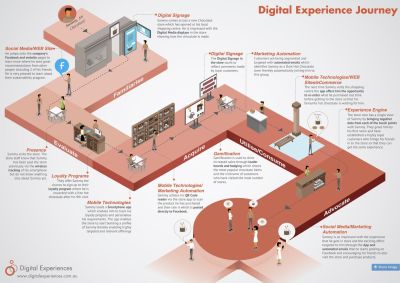
The complexity of B2B transactions highlights why strategic frameworks like customer journey mapping and pipeline integration are indispensable tools for modern UX professionals.
The Dangers of Premature Conversions
Data across web analytics and conversion rate optimization (CRO) studies consistently demonstrate the peril of misjudged calls to action. A classic example is the immediate deployment of discount overlays or aggressive email-capture pop-ups upon a user’s very first arrival on a website. When a visitor lands on a B2B platform, they have yet to evaluate the offerings or understand the value proposition. Forcing an arbitrary call to action too early creates immediate friction, resulting in elevated bounce rates and a degraded brand perception.
Plugging the "Experience Gaps"
UX designers spend significant energy identifying and sealing "gaps" in the customer journey. Gaps occur naturally when users transition between:
- Channels: Moving from a marketing website to a support chat interface.
- Devices: Shifting from mobile research to desktop form-filling (where poorly optimized session states can wipe user data, forcing them to restart).
- Business Silos: Being transferred between different internal departments without contextual continuity.
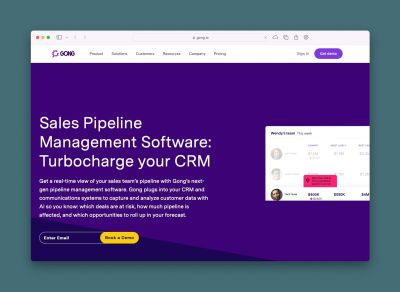
Advanced organizations leverage sophisticated sales pipeline software and CRM applications (such as Gong.io or enterprise pipeline tools) to bridge these chasms. For instance, top-tier banking applications have eliminated redundant security hurdles by carrying authentication data directly from mobile app logins to inbound customer service voice calls—effectively eradicating an irritating gap in the user experience.

Official Industry Perspectives and Expert Insights
Industry leaders argue that confining UX designers to interface design is not only strategically short-sighted, but it also fundamentally misunderstands the breadth of the discipline.
"Perhaps this is a controversial statement, but I hate it when UI and UX designers are referred to interchangeably. To my mind, at least, they are different roles, with the clue being in the names," explains Paul Boag. "User Interface designers design the interface, while User Experience designers are concerned with the entirety of the user’s experience."
Boag emphasizes that many enterprise clients commit a critical error when they commission UX audits focused strictly on landing page conversion rates while ignoring where the traffic originated and where it goes next. If traffic is driven by deceptive advertising campaigns or if inbound leads face heavy-handed, tone-deaf sales representatives, even the most meticulously optimized interface will fail to secure long-term business growth.
Furthermore, industry experts point out that the human factor is frequently overlooked in digital design discussions. In B2B environments, many critical interactions occur between two people rather than between a human and a digital screen—facilitated via Zoom meetings, webinars, email threads, or chat tools. When sales representatives rely on rigid, automated stock responses, or when enterprise communications read as cold and insensitive, the digital UX is severely compromised. UX designers must take an active interest in coaching sales teams, improving online communication workflows, and advocating for a human-centric corporate voice.
Implications for Businesses and Design Professionals
The realization that user experience extends far beyond the screen carries profound implications for organizational structures and professional job descriptions.
1. Re-evaluating the UX Role
If a company hires a professional designated as a "UX Designer" but restricts their daily activities entirely to wireframing mobile applications and website layouts, the enterprise is underutilizing top-tier strategic talent. True UX design involves questioning business silos, mapping out long-term sales funnels, auditing cross-channel transitions, and influencing human-to-human communication strategies.
2. Bridging the Gap Between Sales and Design
Organizations must integrate their design teams with marketing and sales departments. Because B2B customer journeys cross multiple operational boundaries, isolating the design team within an IT or product silo guarantees friction. Design strategies must inform how sales teams communicate, how CRM pipelines capture lead metadata, and how customer support handles inquiries.
3. Embracing Holistic Transformation
Ultimately, businesses must accept a fundamental truth: You cannot improve the user experience without considering the entirety of the journey. Transitioning from a narrow interface-first mindset to a holistic, end-to-end customer experience model requires patience, cross-departmental collaboration, and a willingness to break traditional corporate boundaries. For designers willing to step outside the box, the reward is a transition from a tactical decorator to a core strategic driver of business success.