By Global Business Insights
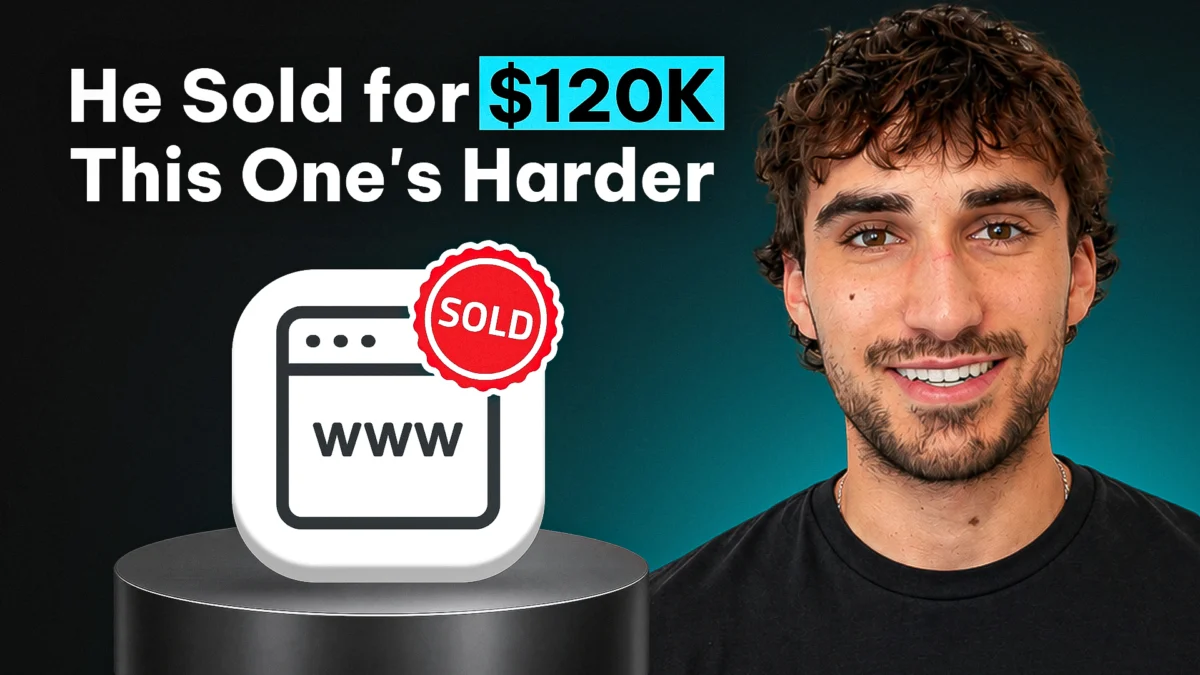
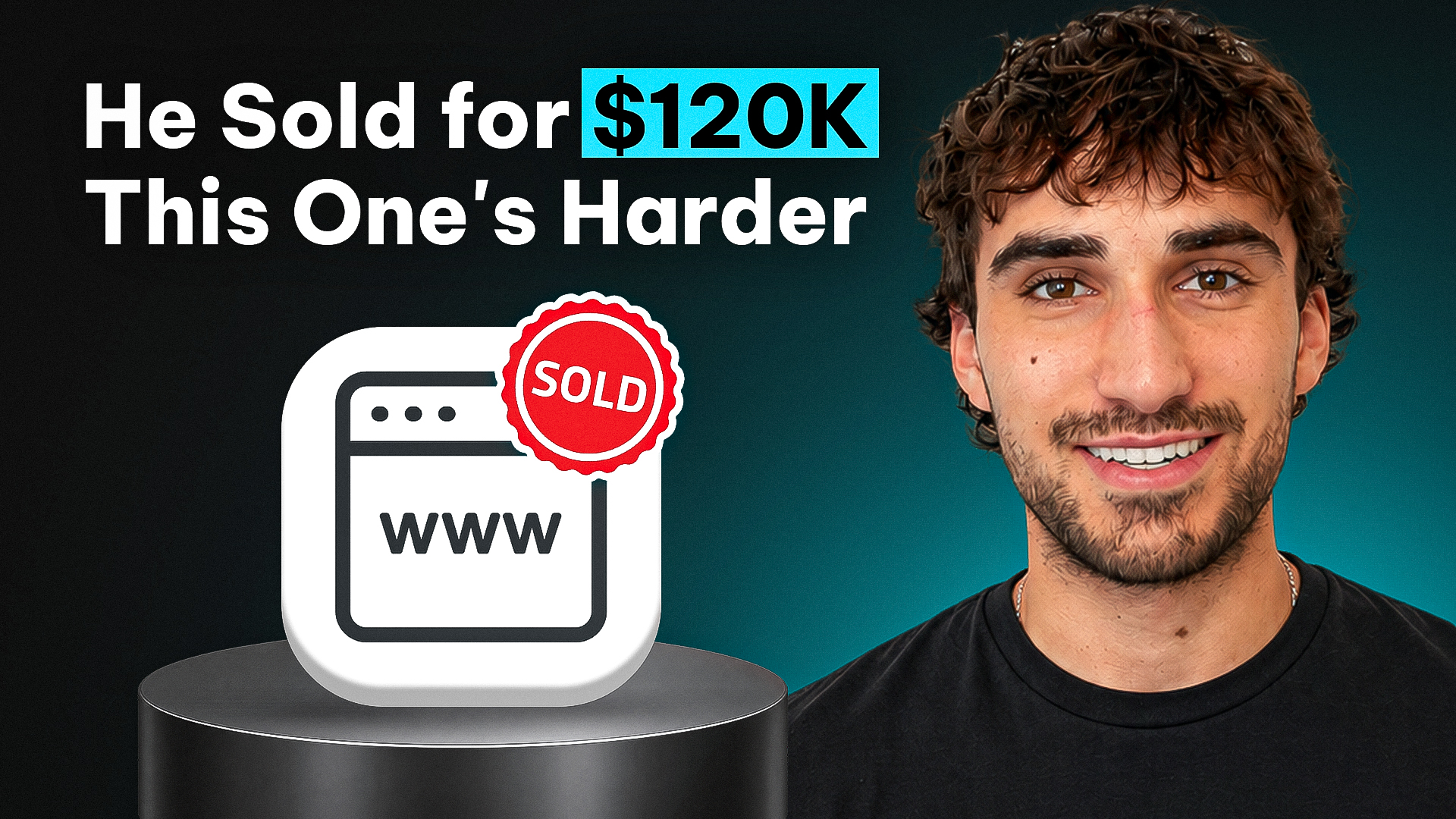
In the modern digital economy, the archetype of the young, hyper-ambitious tech founder has become increasingly common. Yet, few individuals navigate the high-stakes world of online business quite like Maddox Schmidlkofer. At just 21 years old, Schmidlkofer has already tasted the intoxicating rush of a major entrepreneurial victory—building an unblocked gaming website from scratch, scaling it to $1,000 a day in advertising revenue, and executing a $120,000 exit.
However, as he details in a recent appearance on the Niche Pursuits podcast, past success is no guarantee of a frictionless future. His current venture, a health-conscious consumer scanner app called Tallow, is operational, generating revenue, and slowly building a user base. Even so, it continues to lag behind his aggressive financial expectations.
Schmidlkofer’s candid reflections offer a rare, unvarnished look at the realities of modern solo entrepreneurship: the psychological weight of unmet targets, the ruthless dominance of app-store marketing, and the agonizing calculus founders face when deciding whether to pivot or persevere.
Main Facts: The Anatomy of a Young Tech Founder
Schmidlkofer’s trajectory bridges the gap between casual online experimentation and serious digital commerce. His career is defined by two distinct chapters: the explosive triumph of DuckMath and the uphill battle of Tallow.
- The First Big Win: At age 17, inspired by a TikTok video, Schmidlkofer coded and launched DuckMath, an unblocked gaming site tailored for students. By aggressively leveraging short-form video marketing, he scaled the platform to generate roughly $1,000 per day in advertising revenue.
- The Exit: In November 2025, at age 21, he sold DuckMath for $120,000. Despite a lower-than-average revenue multiple due to niche-specific operational challenges, the lump-sum capital validated his business acumen.
- The Current Venture: On May 1, 2026, Schmidlkofer launched Tallow, a consumer mobile application designed to scan products and score them based on ingredient health and safety, positioning it as an alternative to established market leaders like Yuka.
- The Financial Reality: At the time of the Niche Pursuits interview, Tallow was generating under $2,000 per month—falling significantly short of Schmidlkofer’s $4,000 monthly revenue target, prompting a critical review of his runway and future commitment.
Chronology: From TikTok Inspiration to Mobile App Realities
The Early Experiments and the First Breakthrough
Schmidlkofer’s journey into digital entrepreneurship began around age 16 or 17. While browsing TikTok, he came across a peer who had successfully built an unblocked gaming site. Armed with basic coding knowledge acquired through an Advanced Placement (AP) computer science class, Schmidlkofer reasoned that he could replicate the feat.
He initiated the project using Google Sites before transitioning to writing custom code. Crucially, he recognized early on that a product without visibility is worthless. He began documenting his journey through short-form video content, directly connecting his technical build to a receptive audience.
The turning point arrived when a single day’s ad revenue hit $240. For a teenager, that milestone transformed entrepreneurship from a theoretical concept into a tangible reality. Promptly quitting an ongoing internship, Schmidlkofer committed himself fully to online business.
Iterations and Educational Pivots
Following his initial success, Schmidlkofer did not immediately double down on the winning formula. Instead, he explored several tangential ideas. One such project was Quackprep, a platform designed to help college students study via quiz-style interfaces utilizing past exams.
While Quackprep generated nominal revenue, Schmidlkofer quickly realized that scaling the platform required solving arduous, institution-by-institution content acquisition challenges. After several other short-lived experiments that failed to gain traction, he decided to return to the foundation that had proven reliable: DuckMath.
Scaling and Selling DuckMath
By the end of the summer, Schmidlkofer shifted his complete focus to distribution for DuckMath. He spent weeks analyzing short-form gaming content trends and systematically increased his publishing volume.
The aggressive content strategy worked. By the end of the season, DuckMath was pulling in roughly $1,000 daily from ad networks. Yet, despite the lucrative cash flow, personal disinterest in gaming—coupled with the administrative friction of managing a niche site—prompted him to seek an exit. In November 2025, he finalized a $120,000 sale.
Launching Tallow and Hitting Resistance
Eager to build a more meaningful consumer product, Schmidlkofer launched Tallow on May 1, 2026. Designed to help users evaluate food and household items through ingredient scanning, Tallow entered a crowded market dominated by entrenched players like Yuka.
While the app quickly secured initial users and low-thousands monthly revenue, it stalled beneath Schmidlkofer’s projections. A self-imposed August 22 goal of $4,000 MRR (Monthly Recurring Revenue) fell short, landing closer to $1,000 per month. This discrepancy forced a strategic reevaluation of his time and resources.
Supporting Data and Economic Metrics
Understanding Schmidlkofer’s journey requires examining the raw economics governing modern web properties and consumer mobile applications.
+-------------------------------------------------------------------------+
|                       TALLOW APP FINANCIAL METRICS                      |
+-----------------------------------+-------------------------------------+
| Metric                            | Value / Status                      |
+-----------------------------------+-------------------------------------+
| Current Monthly Revenue           | < $2,000 (Target: $4,000 by Oct 31) |
| Infrastructure Costs              | Effectively $0 (Leveraged credits)  |
| App Store Commission Rate         | 15% (Qualifying small developer)    |
| Time Allocation (Marketing)       | 80% of daily operations             |
| Primary Acquisition Channel       | Short-form video (TikTok/Snapchat)  |
+-----------------------------------+-------------------------------------+
The Shift in Operational Overhead
Unlike DuckMath, which relied almost entirely on passive web traffic and ad networks, Tallow operates in the highly competitive app ecosystem. Operating costs remain remarkably low—helmed by hosting credits secured through entrepreneurial networks like Y Combinator. Furthermore, both Apple and Google grant qualifying developers earning under $1 million annually a reduced platform fee of 15%, a bracket Tallow comfortably fits into.
However, low server bills do not equate to low effort. Schmidlkofer estimates that roughly 80% of his time is now dedicated to marketing, leaving only 20% for actual product development.
The Cost of Digital Friction
In the app economy, minor technical hurdles translate directly to lost capital. During the podcast, Schmidlkofer noted an instance where App Store search anomalies directed potential users to unrelated results, greeting them with a "Did you mean Talo?" prompt. He estimates this single algorithmic glitch cost him at least $500 in lost conversions—a devastating leak for a bootstrapped project trying to bridge a gap of a few thousand dollars.
Strategic Implications: Marketing, Influencers, and the October 31 Deadline
Schmidlkofer’s current predicament highlights several broader truths about consumer application development in the mid-2020s.
1. The Dominance of Marketing Over Product
Many first-time founders fall into the trap of believing that a superior product will naturally attract users. Schmidlkofer’s experience with both DuckMath and Tallow proves the inverse: distribution is paramount. By anchoring his marketing strategy in narrative-driven content—such as leveraging consumer research reports on adulterated avocado oils to spark engagement—he attempts to frame Tallow as an immediate, practical solution to broader consumer anxieties.
2. The Power and Peril of Influencer Partnerships
Reflecting on the competitive landscape, Schmidlkofer acknowledges that the most successful consumer apps often leverage pre-existing influencer audiences. Founders who partner with creators possessing millions of trusting followers bypass the grueling cold-start phase of brand building.
Yet, this path is fraught with structural tension. Giving away substantial equity to secure an influencer can choke future growth if the partner lacks holistic business capabilities. Conversely, waiting until an app is large enough to attract top-tier influencers creates a chicken-and-egg dilemma for solo founders operating on limited runway.
3. The Psychology of the Pivot
Perhaps the most compelling takeaway from Schmidlkofer’s story is his framing of October 31 as a definitive decision point. Having extended his $4,000 MRR target to Halloween, he faces a stark binary choice: if the app fails to hit the milestone, he plans to sunset or walk away from the project.
This scenario exposes a rare vulnerability in startup culture. Tallow is not dead; it generates revenue, serves real customers, and features continuous updates. Yet, for an ambitious entrepreneur with limited time and high opportunity costs, growth alone is not always enough to justify endurance.
Conclusion
Maddox Schmidlkofer’s journey underscores a vital lesson for the next generation of digital entrepreneurs: a successful early exit does not insulate a founder from the grinding realities of subsequent ventures. At age 21, he has demonstrated an uncanny ability to identify digital trends, engineer functional platforms, and scale distribution channels.
Whether Tallow ultimately crosses its revenue thresholds or becomes a stepping stone to a third venture, Schmidlkofer’s willingness to publicly evaluate his metrics, question his timelines, and accept the brutal math of modern app economics marks him as a founder operating with exceptional maturity. In the fast-paced ecosystem of digital business, knowing when to double down—and when to walk away—may ultimately be the most valuable skill an entrepreneur can acquire.