In the modern digital economy, LinkedIn has evolved from a simple repository for digital resumes into the premier B2B marketplace. However, many business owners and professionals find themselves posting into the void, struggling to distinguish between vanity metrics—like empty likes—and the genuine lead generation that fuels revenue.
According to LinkedIn strategist Will McTighe, the secret to cracking the LinkedIn code isn’t about chasing viral trends; it’s about implementing a disciplined, funnel-based content strategy. By treating LinkedIn as a professional revenue driver rather than a hobby, McTighe has scaled his own operations to over $2 million in annual revenue. The methodology is built on a specific "4-2-1" posting ratio designed to guide strangers through a psychological journey from awareness to trust, and finally, to conversion.
The Strategic Framework: Why a Funnel Matters
The primary barrier to LinkedIn success is often not a lack of creativity, but a fear of the unknown. Many users hesitate to post, fearing judgment or irrelevance. McTighe argues that this fear is misplaced: LinkedIn’s algorithm is essentially a "mercy-based" system. If your content is lackluster, the platform simply limits its reach, preventing widespread embarrassment.
The "job" of a LinkedIn creator is defined by three distinct stages:
- Awareness: Attracting new eyes to your profile.
- Trust: Proving your competence and authority.
- Lead Generation: De-risking the buying decision for your prospects.
By mapping content to these specific objectives, you stop guessing what to post and start building an asset that works for you around the clock.
Chronology of Strategy: Implementing the 4-2-1 Ratio
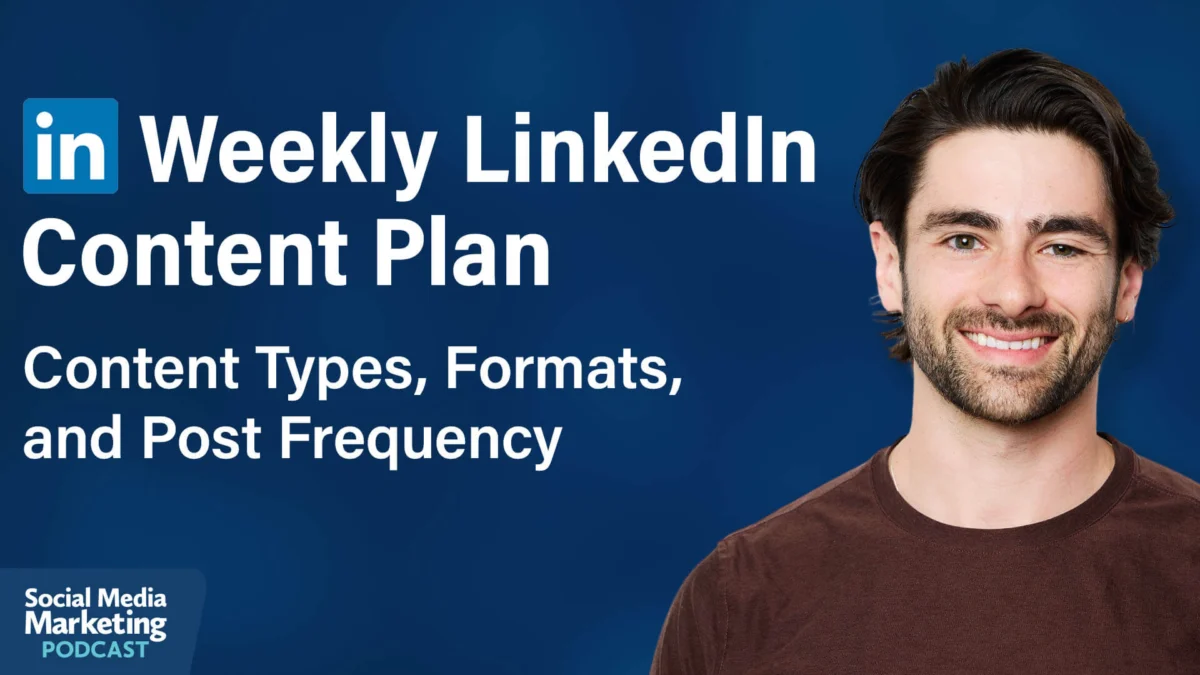
Consistency is the bedrock of this framework. McTighe suggests a weekly cadence of seven posts, distributed to address different stages of the buyer’s journey.

Phase 1: The Awareness Engine (4 Posts Per Week)
Awareness content is designed to expand your reach. There are two primary sub-types: educational and relatable.
- Educational Content: This is the most effective driver of follower growth. By reacting to news or shifts in your specific industry, you provide actionable value. For instance, if you target AI startups, don’t just share industry news; offer a nuanced perspective on how those developments affect their specific business models.
- Relatable Content: While content about universal struggles like "burnout" garners high engagement, it rarely converts followers into prospects unless it is niche-specific. Discussing the unique stresses of a specific role—such as a CISO navigating data breaches—builds a much stronger, qualified audience.
Phase 2: Building Authority and Trust (2 Posts Per Week)
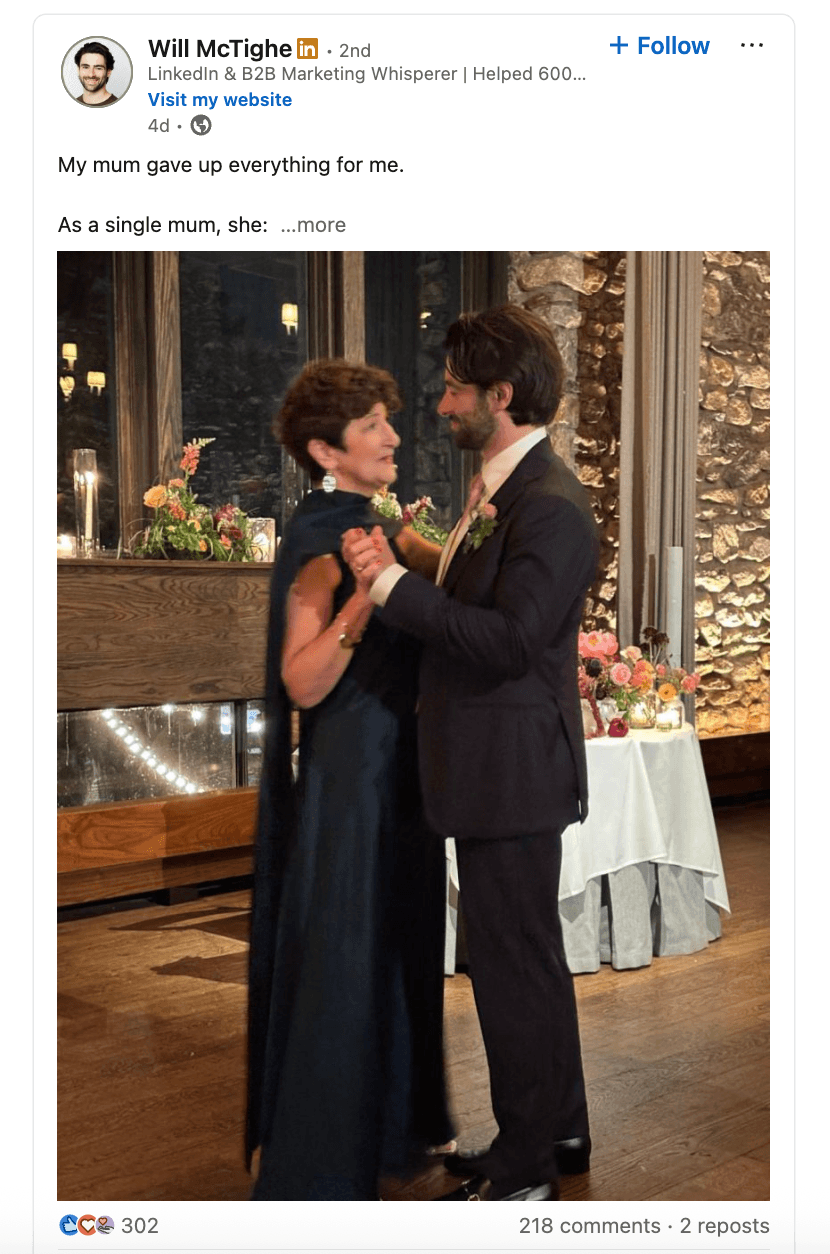
Once you have an audience, you must prove you are the solution to their problems. Trust-building posts should be story-driven, but they must avoid the trap of being "confessional." A story without a takeaway is just an anecdote.
- The Structure: Use the Story → Lesson → Application framework. The story provides the hook (adversity), the lesson provides the insight, and the application provides the utility for the reader.
- The Visual Hook: Use images of you on stage or working with a team. These visuals signal to the reader that you are an established authority, creating a "borrowed credibility" effect.
Phase 3: The Conversion (1 Post Per Week)
Lead generation is about removing the friction that prevents a potential client from buying. Generic testimonials are insufficient here. Buyers want to see a "Transformation Case Study."
- The Arc: State a massive result achieved in a specific, short timeframe. Explain the starting pain, the intervention, and the final result.
- The Hero: Crucially, the client must remain the hero of the story. Your role is that of the guide who provided the tools. By positioning the client as the person who did the hard work, you make the result feel attainable for the reader.
Supporting Data: What the Metrics Reveal
McTighe’s analysis of over 100,000 LinkedIn posts has provided a clear roadmap for format optimization.
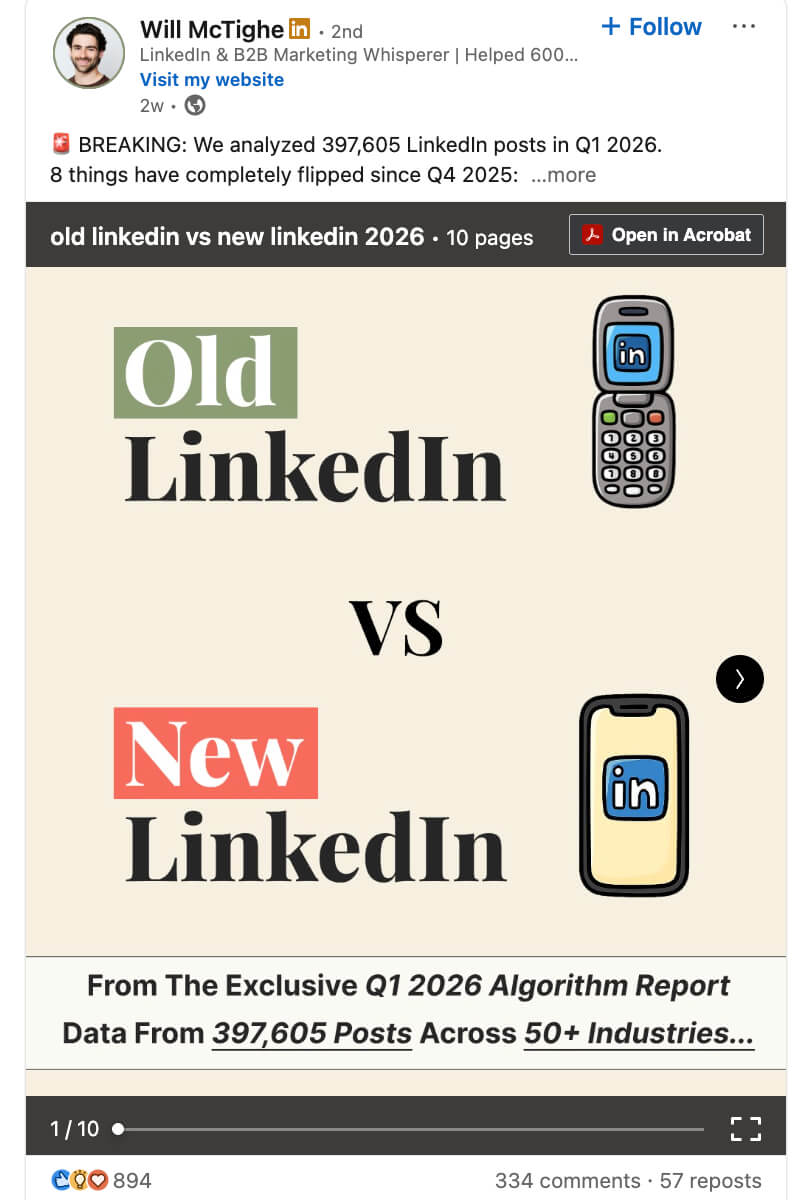
- The Dominance of Visuals: Infographics and carousels consistently outperform other formats, serving as the most effective "viral" tools. Pure text posts, while useful for deep-dives, struggle to gain traction unless paired with an image.
- The "First Two Lines" Rule: When using images with text, the visual must directly relate to the first two lines of your post. If the reader has to connect the image to a detail buried in the 17th line, they will likely scroll past.
- The Myth of the Link Penalty: While conventional wisdom suggests that including external links suppresses reach, McTighe’s data suggests otherwise. Posts with links often perform well because they offer high-value resources. If the content is genuinely useful, the "saves" and "shares" generated will more than compensate for any algorithmic friction.
Official Perspective: The Role of AI in Content Scaling
For many professionals, the biggest hurdle is the "blank page" problem. McTighe recommends using AI tools like Claude or ChatGPT to mine existing client call transcripts.
By feeding your call notes into an AI, you can prompt the system to identify 20–30 impactful stories or specific pain points that you addressed during live conversations. Often, we share our best insights during client consultations but forget them the moment the call ends. AI allows you to extract this "hidden" content, turning your existing sales conversations into a bank of high-quality LinkedIn posts.
Implications for Long-Term Growth
Adopting this funnel approach has significant implications for your business model. Firstly, it forces a shift from "content creation" to "client acquisition." By moving away from vanity metrics and toward a strategy that addresses specific pain points at each stage of the funnel, you insulate your business from algorithm changes.
Secondly, the strategy necessitates a shift in professional identity. As you begin to consistently produce content that educates and builds trust, your role in the market shifts from "vendor" to "trusted advisor." This is a profound shift that allows for higher price points, shorter sales cycles, and a more stable client base.
Strategic Summary for Execution:
- The Audit: Before writing, map your target audience’s pains and goals.
- The Spreadsheet: Track your best-performing posts. When you see an outlier (a post that does significantly better than your average), analyze the theme and adapt it to your specific niche.
- The Sustainability Rule: Don’t chase trends. The 4-2-1 ratio is designed for long-term consistency. If you have a major launch or event, it is acceptable to deviate from the ratio temporarily, but always return to the baseline to keep your audience engaged and nurtured.
In conclusion, the path to LinkedIn success is not through luck, but through the rigorous application of a funnel-based strategy. By balancing the need for awareness, the necessity of trust, and the finality of conversion, any professional can turn their LinkedIn presence into a consistent, revenue-generating engine. As McTighe’s own growth demonstrates, the investment of time into this structured approach is one of the highest-leverage activities a modern entrepreneur can undertake.