As generative artificial intelligence fundamentally alters how consumers discover products, the playbook for ecommerce marketing is being rewritten. Traditional search engine optimization (SEO) is no longer enough. Today, online retailers must optimize not just for human eyes and traditional search algorithms, but for Large Language Models (LLMs) like ChatGPT, Claude, and Gemini.
To understand how modern brands can thrive amid this technological upheaval, Eric Bandholz recently sat down with Kenny Trusnik, founder of Forest City Digital, a Cleveland, Ohio-based marketing agency. Trusnik shared critical insights on how AI-driven referrals are already accounting for up to 10% of online revenue for some brands, offering a roadmap for startups trying to carve out market share in an increasingly crowded digital landscape.
Main Facts: The New Reality of Ecommerce Discovery
The retail landscape is undergoing a massive paradigm shift. AI-powered search and recommendation engines are rapidly replacing traditional keyword-based queries. Consumers increasingly rely on conversational AI to research products, compare specifications, and make purchasing decisions.
According to Trusnik, this transition requires a fundamental shift in how online merchants structure their digital assets:
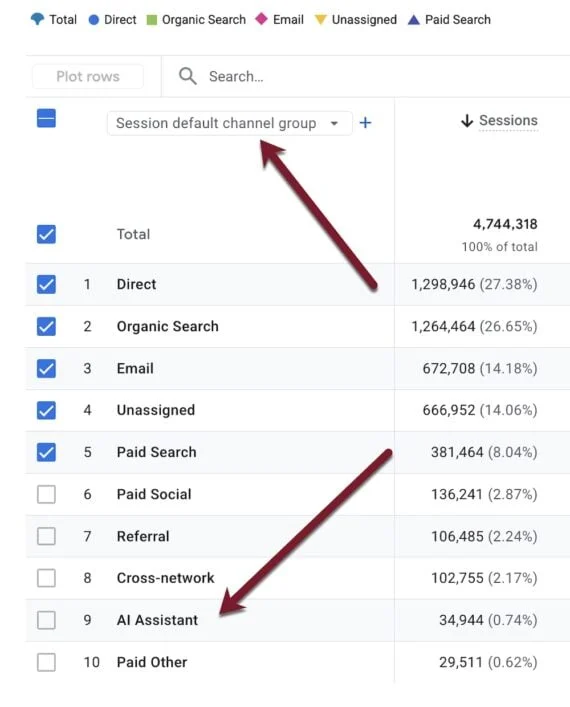
- AI Revenue Impact: Leading-edge brands are already seeing up to 10% of their total online revenue driven directly by LLM citations and referrals.
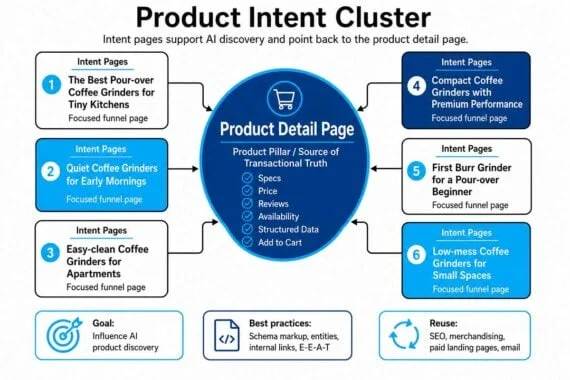
- The Importance of Clean Data: To capture AI traffic, product data must be deep, clean, and organized within a highly structured environment.
- Infrastructure Accessibility: Platforms like Shopify are democratizing AI integration through tools like "Agentic Storefronts," which expose a merchant’s entire product catalog directly to generative AI platforms.
- The Baseline Check: A crucial first step for any online store is ensuring that its
robots.txtfile does not accidentally block crawlers from top AI platforms.
Chronology: From Corporate Marketing to AI-Forward Agency
Trusnik’s journey to the forefront of AI-driven ecommerce marketing is rooted in traditional corporate discipline combined with startup agility.
Early Foundations and Corporate Experience
Trusnik began his career in the traditional corporate sector, cutting his teeth at major global brands including Toyota and Sherwin-Williams. Working within these structured environments instilled in him a deep appreciation for clear, measurable business goals—a philosophy that would later define his agency work.
Transition to Creator Economy and Startup Life
Seeking a more dynamic environment, Trusnik transitioned to an early-stage startup focused on helping content creators monetize their digital viewership through ecommerce. This role gave him a front-row seat to the rapid evolution of online retail, influencer marketing, and direct-to-consumer (DTC) business models.
Founding Forest City Digital (2020)
In 2020, Trusnik launched Forest City Digital in Cleveland, Ohio. Recognizing a common friction point in the agency world—where creative campaigns often became disconnected from bottom-line business objectives—he built his firm around a singular premise: relentlessly tying marketing initiatives directly to what clients are trying to accomplish financially.
The Pivot to Agentic Commerce (2024–2026)
Over the past two years, Forest City Digital shifted significant resources toward search, social, and retention channels optimized for the modern web. With the rollout of Shopify’s Agentic Storefronts and the explosion of generative AI search, Trusnik’s agency has positioned itself at the cutting edge of LLM optimization, helping spec-intensive, automotive, and consumer brands capture high-intent AI traffic.
Supporting Data: Channels, Metrics, and Strategic Focus
Forest City Digital operates across three core digital pillars: search, social, and retention, while also providing fractional ecommerce and marketing-strategy consulting.
1. Search and AI Visibility
While traditional organic search on Google and Bing remains vital, the fastest-growing frontier is AI visibility. Trusnik highlights that backend metadata optimization is critical for platforms utilizing Shopify’s Agentic Storefronts.
- Granular Product Fields: LLM crawlers index deep product attributes, including categories, colors, sizes, technical features, and materials.
- Structured Data Markup: Schema.org markup is essential for helping search algorithms and AI crawlers understand a website’s overall purpose, context, and inventory.
- The "Listicle" Authority Factor: Securing placements in prominent industry listicles and "best-of" roundups serves as a powerful validation signal for LLMs when formulating recommendations.
2. Social Media and Influencer Partnerships
Social strategy at Forest City Digital bridges organic influencer programs with targeted paid acquisition channels, ensuring continuous top-of-funnel brand awareness.
3. Retention and Funnel Optimization
Using advanced email marketing platforms like Klaviyo and Brevo, the agency focuses heavily on plugging leaky sales funnels to maximize customer lifetime value (LTV), treating open rates not as vanity metrics, but as indicators of underlying engagement health.
Official Insights: Kenny Trusnik on Launching an Ecommerce Brand in 2026
When asked how he would approach launching an ecommerce startup in today’s volatile AI environment, Trusnik outlined a clear, resource-conscious framework.
"Focus on getting the product data as deep and clean as possible in a structured environment," Trusnik advises. On Shopify, he notes, opting into Agentic Storefronts is non-negotiable.
The Bootstrap Playbook
For founders operating with limited resources, Trusnik recommends a hyper-focused two-pronged strategy:
- Pristine Product Data & Structure: Ensure every product attribute is meticulously documented and readable by both human shoppers and AI crawlers.
- Authority Link Building: Earn mentions in trusted third-party listicles, which act as primary trust signals for LLMs.
Scaling with Capital
For brands with well-funded marketing budgets, Trusnik suggests deploying capital into Meta ads to aggressively build top-of-funnel awareness. Furthermore, he emphasizes the unmatched value of original content—articles, videos, and social assets featuring proprietary data or insights that cannot be automatically scraped or replicated by AI.
Navigating Innovation: Blue Oceans vs. Red Oceans
Discussing product novelty, Trusnik and Bandholz explored the balance between radical innovation and iterative improvement. Citing successful brands like Grüns gummies—which took the crowded gummy vitamin market and elevated it by adding dozens of ingredients to position the product as a superfood—Trusnik noted that entrepreneurs do not always need to reinvent the wheel.
Another prime example is the booming hemp beverage industry, which provides a familiar product format (hemp) but introduces a novel value proposition: serving as a functional, alcohol-free alternative for social settings.
"Don’t get too novel," Trusnik cautions. "A product has to be novel and solve an unaddressed pain point, but it helps when consumers already understand the category."
Implications: What This Means for the Future of Retail
The rise of agentic commerce and LLM-driven discovery carries profound implications for the future of online retail:
- The Death of Generic SEO: Keywords alone will no longer guarantee visibility. Brands must invest in deep technical metadata, structured schemas, and clean architecture that AI agents can easily parse and synthesize.
- The Rise of Zero-Click Searches: As LLMs provide direct, synthesized answers to consumer queries (e.g., "What is the best durable water bottle for backpacking with a lifetime warranty?"), traditional click-through traffic may evolve. Brands must ensure they are the cited recommendation within the AI’s response.
- Data Hygiene as a Competitive Advantage: Companies that treat their product databases as messy afterthoughts will find themselves invisible to AI shopping assistants. Clean, comprehensive data is no longer just an operational housekeeping task—it is a core revenue driver.
As the digital marketplace continues to mature under the influence of artificial intelligence, agencies like Forest City Digital are proving that success belongs to those who adapt their technical foundations to meet the algorithms of tomorrow.
To learn more about Forest City Digital or to connect with Kenny Trusnik, visit ForestCityDigital.com or reach out to him directly via LinkedIn.