Main Facts: The Evolution of WordPress, Page Builders, and AI
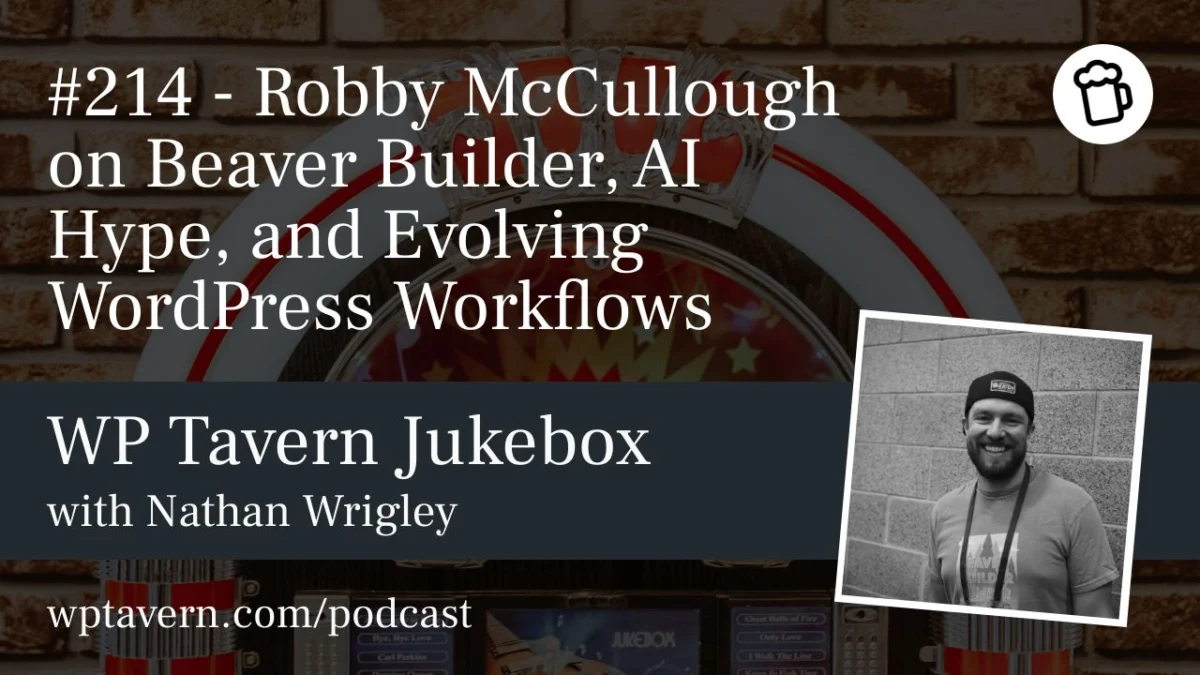
As the WordPress ecosystem approaches nearly two decades of mainstream dominance, the tools used to construct the web are undergoing a seismic transformation. In a recent episode of the Jukebox Podcast from WP Tavern, host Nathan Wrigley sat down with Robby McCullough, co-founder of Beaver Builder—a cornerstone page builder plugin that has served the WordPress community for nearly 12 years.
The conversation captured a critical crossroads in the technology sector. On one side stands the traditional craft of web development—requiring hands-on familiarity with HTML, CSS, PHP, and visual page layout interfaces. On the other side is the explosive rise of Artificial Intelligence (AI), large language models (LLMs), and agentic coding tools capable of spinning up fully functional websites from simple text prompts in mere seconds.
While many companies rushed to slap basic GPT wrappers onto their software during the initial AI gold rush, Beaver Builder took a deliberate step back. McCullough discussed why his team avoided early AI hype, how they are now thoughtfully integrating agentic workflows into their platform, and what the future holds for visual site editors in a world where AI can build websites instantaneously.
Chronology: From Hand-Coding to Page Builders and the AI Inflexion Point
The Early Days: Breaking Down Barriers
McCullough’s journey into WordPress began over a decade ago when he and his business partners operated a web design agency. At the time, building websites required deep technical fluency. Customizing a WordPress theme meant navigating the template hierarchy, deploying PHP variables, and manually writing CSS.
To solve client handoff issues—allowing non-technical users to update simple text or images without breaking the site—McCullough and his team built Beaver Builder. Launched nearly 12 years ago, it arrived during a massive wave of visual page builders that democratized web design. Along with competing tools, Beaver Builder helped propel WordPress market share past 40% globally by removing friction for millions of everyday users.
The Gutenberg Challenge and Industry Skepticism
Throughout its lifespan, Beaver Builder faced repeated existential forecasts. Early purists argued against page builders, advocating for "the WordPress way" of hand-coded themes. Later, when WordPress Core introduced the Gutenberg block editor, skeptics predicted that traditional third-party page builders would vanish within a year. Instead, page builders adapted, carving out a robust, enduring market share by offering advanced layout controls and reliable client-management interfaces.
The AI Inflexion Point: Waiting Out the Hype
When the generative AI boom accelerated roughly a year ago, corporate boardrooms and software companies flooded the market with superficial AI integrations. McCullough admitted that Beaver Builder deliberately avoided this early bandwagon.
Rather than deploying gimmicky headline-writing bots just to appease shareholders, McCullough’s team waited for the technology to mature. Today, McCullough views AI as having reached a true inflexion point. Modern LLMs and agentic coding tools have evolved from mere buzzwords into sophisticated assistants capable of complex code generation, fundamentally altering web development workflows.
Supporting Data: The Changing Landscape of Web Development
- Market Longevity: Beaver Builder is entering its 13th year of operation, placing it firmly among the "OG" plugins of the WordPress ecosystem.
- WordPress Scale: WordPress powers over 40% of all websites on the internet, anchored by a vast infrastructure of plugins, themes, and community-driven knowledge bases.
- Adoption Friction: According to McCullough, the friction required to build new software features has plummeted dramatically due to AI tooling, allowing development teams to prototype and deploy capabilities that were previously economically unviable.
- Community Dynamics: In-person community engagement, such as WordCamps and local meetups, has experienced a notable decline—particularly following the COVID-19 pandemic—sparking discussions about the balance between digital efficiency and human connection.
Official Perspectives: Balancing Productivity with Craftsmanship
The Appeal of "Vibe Coding" vs. The Value of Plumbing
McCullough noted that he has personally used modern AI tools to "vibe code" roughly a dozen websites in just a month and a half by simply speaking commands to his computer. However, this shift raises questions about the loss of foundational technical literacy.
As prominent WordPress educator Chris Lema recently discovered when migrating a site to an AI-generated static setup, removing WordPress exposes how much invisible "plumbing" users take for granted—features like revision drafts, featured images, Open Graph metadata, and deep extensibility. While AI can instantly construct a static brochure site, WordPress excels at serious, business-critical customizations.
The Role of Page Builders in Maintenance
A core theme of the discussion centered on the lifecycle of a website. While the industry is currently obsessed with initial creation speed—asking what AI can generate in seconds—long-term maintenance receives far less attention. McCullough and Wrigley agreed that websites require ongoing updates, seasonal modifications, and client-side tweaks over three to five years.
Even if AI handles the initial zero-to-one creation phase, page builders like Beaver Builder will likely retain their utility as robust post-creation editing and maintenance environments.
Implications: Business Anxiety, Human Connection, and the Future
Navigating Business Anxiety in a Rapidly Shifting Market
Running a product business under normal circumstances involves balancing payroll, marketing, roadmap planning, and customer support. Throwing rapid AI innovation into the mix introduces profound uncertainty. Founders cannot predict what the market will look like in a month, let alone a year.
McCullough credits a mindset of "hopeless optimism" for Beaver Builder’s survival through multiple tech eras. Rather than building a closed black box that locks users into token-based subscriptions, Beaver Builder’s experimental roadmap aims to offer a "bring your own agent" model. This approach empowers developers to inspect, tinker with, and learn from the underlying code while maintaining an intuitive visual interface for clients.
The Loss of Human Connection and the Return of the Artisans
As text-to-speech dictation and agentic workflows become standard, developers risk spending their workdays isolated, collaborating with hyper-intelligent AI simulations rather than real people. McCullough and Wrigley reflected on the psychological toll of hyper-productivity and the potential erosion of authentic human interaction.
However, historical shifts often trigger a pendulum swing. Just as interest in tactile hobbies and local clubs (such as mountaineering and canoeing groups) has resurged, human beings continue to crave real-world connection. McCullough remains hopeful that the global WordPress community will revitalize its in-person events, ensuring that software innovation does not entirely eclipse human camaraderie.
Conclusion: The Road Ahead
As technology marches forward toward voice-activated web design and increasingly autonomous agents, the definition of web development will continue to morph. Whether future developers look back at HTML and CSS as quaint historical artifacts or maintain them as artisan crafts, tools like Beaver Builder prove that adaptability is the ultimate survival metric. As McCullough and Wrigley concluded, the human element—sharing stories, collaborating in person, and building lasting relationships—remains irreplaceable, no matter how advanced our digital tools become.