Main Facts: Taming the Digital Deluge
We live in a world where data multiplies exponentially, presenting a paradox of modern existence: while humanity has achieved unprecedented, instantaneous access to a global library of knowledge through the internet, we are simultaneously drowning in an overwhelming tide of information. Finding what is relevant at the exact moment of need has become one of the defining UX challenges of the 21st century.
Enter Information Architecture (IA). As defined by the Information Architecture Institute, IA is "the practice of deciding how to arrange the parts of something to be understandable." From a user experience (UX) perspective, this means deeply understanding user intent—how people think, what problems they are trying to solve—and presenting information in a logical, contextual hierarchy.

Whether applied to complex corporate websites, enterprise software, or mobile applications, a robust information architecture structures raw data into an intuitive navigation framework. In an era marked by information overload, IA acts as a vital compass, rescuing users from digital fatigue and enabling businesses to connect seamlessly with their audiences.

Chronology: The Evolution of Search, Navigation, and Digital Behavior
To understand how we arrived at our current information ecosystem, it is helpful to look back at how digital discovery has evolved over the decades:
- 1997: Early internet studies, notably by usability expert Jakob Nielsen, reveal that over 50% of web users prefer utilizing search functions over traditional site navigation when trying to locate specific content.
- 2010–2012: Subsequent studies by e-commerce analysts, Kissmetrics, and digital strategist Gerry McGovern complicate the narrative. Research indicates that between 30% and 40% of visitors lean heavily on search, while the vast majority still rely on structural browsing, establishing that users naturally oscillate between both behaviors depending on their immediate goals.
- 2013: The digital rights movement is deeply shaken by the tragic death of internet activist and Reddit co-creator Aaron Swartz, who championed the "liberation" of paywalled academic and corporate data. His legacy forces a global conversation regarding information access, corporate gatekeeping, and internet censorship.
- 2017–2018: A wave of massive data breaches—including the Equifax compromise affecting 147 million Americans and the Facebook security scandal—underscores the darker side of data accumulation. In response, global legislative frameworks accelerate, bringing data privacy and protection laws to over 132 countries.
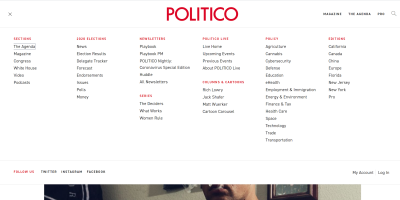
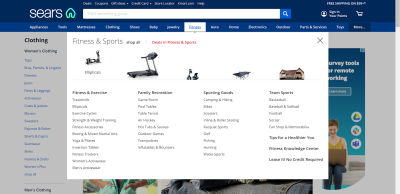
- Present Day: Organizations increasingly adopt hybrid architectures, blending sophisticated mega-menus with intent-driven site search, metatags, and predictive analytics to manage massive content volumes efficiently.
Supporting Data: Search vs. Navigation and the ROI of Good IA
The friction between site navigation and search functionality remains a central battleground for UX designers. While users utilize both methods in varying proportions, quantitative research highlights distinct behavioral patterns:
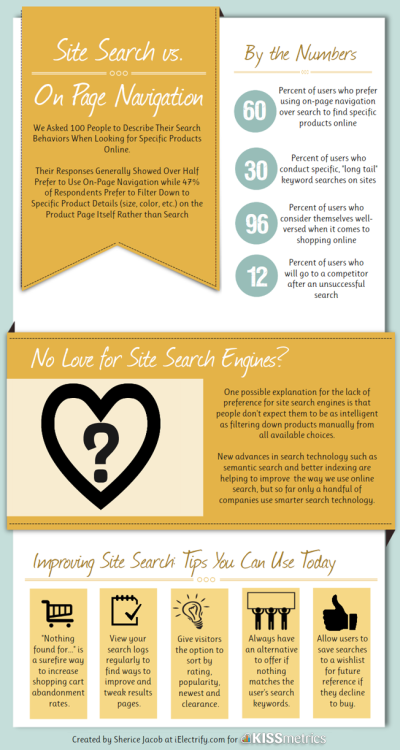
- Browsing Dominance: According to user-experience research firm MeasuringU, roughly 86% of users begin their site journey by browsing through navigation options rather than immediately defaulting to a search bar.
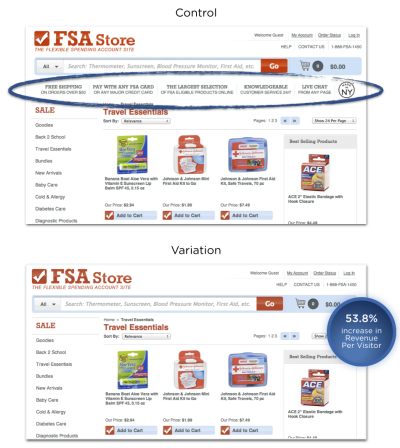
- The Power of Simplicity: Case studies in e-commerce optimization demonstrate that refining site architecture can yield massive financial returns. For instance, optimizing a major retail store’s category layout—specifically by removing superfluous vertical navigation bars and moving product listings higher up the page—drove an astonishing 53.8% increase in customer revenue.
- The Synonym Challenge: Alphabetical or rigid categorical navigation often fails when users encounter semantic hurdles. For example, a customer searching for "antibacterial hand wash" might look under "Body Washing Products" or "Skin Cleansers," or mentally categorize the item as "hygienic soap." Because no single navigation structure can capture every human synonym, integrating robust site search backed by hidden metatags is essential for capturing misaligned search intent.
Effective IA relies on striking a delicate balance. As digital designers often remind themselves during the wireframing phase: "Does the language resonate with the user, does the hierarchy make sense to the user flow, and can they easily find their way back to where they were?"

Official Responses and Industry Best Practices: How to Get IA Right
Designing an intuitive information architecture requires rigorous testing methodologies and human-centered design processes. Industry leaders utilize several proven frameworks to validate their structural choices:

1. Card Sorting
Card sorting involves writing out content sections on physical cards (or digital equivalents) and asking participants to group them logically.
- Open Card Sorts: Participants create their own category names, revealing natural mental models.
- Closed Card Sorts: Participants organize content under pre-determined top-level categories. Testing across multiple users highlights prevailing structural preferences.
2. Scenario Testing and Wireframing
By deploying clickable prototypes, designers observe real users attempting to complete targeted multi-step workflows—such as registering, booking an event, and publishing content. This exposes navigational bottlenecks before development begins.
3. Specialized Testing Tools
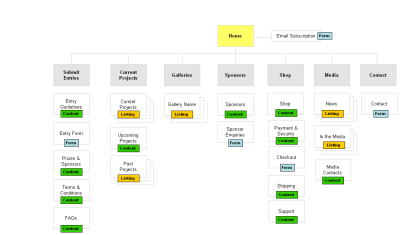
Tools like Treejack allow designers to test a text-only version of a site’s hierarchical tree structure, tracking whether users can successfully locate specific items without the interference of visual design elements. Additionally, keyword tools like AnswerThePublic help designers align their on-site terminology with actual user search language.

Implications: The Double-Edged Sword of the Information Age
As information architecture tackles increasingly vast digital landscapes, we must confront the broader socio-political implications of the Information Age. Information is neither inherently good nor evil; it is a profound source of power that carries immense responsibility.

The Power and Peril of Knowledge
Information can be harnessed to protect public health, shape progressive government policy, and educate global citizens. However, it can just as easily be weaponized for political propaganda, economic manipulation, and mass surveillance. The rapid pivot of global governments and medical institutions during public health crises like COVID-19 highlights how quickly changing data can alter world events—while simultaneously breeding confusion through conflicting reports and unverified "fake news."
Data Security and Privacy
The modern proliferation of data has turned personal information into a high-stakes commodity. High-profile security breaches at corporate giants like Facebook and Equifax demonstrate that poor data stewardship carries multi-year ramifications for millions of consumers. Consequently, regulatory measures such as the GDPR and regional data privacy laws have become mandatory bulwarks, with over two-thirds of nations now enforcing legal frameworks to protect personal data from unauthorized exploitation.

Conclusion
Ultimately, information architecture is much more than a technical blueprint for a website or app; it is a translation layer between human intent and digital complexity. By synthesizing rigorous card sorting, intuitive navigation hierarchies, and intelligent search mechanisms, designers can cut through the noise of the information-overloaded era. In doing so, we not only build better digital products—we create a more navigable, understandable, and humane digital world.