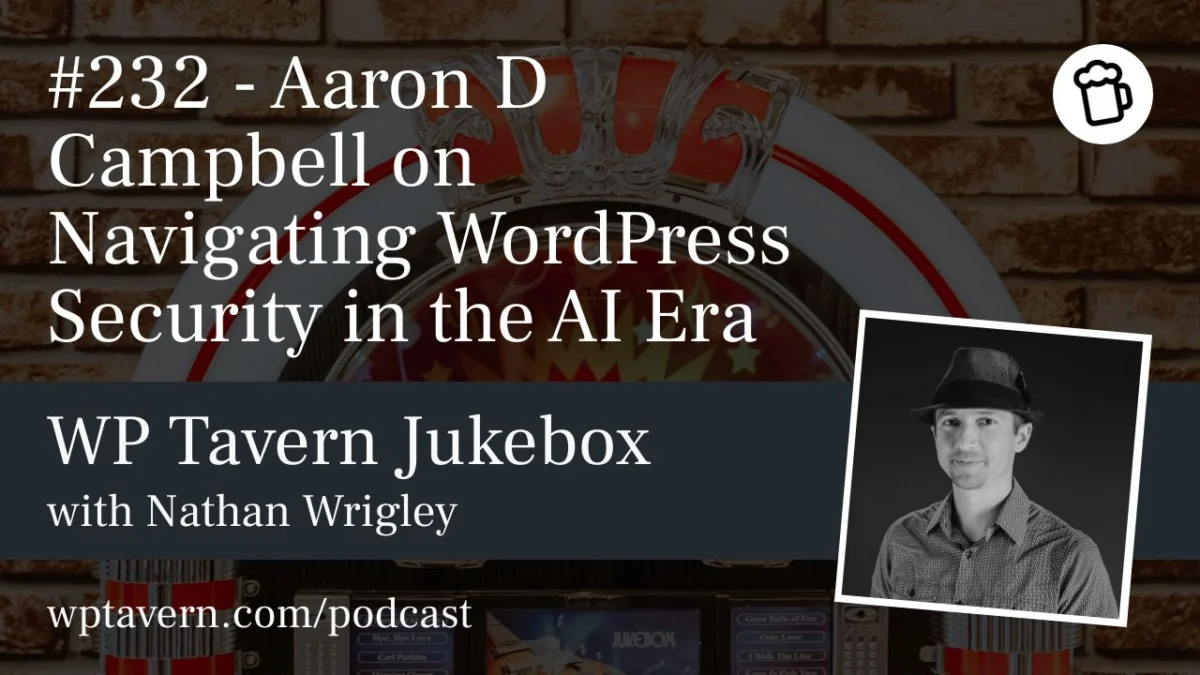
As artificial intelligence rapidly transforms the digital landscape, the cybersecurity paradigm is undergoing an unprecedented shift. No longer a traditional battle of human wits, online security has evolved into a high-stakes, high-speed war of computational power. Nowhere is this more apparent than in the WordPress ecosystem, where the world’s most popular Content Management System (CMS) faces a constantly shifting frontier of automated threats, sophisticated multi-layered vulnerabilities, and an entirely new class of AI-driven adversaries.
Recently, WP Tavern’s Jukebox Podcast host Nathan Wrigley sat down with veteran security expert Aaron D. Campbell in a candid discussion recorded at WordCamp US. With a career spanning over 25 years across agency work, major hosting giants like GoDaddy and Newfold, and his current role at malware detection firm Monarx—alongside a stint leading the official WordPress Security Team—Campbell offered a sobering yet surprisingly optimistic look at how the open-source community is adapting to the AI era.
Main Facts: The AI-Driven Threat Landscape
The core reality of website security has fundamentally changed over the last two to four years. While the fundamental cat-and-mouse dynamic between attackers and defenders remains, the scale, speed, and complexity of attacks have escalated dramatically.
- The Rise of Autonomous AI Agents: What once required extensive human ingenuity and coordinated team efforts can now be orchestrated by AI agents for a fraction of a dollar. These agents work 24/7, testing millions of permutations simultaneously.
- Complex Vulnerability Chaining: Rather than relying on simple, standalone exploits, modern AI-driven attacks are capable of chaining multiple minor bugs across different layers (such as operating systems, PHP environments, and WordPress core or plugins) to form complex, multi-step exploits.
- The Profit Motive: Despite occasional political or ideological hacks, the vast majority of WordPress-focused attacks remain financially motivated—ranging from injecting pay-per-click pharmaceutical ads to hijacking sites for distributed computing power and credential stuffing.
- Proactive Defense & AI vs. AI: To combat autonomous threats, security professionals are increasingly deploying AI-powered testing rigs and analytical tools to find flaws, assess viability, and patch code before malicious actors can weaponize it.
Chronology: How the Speed of Exploitation Accelerated
Understanding the current security crisis requires looking at how quickly the timeline between vulnerability discovery and exploitation has compressed.
The Pre-AI Era (Years Prior)
Historically, when a software vulnerability was discovered, developers and system administrators enjoyed a comfortable window of weeks—or at least days—to review disclosures, develop patches, and push updates. Adversaries typically operated in small, localized human teams that rested, worked standard hours, and required significant manual effort to weaponize new code.
The Transition and the 5-Hour Window
As machine learning models and early AI agents began infiltrating the security space, the gap between disclosure and exploitation narrowed to hours. According to a recent retrospective analysis conducted by Monarx in collaboration with Patchstack, the window for major vulnerabilities dropped to an average of just five hours.
The Real-Time Battleground
Today, the velocity of exploitation is measured in minutes. Campbell pointed to recent high-profile incidents, such as the wp2shell exploit, where major waves of automated attacks began hammering vulnerable sites within 30 minutes of a patch being released. This rapid spike underscores why traditional reactive security models are no longer sufficient.
Supporting Data and Ecosystem Metrics
To contextualize the sheer scale of WordPress security operations, several key data points and operational realities highlight the current environment:
- Massive Footprint: WordPress powers tens of millions of websites globally, creating a massive target surface. However, its immense scale also means it benefits from a vast army of contributors.
- The Open-Source Advantage: Despite open-source code being accessible to bad actors utilizing AI to scan for flaws 24/7, it also allows hundreds of thousands of "good actors" to inspect, audit, and patch vulnerabilities faster than any proprietary software vendor could manage internally.
- White-Label Infrastructure Protection: Firms like Monarx operate largely in the background via web hosts, monitoring files, runtime environments, and Web Application Firewall (WAF) layers across diverse Linux and server setups to neutralize novel malware globally before it spreads.
Official Responses: The WordPress Community and "Protect the Shire"
In response to rising supply chain attacks—where malicious actors target popular plugins, compromise NPM packages, or purchase legitimate plugins to inject malicious code—the WordPress community has introduced innovative protective measures.
The "Protect the Shire" Initiative
Recently championed by figures like project co-founder Matt Mullenweg, the "Protect the Shire" initiative introduces a mandatory time buffer (roughly six hours) on certain plugin updates. While this brief delay might seem counterintuitive in an era where milliseconds matter, Campbell argues it is a crucial safeguard.
By slowing down automated or potentially compromised updates, the community can catch supply chain tampering before malicious code is pushed out to millions of sites. However, Campbell stresses that this policy is not set in stone:
"If there is a vulnerability in your plugin, or especially in a major plugin, reach out to the WordPress Security Team because we can coordinate a faster release, we can make an exception to that rule when it’s necessary."
Coordinated Disclosure Networks
Beyond core updates, the WordPress Security Team relies heavily on private communication channels with major web hosts and security vendors (such as Cloudflare). By sharing intelligence privately before a public advisory drops, security infrastructure providers can deploy global patches and firewall rules, protecting millions of users before hackers can leverage the disclosure.
Implications for Everyday WordPress Users and the Future
While the technical realities of AI-driven cyberattacks sound intimidating—with Campbell noting instances of AI-generated vulnerability reports stretching across 11 complex pages—the overarching message for everyday site owners is one of structured empowerment rather than despair.
Actionable Advice for Non-Technical Users
Website owners who do not possess deep technical or security credentials do not need to become experts overnight. Instead, Campbell recommends three fundamental steps to leverage the expertise of the wider security community:
- Enable Auto-Updates: Keep WordPress Core, plugins, and themes updated automatically. This ensures you immediately benefit from the security team’s rapid patches.
- Choose Security-Minded Hosts: Invest in reputable hosting providers that employ layered security protections (such as proactive malware scanning, WAFs, and file monitoring) and are transparent about how they keep client sites safe.
- Monitor Compromised Credentials: Utilize dark web monitoring tools or services like Have I Been Pwned to track your email addresses and passwords. AI agents are increasingly adept at collating decades of historical data breaches to brute-force modern logins; knowing if your credentials have leaked is vital.
The Outlook Ahead
Looking toward the midterm future, Campbell remains remarkably sanguine about the trajectory of cybersecurity. Just as the industry successfully adapted to cryptographic and hashing cracks in previous decades by inventing stronger algorithms, the security sector is actively learning to use AI to outmaneuver AI.
While the modern security landscape will remain a complex, nuanced space requiring constant vigilance, the combination of collective open-source intelligence, automated defensive rigs, and proactive hosting infrastructure ensures that the web remains a safe space for humanity to share information and build businesses.