The digital landscape is currently undergoing a tectonic shift. From the vibrant feeds of Instagram to the professional portfolios on Dribbble, a new breed of imagery is taking over. These visuals, characterized by surreal compositions and hyper-realistic textures, are not the product of a human hand meticulously nudging pixels, but rather the output of sophisticated machine learning models like DALL-E, Midjourney, and Stable Diffusion. As these AI tools become increasingly accessible and intuitive, a burning question dominates the industry: Will artificial intelligence render human designers obsolete?
To answer this, we must look beyond the fear-mongering. The evolution of design is not a story of replacement, but one of transformation. In this article, we examine the current state of the industry, address the existential anxieties of the creative class, and explore how designers can pivot from being manual laborers of the screen to visionary architects of the digital age.
The Chronology of an Industry Shift
For decades, the path to becoming a proficient designer has been steep. It requires years of deliberate practice, mastering complex software, understanding color theory, and refining the "pixel-perfect" execution that separates amateurs from professionals. Historically, design has been a discipline defined by a heavy ratio of craft to creativity—often estimated at 95% execution and 5% conceptual art.
The turning point began in early 2022. The release of text-to-image models democratized high-fidelity content creation. Suddenly, the barrier to entry for generating stunning visuals dropped from "years of training" to "a single descriptive sentence."

In 2023, the industry witnessed a wave of legal and ethical challenges. Artists began filing class-action lawsuits against major AI providers, arguing that the training data—billions of images scraped from the web—violated the rights of the original creators. While these legal battles are ongoing, the technological momentum is unstoppable. We have moved from the era of "learning to draw" to the era of "learning to prompt."
Supporting Data: The Efficiency Paradox
Why is the industry embracing this technology so rapidly? The answer lies in the fundamental pursuit of efficiency.

Consider the "Glass Reflection" project by designer Gleb Kuznetsov. The creation of a single, hyper-realistic CGI scene can take 87 hours of rendering on high-end hardware. AI, by contrast, can approximate similar complexity in a fraction of the time. This massive leap in productivity is not just a convenience; it is a business imperative.
However, data also reveals a "homogenization risk." A study of AI-generated content samples shows that when designers rely solely on popular models like Lexica or standard Stable Diffusion setups without human intervention, the outputs tend to converge toward a "generic" aesthetic. This is the "Dribbblisation" of design on steroids—a phenomenon where the ease of tool access leads to a repetitive, trend-chasing visual culture. Yet, historical precedent—such as the Luddite movement of the 19th century—teaches us that while machines replace monotonous labor, they rarely replace the human capacity for innovation.

Official Perspectives: Co-Creation, Not Competition
The consensus among forward-thinking practitioners is that AI should be viewed as a "bicycle for the mind," a term famously coined by Steve Jobs regarding the personal computer.
Can I Take Credit for AI Art?
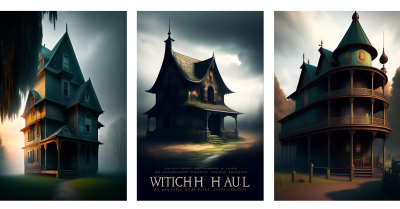
Technically, yes. Practically, one shouldn’t. Current AI models operate as black boxes; the user inputs a prompt and the machine interprets it. Because the designer has limited control over the algorithmic "decision-making" process, the final output often lacks the specific, intentional personality that defines high-level human art. However, as tools evolve to allow for finer granular control, the "human touch" will return as a curatorial, rather than purely mechanical, skill.
The Myth of Replacement
Companies are certainly experimenting with AI to lower costs, replacing entry-level stock photography and basic illustration roles. But the role of the senior designer—the individual who understands user psychology, identifies core problems, and crafts meaningful solutions—remains shielded. AI does not "think"; it calculates probabilities based on existing data. It cannot empathize with a user, nor can it navigate the complex political and emotional nuances of a client pitch.
Implications: The New Chapter in Design
The integration of AI into the design workflow changes the nature of the job description. Designers are transitioning into roles as "Design Directors" or "Visionaries," where their value lies in curation, strategy, and conceptual framing.
1. The Death of the Traditional Mood Board
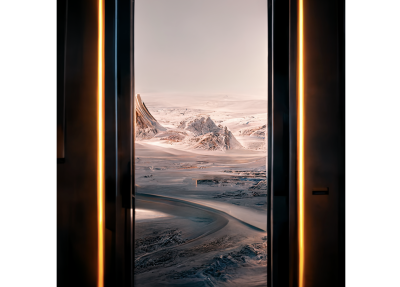
The era of manual mood boarding on Pinterest is ending. Designers can now use image-to-image (img2img) prompting to generate hyper-specific visual directions. By feeding an existing composition into a tool like Stable Diffusion and adjusting the "Image Strength" parameter, designers can explore hundreds of iterations of a visual concept in minutes. This turns the discovery phase from a search-and-save activity into a generative, experimental one.
2. Rapid Prototyping and UX/UI
Previously, moving from an idea to a high-fidelity prototype took weeks of wireframing and layout design. With AI-assisted tools, designers can now generate UI concepts during a live brainstorming session. While these initial outputs often contain errors—such as the infamous "extra finger" problem seen in human-hand renderings—they serve as excellent "napkin sketches" that accelerate the feedback loop between product teams and stakeholders.

3. The Rise of the Metaverse
As we look toward the metaverse, the sheer volume of assets required to populate virtual worlds is staggering. It is impossible to manually craft every texture, object, and environment. AI will become the primary engine for world-building, allowing designers to direct the "look and feel" of vast digital spaces while the software handles the tedious implementation of geometry and lighting.
A Call to Action for the Modern Designer
The future of design is not about fearing the algorithm; it is about mastering the input. To thrive in this new era, designers must:
- Become Curators: As the market becomes flooded with AI-generated content, the value of "taste" and the ability to curate high-quality, emotionally resonant work will skyrocket.
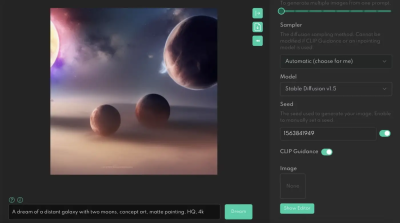
- Learn Prompt Engineering: Understanding the nuances of model parameters—like seed numbers, sampling steps, and image strength—is the new "Photoshop mastery."
- Focus on Problem Solving: AI is excellent at creating assets, but poor at solving business problems. Double down on your ability to conduct user research, define brand identity, and align design strategy with user needs.
The "Artificial Renaissance" is not an end, but a beginning. By embracing AI as a creative assistant, designers can shed the 95% of their job that is tedious labor and focus on the 5% that truly matters: the spark of human ingenuity. The technology will continue to learn from us, and in doing so, it will enable us to reach creative heights previously thought impossible.
The blank canvas is no longer a source of anxiety—it is an invitation to direct the machine toward a more imaginative future. The era of the designer as a visionary has only just begun.