By The Business Insights Editorial Desk
Published: April 2025
Main Facts: The Paradigm Shift in Modern Email Marketing
As digital inboxes become increasingly saturated with corporate noise, the traditional "spray and pray" email marketing strategy—blasting a single, monolithic newsletter to an entire database—has officially reached obsolescence. In 2025, modern consumers no longer tolerate generic communication; they expect hyper-personalized, context-aware brand interactions that mirror the attentiveness of a boutique concierge.
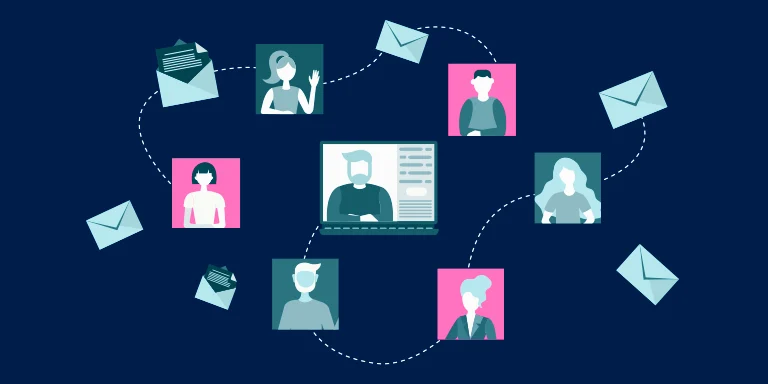
At the center of this evolutionary shift is audience segmentation: the deliberate practice of dividing an email subscriber base into smaller, highly targeted cohorts based on behavioral data, demographic traits, and lifecycle stages.
Recent empirical data underscores the stark contrast in performance between unsegmented blasts and targeted workflows. According to comprehensive industry benchmarks published in Omnisend’s 2025 marketing report, automated and segmented emails achieve an astounding average open rate of 40.55%. This towers significantly over the general, cross-industry baseline open rate of 26.6%.
For business founders, early-stage entrepreneurs, and e-commerce leaders operating on tight margins, ignoring audience segmentation is no longer just a missed opportunity—it is a direct financial liability that leads to higher churn, burned-out lists, and suppressed revenue generation.
Chronology: How Mass Broadcasting Lost Its Edge
To understand how audience segmentation became the indispensable gold standard of digital marketing in 2025, it helps to trace the historical timeline of commercial electronic mail.
- The Early 2000s (The Wild West of Email): In the nascent days of commercial email, volume equated to victory. Digital marketers could send weekly or daily blasts to hundreds of thousands of addresses with minimal personalization, enjoying double-digit open rates simply because inboxes were sparse and digital attention spans were less fractured.
- The 2010s (The Rise of Automation): As spam filters grew more sophisticated and consumer inboxes began overflowing with promotional clutter, basic email service providers (ESPs) introduced primitive segmentation features. Brands began separating lists by geographic location or basic sign-up source, yielding marginal improvements in click-through rates.
- The Early 2020s (The Shift Toward Contextual Relevance): Driven by the rise of direct-to-consumer (D2C) brands and machine learning algorithms, consumer expectations shifted dramatically. Generic marketing began to trigger immediate opt-outs. Companies realized that relevance was the primary currency of consumer trust.
- 2025 and Beyond (Real-Time Behavioral Intelligence): Today, segmentation is no longer static. Modern platforms track user behavior across websites and apps in real time, feeding data back into dynamic email engines that instantly trigger hyper-targeted messaging the moment a user performs—or fails to perform—a specific action.
Supporting Data: The High Cost of Ignoring Segmentation
The math behind audience segmentation reveals an undeniable truth: relevance converts, while generalizations alienate. When brands fail to tailor their messages, the consequences manifest quickly across key performance indicators (KPIs).
+-----------------------------------+-----------------------------------+
| Metric / Action                   | Unsegmented vs. Segmented Impact  |
+-----------------------------------+-----------------------------------+
| Average Automated Open Rate       | 40.55% (vs. 26.6% baseline)       |
| Direct Impact of Irrelevance      | Spikes in spam complaints & churn |
| Revenue per Campaign              | Up to 3x higher in segmented lists|
+-----------------------------------+-----------------------------------+
The Domino Effect of Generic Messaging
- Immediate Disengagement: When a subscriber repeatedly receives content that bears no relation to their buying habits or interests, psychological fatigue sets in. They stop opening the emails entirely.
- Algorithmic Penalization: Major inbox providers like Gmail, Yahoo, and Outlook monitor user engagement metrics (opens, deletes without opening, and spam reports). Low engagement rates across an unsegmented list signal to algorithms that your domain is untrustworthy, routing your future messages straight to the spam or promotional tabs.
- Revenue Erosion: Every unread email represents wasted operational capital. For early-stage startups where every customer acquisition dollar counts, failing to convert traffic due to poor messaging layout can choke cash flow.
Official Responses and Industry Insights
Marketing strategists, data analysts, and top-tier software architects agree that the future of digital commerce hinges on granular consumer data applied ethically and efficiently.
Greg Sterling, a leading digital marketing analyst, notes: "Consumers don’t hate marketing; they hate irrelevant marketing. Segmentation is the bridge that turns a disruptive corporate broadcast into a welcome, value-driven conversation."
Meanwhile, product developers behind leading automation infrastructures emphasize that advanced segmentation no longer requires a dedicated team of data scientists. Modern software democratizes deep analytics, allowing solopreneurs and small teams to execute enterprise-level personalization with zero coding experience.
Industry experts recommend focusing on five fundamental audience segments to immediately overhaul any underperforming email program:
1. New Subscribers
Brand-new leads require nurturing, not an aggressive hard-sell. Establishing trust should be the primary objective during this window. For instance, an artisanal tea brand can deploy a three-part welcome sequence: sharing the founder’s origin story, offering brewing masterclasses, and eventually introducing a modest introductory discount.
2. Past Purchasers
A one-time transaction should never be treated as the end of a customer relationship. Transforming buyers into repeat purchasers requires proactive cross-selling and post-purchase validation. If a consumer purchases a yoga mat, a well-timed follow-up a week later featuring resistance bands, foam rollers, and complementary digital workout tutorials adds immense value while driving secondary sales.
3. Cart Abandoners
Cart abandonment represents high-intent traffic slipping through the cracks. These users have already vetted your product and reached the threshold of purchase. A gentle, automated reminder sent within 24 hours—perhaps pairing product imagery with a low-friction incentive like free shipping—often recaptures otherwise lost revenue.
4. Inactive Subscribers
Subscribers who go cold do not necessarily need to be purged immediately. Win-back campaigns can successfully resurrect dormant interest. A re-engagement sequence with a compelling subject line ("Still into self-care?") paired with a curated look at new product drops can reactive stale lists without damaging sender reputation.
5. VIP Customers
Your most loyal brand advocates deserve elite treatment. High-frequency purchasers and high-lifetime-value (LTV) customers should be segregated to receive exclusive perks, such as early access to seasonal inventory drops, private Q&A sessions, or loyalty rewards.
Implications: Building a Resilient Email Architecture for the Future
Adopting an audience segmentation framework fundamentally alters how a business interacts with its market. Beyond immediate revenue spikes, the long-term implications span operational efficiency, brand equity, and customer lifetime value.
Operational Agility Through Automation
Segmentation is not about creating twenty different newsletters manually every week; it is about building automated, intelligent systems that run quietly in the background. Once configured, workflows respond dynamically to live user behavior—welcoming, upselling, recovering, and rewarding without manual intervention.
Scalable Growth Without Bloat
As a business scales from 500 subscribers to 50,000 and beyond, unsegmented lists become unwieldy and expensive to host on email service providers. Segmentation ensures that marketing spend remains lean and targeted, focusing resources exclusively on high-probability segments rather than burning budget on unresponsive contacts.
Implementation Blueprint: Steps for Founders
To transition from mass broadcasting to smart segmentation today, marketing teams should follow a structured rollout:
- Select the Right Infrastructure: Utilize platforms engineered specifically for behavioral segmentation and e-commerce ecosystems—such as Omnisend—which allow real-time customer grouping without technical friction.
- Behavior Over Demographics: Prioritize actions (what users click, buy, or ignore) over static demographic assumptions. Behavior is the most accurate predictor of future intent.
- Continuous Experimentation: Treat segments as living laboratories. Monitor open rates, conversion metrics, and unsubscribe rates per segment, iterating constantly as your product catalog evolves.
By abandoning the outdated "spray and pray" methodology and embracing targeted audience segmentation, brands can restore authenticity to the digital inbox—delivering the right message, to the right person, at precisely the right time.