The E-commerce Shift: AI Agents, Global Trade, and Conversational Commerce Take Center Stage
The global e-commerce and retail technology landscape is undergoing a profound structural evolution. Driven by rapid advancements in generative artificial intelligence, changing consumer habits, and shifting international trade dynamics, enterprise software providers, logistics giants, and financial institutions are launching tools designed to automate complex commercial processes.
This week’s roundup of new products and services for merchants highlights critical industry developments spanning international shipping, cross-border payments, agentic AI logistics, conversational ad campaigns, social commerce expansion, dropshipping integrations, and reputation management.
Main Facts
The current wave of e-commerce product releases is heavily dominated by decentralized, AI-driven automation. Rather than relying solely on traditional user interfaces, enterprise networks are building systems where autonomous "AI agents" shop, negotiate, verify, and complete transactions on behalf of both consumers and brands.
Key developments shaping this ecosystem include:
Logistics and International Trade: FedEx has introduced the Global Trade Navigator, while DHL and Alibaba.com have forged a strategic partnership to integrate logistics directly into Alibaba’s agentic AI platform, Accio.
Agentic Payments and Trust Protocols: Ant International, Visa, and Mastercard are developing foundational payment standards for AI agents. Simultaneously, platforms like M11 Labs and Mastercard (Agent Connect) are addressing the trust, verification, and connectivity gaps in autonomous shopping.
Conversational Advertising and Shopping: Amazon Ads and OpenAI are piloting advertising integrations within ChatGPT. Concurrently, major grocery platforms like Instacart (introducing Clementine) and Shipt (launching Ask Shipt) are deploying AI assistants directly into consumer discovery pathways.
Cross-Border Finance and Social Commerce: Fintech platform Xflow has launched solutions allowing global businesses to easily collect payments from India. Meanwhile, Mastercard and Flowcart are partnering to embed secure card payments directly into WhatsApp chats across East Africa.
Chronology of Releases and Strategic Partnerships
The rapid succession of technological rollouts reflects an intensely competitive marketplace where tech firms are racing to establish industry standards.
Early September 2026:
TopDawg announced a live integration with Temu, allowing eligible U.S.-based dropshipping retailers to seamlessly connect their inventory and fulfill orders directly through the marketplace.
RankRabbit AI expanded its brand visibility suite by launching Reputation AI, automating real-time review monitoring and sentiment analysis.
Lightsage (formerly Sapient) secured $4 million in funding led by Nexus Venture Partners to build out its agent-led growth infrastructure for internet software companies.
Mastercard and Flowcart partnered to bring secure chat-based card payments to WhatsApp users in Kenya, with a planned expansion across East Africa and West Africa.
Mid-September 2026:
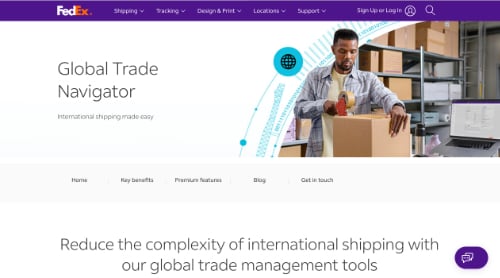
FedEx launched its Global Trade Navigator, introducing modular APIs, self-service duty planners, and Shopify duty-and-tax apps.
DHL Group and Alibaba.com revealed their partnership to embed DHL Global Forwarding’s quotation and booking framework into Alibaba’s AI agent, Accio.
Ant International joined forces with Visa and Mastercard to create standardized protocols for verifying and monitoring transactional AI agents ("Know Your Agent").
M11 Labs launched its agentic trust platform alongside OpenMarket, a research engine built on the Universal Commerce Protocol.
Amazon Ads and OpenAI initiated a high-profile pilot program allowing brands to run conversational ad campaigns within ChatGPT.
Instacart debuted Clementine, an AI-powered grocery shopping assistant, while expanding its white-label Cart Assistant tool to additional grocery partners.
Mastercard introduced Agent Connect to simplify how merchants and payment platforms interface with shopping AI agents.
Mntn and Klaviyo announced a cross-channel integration linking Connected TV performance data directly with CRM-driven email and SMS marketing workflows.
Xflow opened up direct collections from India for global businesses, bypassing traditional local entity requirements.
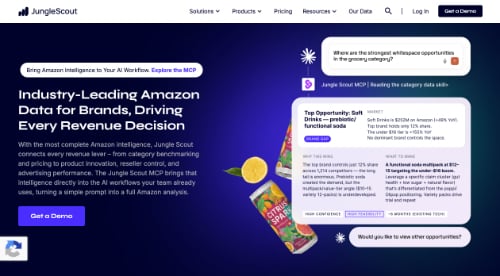
Jungle Scout released AI Solutions, including Ask Cobalt and the Jungle Scout MCP, integrating proprietary Amazon data directly into enterprise LLMs like Claude, ChatGPT, Gemini, and Copilot.
Shipt launched Ask Shipt, an in-app AI assistant capable of processing conversational text, recipe uploads, and food photos.
SurveyMonkey rolled out its AI Analysis Suite, giving users conversational data exploration and automated text-categorization features.
Supporting Data and Technical Architecture
The underlying infrastructure of these newly released products highlights a technical pivot away from static keyword matching toward real-time data streaming, API-first logistics, and machine learning models trained on transactional workflows.
Cross-Border Trade Friction: According to trade data, cross-border compliance and unexpected duty fees remain primary drop-off points for international e-commerce. FedEx’s Global Trade Navigator attempts to mitigate this by shifting H.S. code classification and guaranteed duty/tax calculations directly into the Shopify checkout experience.
Agentic AI Market Penetration: Platforms like Lightsage and M11 Labs are capturing early market data showing exponential growth in non-human traffic. Software companies are increasingly forced to measure their visibility not just on traditional search engines ("SEO"), but across answer engines and automated purchasing agents ("AIO").
Fintech and Alternative Gateways: Xflow’s entry into India collections bridges a notoriously complex regulatory corridor. By leveraging backing from Stripe, PayPal Ventures, and General Catalyst, the platform enables compliant fund settlement across local channels like UPI and net banking without requiring foreign merchants to establish local legal entities.
Official Responses and Industry Perspectives
Executives across logistics, fintech, and retail technology have emphasized that these products are designed to solve operational bottlenecks rather than simply serve as experimental technology.
"Global trade shouldn’t be gated by complicated regulatory hurdles or opaque tax estimations," representatives from FedEx noted during the rollout of the Global Trade Navigator. By combining self-service APIs with real-time customs evaluations, the company aims to open international markets to smaller merchants who previously lacked dedicated trade compliance teams.
Commenting on the convergence of logistics and conversational commerce, leadership from Alibaba.com and DHL highlighted the necessity of agentic systems for small and medium-sized enterprises (SMEs).
"Integrating DHL’s forwarding engine into Accio means small businesses can transition from searching for logistics solutions manually to executing complex, multi-modal shipments through simple conversational prompts," corporate statements indicated.
In the financial sector, the collaboration between Ant International, Visa, and Mastercard represents an unprecedented alignment among rival credit networks. Industry stakeholders stressed that as autonomous agents begin initiating financial transactions independently, establishing clear "Know Your Agent" (KYA) governance frameworks is vital to prevent fraud and ensure accountability across global financial rails.
Implications for Merchants and the Future of E-commerce
The rapid deployment of these tools carries profound strategic implications for digital merchants, independent retailers, and global brands alike.
1. The Death of Traditional SEO and the Rise of "Agent Optimization"
As illustrated by the launches of M11 Labs, Lightsage, and Jungle Scout’s MCP tools, the discovery phase of shopping is shifting away from human-driven web browsing. When consumers use ChatGPT (via Amazon Ads integrations), Ask Shipt, or Clementine to manage their purchasing decisions, brands must ensure their products are intelligible and favorable to AI algorithms. Optimizing for conversational agents requires transparent pricing, structured product data, and real-time inventory synchronization.
2. Streamlined International Expansion
With solutions like FedEx’s Global Trade Navigator and Xflow’s India collections, geographic boundaries are becoming far more porous for small merchants. Brands can now test foreign markets—particularly high-growth regions in Asia, Africa, and Latin America—without absorbing the traditional overhead costs of local legal incorporation, tax compliance, or fragmented checkout integrations.
3. The Centralization of Social and Conversational Commerce
Partnerships like the one between Mastercard and Flowcart in East Africa signal that social media apps (such as WhatsApp) are transforming from marketing channels into closed-loop point-of-sale systems. Merchants who fail to adopt chat-commerce capabilities risk losing consumers who demand zero-friction buying journeys without app switching or external browser redirects.
Summary
The autumn 2026 product cycle marks a watershed moment for digital commerce. Merchants are no longer competing solely for human attention on flat web pages; they are operating in an interconnected web of AI agents, automated logistics pipelines, and borderless payment networks. Those who successfully adopt these tools will likely capture increased operational efficiency and reach new global audiences, while those who remain anchored to legacy infrastructure risk obsolescence in an increasingly automated marketplace.