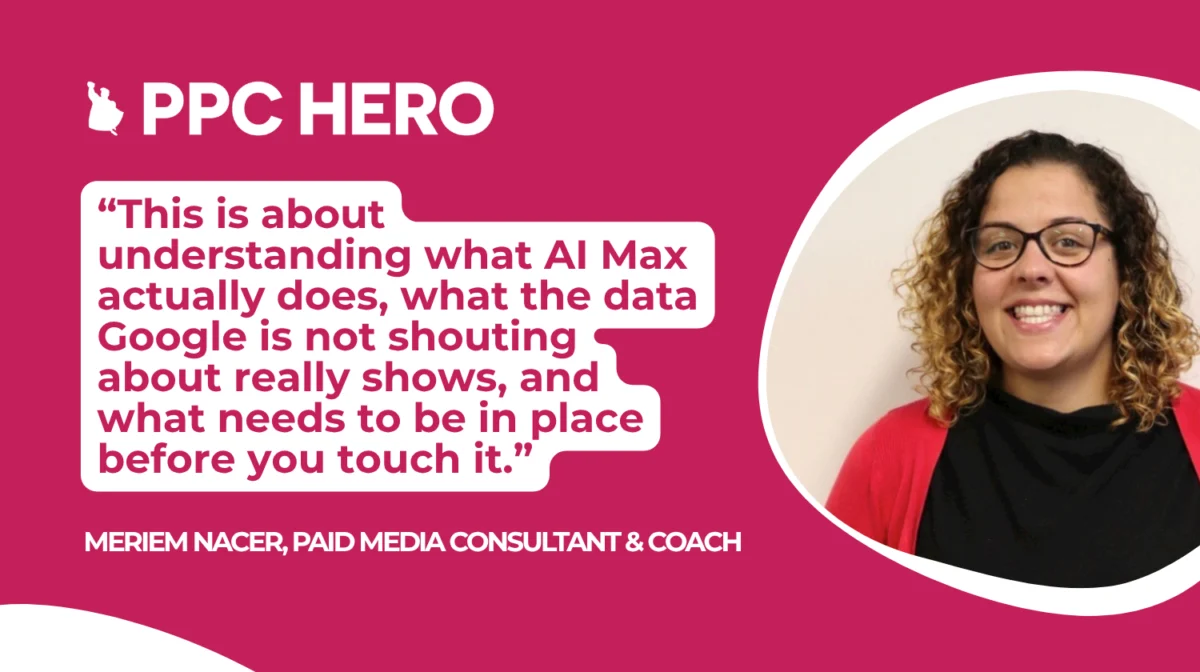
In the current landscape of digital marketing, the conversation is dominated by the transformative power of Artificial Intelligence. From the emergence of Google’s Performance Max to the sophisticated nuances of Smart Bidding, the industry has become enamored with the "engine" of automation. However, a critical oversight is occurring in boardrooms and marketing departments globally: the engine is only as effective as the fuel it consumes.
As privacy regulations tighten and the technical foundations of the web shift, a "measurement gap" has emerged—an invisible erosion of data that threatens to undermine the very AI systems designed to optimize it. Google’s recent emphasis on "Data Strength" marks a pivotal shift in strategy, moving the focus away from bidding algorithms and toward the integrity of the underlying conversion signals.
Main Facts: The Crisis of Signal Loss
The premise of modern digital advertising is simple: report a conversion, and the AI learns who to target next. But for most advertisers, those signals are becoming increasingly thin. When data is incomplete, Google’s automation—specifically Smart Bidding and Demand Gen—is forced to optimize toward "the wrong things, or toward nothing at all."
The crisis stems from several converging factors:
- Browser Restrictions: Safari and Firefox have already implemented aggressive measures against third-party cookies. These browsers represent roughly 21% of global web traffic, a segment that is now significantly harder to track with traditional methods.
- The Apple Effect: Apple’s App Tracking Transparency (ATT) framework, which requires users to opt-in to tracking, has seen opt-in rates hover between a meager 15% and 25%. This has rendered the majority of iOS users "invisible" to standard in-app tracking mechanisms.
- Technical Interception: Ad blockers and privacy-focused browser extensions now frequently strip out tracking tags before they can fire. Furthermore, default Google Tags that load from third-party domains are increasingly intercepted by automated privacy tools.
The result is not merely a reporting discrepancy; it is a fundamental performance failure. Without accurate data, AI "bids in the dark," causing high-performing campaigns to drift and budgets to underperform their latent potential.
Chronology: The Road to the 2026 Data Paradigm
The journey to the current state of "Data Strength" has been a decade in the making, characterized by a steady retreat of third-party identifiers and a subsequent scramble for first-party alternatives.
- 2017–2019: The Initial Crackdown. Apple introduced Intelligent Tracking Prevention (ITP) for Safari, beginning the phased death of the third-party cookie. During this period, most advertisers viewed these changes as a "Safari problem" rather than a systemic threat.
- 2021: The ATT Shockwave. The launch of iOS 14.5 and App Tracking Transparency sent shockwaves through the industry, particularly impacting platforms like Meta and Google. It forced a realization that the era of "easy data" was over.
- 2024: The Privacy Sandbox and Deprecation. Google began the process of phasing out third-party cookies in Chrome, while simultaneously rolling out the "Privacy Sandbox." Advertisers began to see the first iterations of "Enhanced Conversions."
- 2026: The Integrated Ecosystem. By 2026, Google significantly updated its "Data Manager" hub. This update moved the platform beyond simple measurement and into a unified activation center, integrating Google Ads, Search Ads 360, and Campaign Manager 360. This era marks the transition from "tagging" to "data management" as a core marketing competency.
Supporting Data: Quantifying the Impact of Signal Recovery
To understand the stakes, one must look at the empirical evidence provided by Google and early adopters of the "Data Strength" framework. The "prize" for advertisers who successfully rebuild their data foundations is substantial, often resulting in a 10% to 20% increase in observed conversions.

The Component Uplift
Google’s internal data highlights the specific performance gains associated with individual tools within the Data Strength stack:
- Google Tag Gateway (GTG): By serving tags from an advertiser’s own domain rather than a third-party Google domain, GTG bypasses many browser-level blocks. This results in an average 14% uplift in observed conversions.
- Enhanced Conversions for Web (ECW): This tool uses hashed, consented first-party data (such as emails) to recover attributions when cookies are missing. Google reports an 8.5% lift on Search conversions and a more dramatic 15% lift on YouTube, a channel historically difficult to attribute accurately.
- Enhanced Conversions for Leads (ECL): For B2B and lead-gen businesses, the shift to ECL—which uses hashed data alongside the Google Click ID (GCLID)—provides a 10% lift on Search and a 22% lift on YouTube compared to standard offline conversion imports.
- Data Manager Integration: Advertisers who use the Data Manager hub to connect offline and app data have seen an average 26% lift in incremental Return on Ad Spend (ROAS).
Real-World Application: The Retail Case Study
The theoretical benefits are mirrored in practice. A notable case study involving a large home improvement retailer demonstrated the power of a staged rollout. Facing a significant drop in lead volume due to signal loss, the retailer implemented a three-step process:
- Step 1: Integration of Google Tag Gateway via Cloudflare.
- Step 2: Implementation of Consent Mode.
- Step 3: Activation of Enhanced Conversions.
The first step alone—the Tag Gateway—delivered a 15% uplift in conversion visibility. By the end of the full rollout, the retailer had recovered 27% of previously lost conversions, effectively "finding" revenue that was already there but had become invisible to the system.
Official Responses: Google’s Stance on "Data Strength"
Google’s messaging over the past year has been singular: "Data is your moat." In various industry summits and blog posts, Google executives have emphasized that the competitive landscape has shifted. The advantage no longer lies with the advertiser who has the most creative copy, but with the one who provides the AI with the most complete dataset.
"Think of it as fuel," Google representatives often explain in technical briefings. "The automation is the engine, and conversion signals are what it burns. The stronger and more complete the signal, the better the engine runs."
The introduction of the Google Data Manager in 2026 was the official response to the fragmentation of the marketing stack. By adding integrations with platforms like Mailchimp, Klaviyo, and TripleWhale, Google is signaling that it no longer views itself as a silo. Instead, it aims to be the central processor for an advertiser’s entire first-party ecosystem—website, app, store, and CRM.
Implications: The Strategic Pivot for Marketers
The shift toward Data Strength has profound implications for how marketing departments are structured and how budgets are allocated.

1. The Death of "Set and Forget" Automation
For years, the promise of AI was that it would make marketing easier. The reality is that while the execution (bidding and placement) is automated, the preparation (data engineering and privacy compliance) has become significantly more complex. Marketers must now spend less time tweaking bids and more time ensuring their technical "plumbing" is leak-proof.
2. Data as a Competitive Moat
In the era of Smart Bidding, if two competitors are using the same Google AI to bid on the same keywords, the winner will be the one who feeds the AI better data. If your competitor has 20% more conversion signals than you do, their AI will learn faster, identify high-value users more accurately, and eventually price you out of the auction. Your data is the only thing your competitors cannot see or replicate.
3. The Privacy-Performance Paradox
The industry is learning that privacy and performance are not necessarily at odds. Tools like Enhanced Conversions use one-way hashing (SHA-256) to protect user identity while still allowing for attribution. Advertisers who embrace these privacy-preserving technologies early will find themselves in a stronger position than those who attempt to cling to legacy tracking methods that are being systematically dismantled by browser developers.
4. Integration Over Isolation
The 2026 updates to Data Manager highlight the necessity of breaking down silos. Offline data is no longer "the sales team’s problem." If a lead closes in a CRM but isn’t reported back to the Google Ads engine, the AI will continue to find more leads that don’t close. The "Full Funnel" is no longer a marketing concept; it is a technical requirement for AI optimization.
Conclusion: Building the Foundation
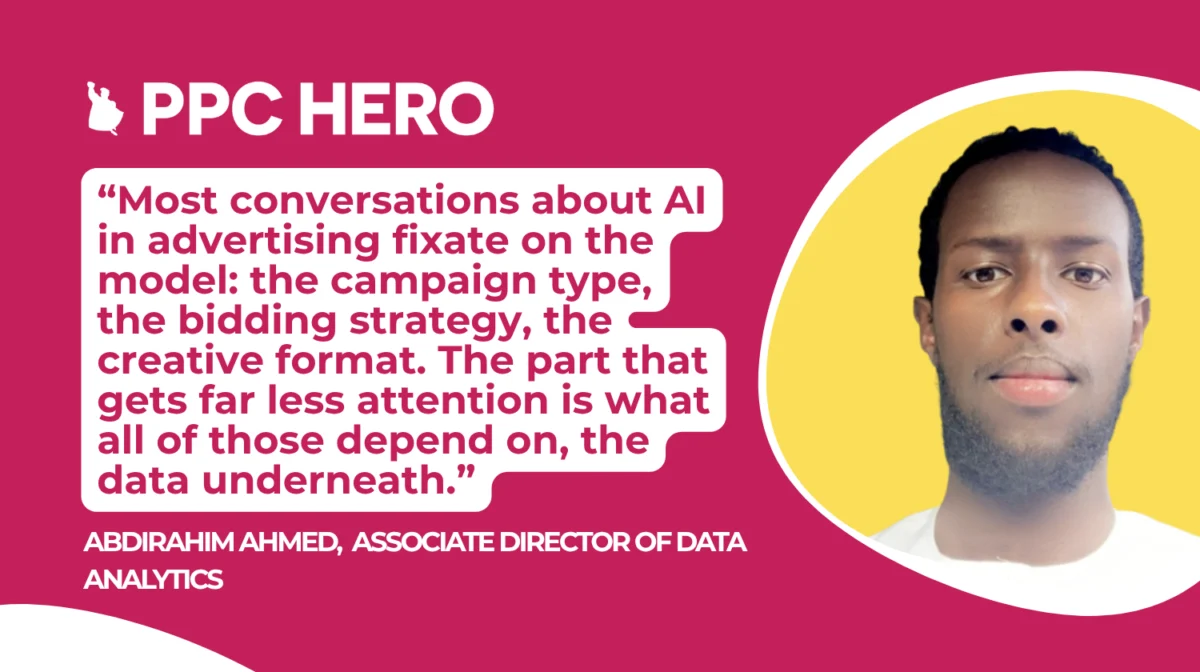
The debate about AI in advertising usually stops at the model, but the model is only half the equation. The other half is the data. For most advertisers, that data is leaking—signals are blocked, conversions are unattributed, and automation is working from a partial, fractured picture.
Data Strength is not a single product or a "quick fix." It is a framework built layer by layer: from the foundational Google Tag Gateway to the sophisticated integrations of Data Manager. As we move further into an era where automation decides the majority of advertising outcomes, the foundation of data is what the rest of the performance rests on. The advertisers who prioritize this foundation now will compound a technical and performance advantage that will be nearly impossible for laggards to overcome.