For decades, the marketing world operated on a "big bang" philosophy. Teams would spend months agonizing over a campaign—crafting the perfect copy, designing high-fidelity assets, and orchestrating a massive launch—only to wait for the final results to determine if they had struck gold or suffered a public-facing failure.
Today, that approach is increasingly viewed as a relic of the past. As digital markets become more saturated and consumer behavior more volatile, marketers are pivoting toward a more agile, resilient methodology: Iterative Testing.
Iterative testing is not merely a tactic; it is a fundamental shift from "guessing and betting" to "observing and evolving." By treating marketing assets as living documents that are continuously refined through small, evidence-based experiments, brands can minimize risk, eliminate wasted budget, and maintain a competitive edge in a rapidly changing landscape.
The Core Concept: Moving Beyond the "One-Off" Test
At its simplest, iterative testing is the process of repeatedly testing, measuring, and refining marketing assets based on sequential data cycles. Unlike traditional A/B testing, which is often used as a standalone checkpoint, iterative testing treats each experiment as a data point that informs the next.
This philosophy has been a cornerstone of product development in Silicon Valley for years. By applying these principles to landing pages, email funnels, and ad copy, marketers can move away from complete overhauls and toward incremental gains. The "base hit" mentality—consistently improving performance by small margins—often yields a significantly higher long-term return on investment (ROI) than the risky "home run" approach.
Why Marketers Are Abandoning the "Big Bang"
Marketing failures are rarely singular, catastrophic events. Instead, they are often "slow leaks"—underperforming headlines, friction-heavy forms, or messaging misalignments—that drain budget over time. Iterative testing plugs these leaks by establishing a continuous loop of feedback.

The Chronology of an Iterative Cycle
To implement this effectively, organizations must transition from project-based thinking to process-based thinking. A standard iterative cycle typically follows this sequence:
- Hypothesis Formulation: Instead of testing everything, isolate a single variable (e.g., "Will a shorter form field increase lead capture?").
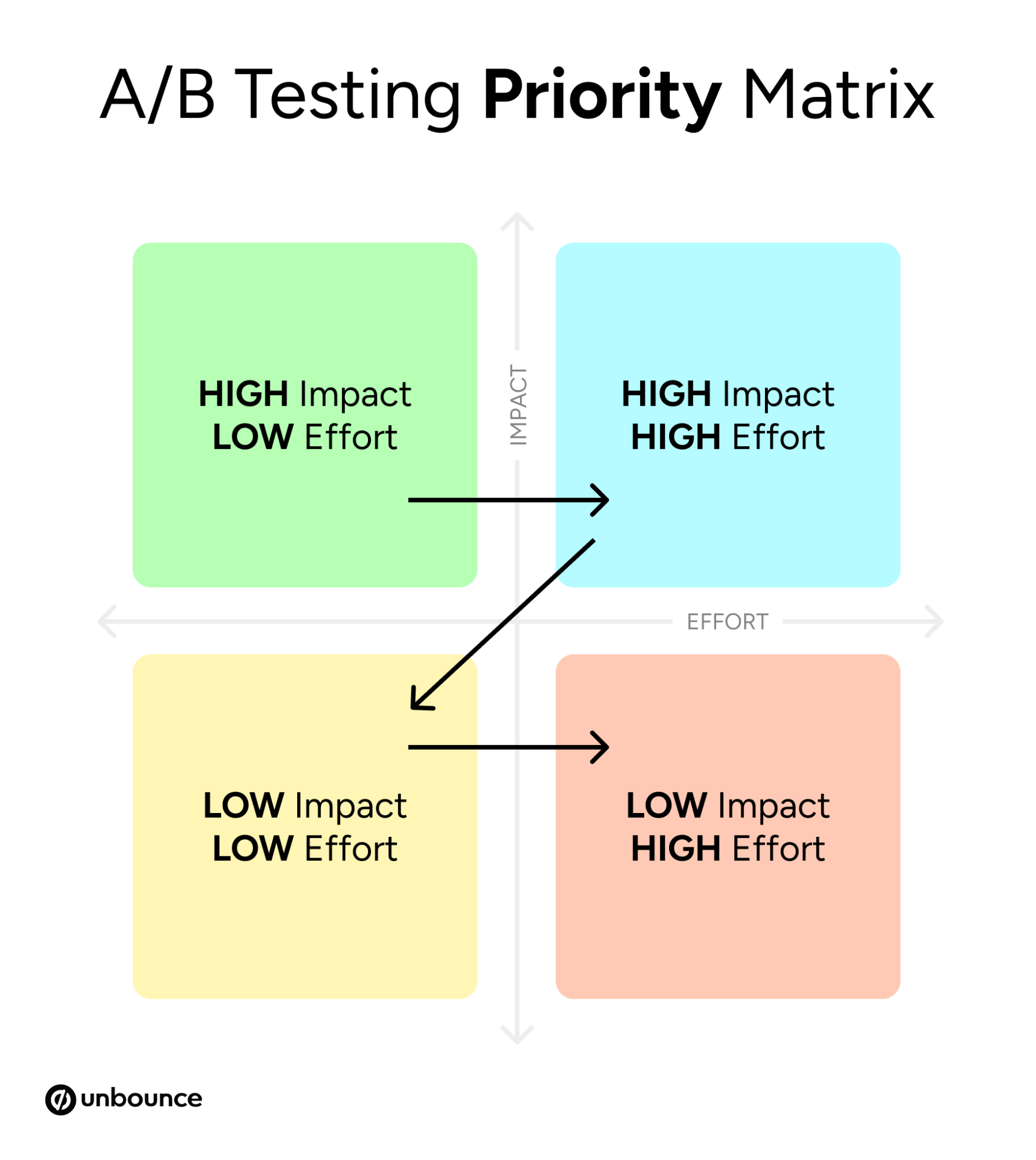
- Prioritization: Rank tests based on the effort required versus the potential impact on conversion rates.
- Deployment: Launch a minimal, testable variation of the asset.
- Observation: Use statistical analysis to determine if the result is a true trend or a statistical anomaly.
- Synthesis: Extract the underlying "why" behind the data. If the variation won, why? If it failed, what did it teach us about the audience?
- Expansion: Apply the winning insight to other channels or scale the change to the broader campaign.
Supporting Data: What the Trends Tell Us
The necessity for iterative testing is backed by shifting consumer data. According to the 2024 Conversion Benchmark Report, the digital environment is becoming increasingly nuanced. For example, while 83% of landing page visits now occur on mobile devices, desktop traffic continues to convert at an average rate 8% higher than mobile.
This creates a paradox: if a marketer relies on broad industry assumptions, they might optimize for the wrong device. Data also suggests that language complexity is a significant hurdle; the report indicates that pages written at a 5th-to-7th-grade level convert at 11.1%—more than double the rate of professional-level, complex writing.
Furthermore, high word complexity shows a -24.3% negative correlation with conversion rates. These findings serve as the perfect "first iteration" for any team; by testing simplified language, marketers can immediately see if their specific audience responds to plain-spoken clarity or if their industry requires technical jargon.
Implications for Modern Marketing Teams
The shift toward iterative testing has profound implications for how marketing departments are structured and how they view their "to-do" lists.
1. The Death of the "Expertise" Trap
One of the most significant hurdles to iterative testing is the ego of the "marketing expert." Often, teams rely on personal preference or "best practices" that worked five years ago. Iterative testing democratizes decision-making; the data, rather than the loudest person in the room, dictates the strategy. This fosters a culture of humility where a "failed" test is considered a successful learning experience.

2. Speed as a Competitive Advantage
In the digital age, speed is a metric of its own. When teams can shrink their feedback loops from quarterly reviews to weekly iterations, they can pivot in real-time. If a competitor launches a new campaign or a trend shifts consumer sentiment, an agile team is already testing their response, while a traditional team is still drafting the creative brief for their next big launch.
3. Breaking Down Organizational Silos
Iterative testing thrives on cross-functional input. When sales, support, and marketing teams collaborate on the "testing backlog," the quality of the hypotheses improves. For instance, if the support team notices a trend in user confusion regarding pricing, the marketing team can immediately launch an A/B test to see if adding pricing clarity to the hero section of the landing page reduces friction. This creates an organizational "flywheel" where every department contributes to the conversion optimization effort.
Best Practices: How to Start Small and Scale Fast
To avoid the common pitfall of over-complication, marketers should adhere to these three principles:
Prioritize Impact Over Perfection
Not every variable is worth testing. Use a 2×2 prioritization matrix to categorize tasks by Effort and Impact. Start with "High Impact, Low Effort" wins to build organizational momentum. Once you have a few quick wins, it becomes significantly easier to gain executive buy-in for more resource-intensive, high-stakes experiments.
The Power of "Clean" Testing
Avoid the temptation to change multiple elements at once. If you change the headline, the button color, and the hero image simultaneously, you will never know which element actually moved the needle. Keep your variations clean and isolated. The goal is to isolate the causal factor, not to reinvent the page in one go.
Establishing Statistical Significance
A common mistake is ending a test too early. Without a sufficient sample size, you are simply guessing. Use tools that provide built-in confidence intervals to ensure your data is robust. If your traffic volume is low, utilize advanced optimization tools—such as AI-driven traffic distribution—that can start making intelligent decisions with smaller sample sizes (often as few as 50 visits).
Conclusion: Cultivating a Culture of Experimentation
The transition to iterative testing is not just about adopting new software; it is about adopting a new mindset. It is the realization that "done" is a dangerous word in marketing.
When you view your campaigns as an ongoing, evolving experiment, you stop fearing failure and start embracing the curiosity required to understand your customers better. Whether you are a small startup or a global enterprise, the ability to learn faster than your competition is the ultimate sustainable advantage.
As you begin your journey toward iterative optimization, remember that the goal is not to find a single perfect solution. The goal is progress. By testing continuously, learning from every interaction, and iterating based on evidence rather than intuition, you ensure that your marketing efforts remain relevant, effective, and highly profitable in an ever-shifting digital landscape.
The path to higher conversion rates isn’t paved with big, risky bets—it’s paved with the steady, consistent, and data-driven improvements of an iterative testing program. Start your first test today, observe the data, and let your customers show you the way forward.