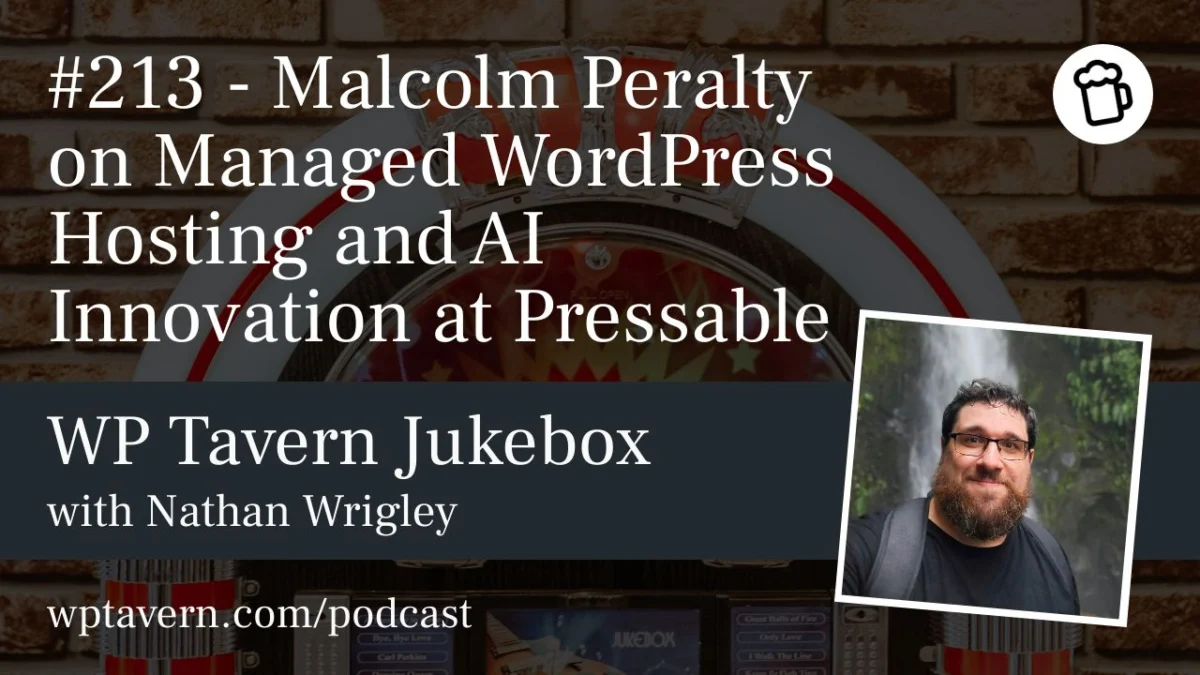
The landscape of managed WordPress hosting is undergoing a fundamental transformation. As the web evolves toward more complex, data-driven experiences, the role of the hosting provider is shifting from a passive utility to a proactive, strategic partner. At the forefront of this shift is Malcolm Peralty, a seasoned industry veteran and Technical Account Manager at Pressable, who is pioneering new approaches to infrastructure, client relations, and AI integration.
In a recent deep dive on the Jukebox Podcast, Peralty explored the intersection of human expertise and machine intelligence, offering a candid look at the challenges of maintaining high-performance WordPress environments at scale.
The Evolution of the Technical Account Manager (TAM)
For many, the concept of a "Technical Account Manager" remains elusive, often confused with sales or traditional support roles. However, as Peralty explains, the position is rooted in long-term strategy rather than immediate troubleshooting.
"We are WordPress hosting strategists," Peralty notes. "We’re thinking about what your website looks like a year or two from now. What technologies do you need to be aware of? What end-of-life cycles are approaching, and how can we bridge the gap between customer needs and the underlying infrastructure?"
Unlike standard support, which focuses on "breaking/fixing," the TAM model is designed to optimize. By monitoring data from server instances, Pressable’s TAMs proactively identify performance bottlenecks—sometimes even advising clients to downgrade their plans if optimizations reduce their resource footprint. This philosophy turns the traditional hosting business model on its head: instead of encouraging higher resource consumption, the provider thrives by making the client more efficient.
From Drupal to the WordPress Ecosystem
Peralty’s journey provides a unique perspective on the CMS landscape. With 20 years in the space, he has navigated the complexities of both WordPress and Drupal, even spending time at Acquia, a titan in the Drupal world.
His transition back to the WordPress ecosystem was not merely a career move; it was a realization of the platform’s unique strengths. While he acknowledges that Drupal often carries a higher professional pay grade, the agility and accessibility of WordPress, combined with the innovative infrastructure at Pressable, made his return an easy decision. His experience managing large-scale, complex environments in the Drupal space has allowed him to bring a level of enterprise-grade rigor to Pressable’s "WP Cloud" infrastructure.
The Performance Paradox: Plugins, Bloat, and Scale
One of the most persistent myths in the web world is that hosting is a simple "file-and-database" affair. Peralty argues that this perception ignores the reality of modern web demands.
"It’s a difficult juggling act," Peralty explains. "On one hand, WordPress is incredibly performant. On the other, the accumulation of themes and plugins—especially heavy page builders—can create massive overhead."
This is where the distinction between commodity hosting and managed, high-scale hosting becomes critical. While some hosts mask performance issues with aggressive caching or high-end CPUs, these setups often fail under the weight of real-world, concurrent traffic.
Pressable’s approach, according to Peralty, focuses on the concept of "workers"—the software processes that complete user requests. By implementing a one-to-one ratio of workers to virtual CPUs, Pressable ensures that even complex, uncached sites—such as those running e-commerce checkouts or Learning Management Systems (LMS)—remain resilient under load.
The Rise of AI: The MCP and Natural Language Hosting
Perhaps the most significant development on the horizon is the introduction of Pressable’s AI-powered control panel, known as the MCP (Managed Control Panel). The goal is to allow users to deploy, manage, and optimize their WordPress sites using nothing but natural language commands.
The Power of Natural Language
Imagine a developer sitting in a café, briefing a client, and being able to spin up a fully configured staging site, sync it with production data, and apply a theme, all via a voice prompt. This is not science fiction; it is the near-future reality that Peralty and his team are building.
"Anything that you could do or click on as a user in the control panel, an AI could eventually act on," says Peralty. This includes complex tasks like:
- Spinning up sandbox environments.
- Syncing code and uploads between staging and production.
- Managing plugin updates across a fleet of thousands of sites.
Guardrails and the Human-in-the-Loop
The concern regarding AI "hallucinations" or accidental destructive actions is valid. To mitigate this, Pressable is focusing on "human-in-the-loop" workflows. By utilizing system prompts that mandate verification before any destructive action, and by leveraging robust backup solutions, the platform aims to provide the speed of automation with the safety of human oversight.
Infrastructure and the "Invisible" Web
As hosting becomes more automated, the underlying infrastructure is becoming more sophisticated. Peralty points to several cutting-edge trends that will define the next few years:
- Virtual Clusters: Moving away from reliance on single data centers, virtual clusters allow multiple locations to act as a single, local server, significantly increasing resiliency.
- Advanced Replication: As e-commerce sites grow, the need for near-instant database replication across geographies is paramount. Minimizing latency is the new "holy grail" of database management.
- Edge Caching and Web Assembly: Technologies like WordPress Playground, which runs WordPress directly in the browser, are changing how we think about testing and deployment.
The Ethical and Financial Implications
The integration of AI into hosting is not without its costs—both literal and metaphorical. Peralty raises a provocative point: AI bots are increasingly aggressive in crawling, testing, and interacting with websites, often consuming significant server resources.
"An AI bot might add products to a cart, triggering uncached sessions millions of times a day," Peralty explains. "As an industry, we are grappling with how to handle these costs. Do we block these bots, or do we adapt our pricing models to account for the massive amount of server load generated by non-human traffic?"
Furthermore, there is the existential question of the "human touch." As hosting becomes more automated, companies must strike a balance. Peralty remains committed to a "human-first" philosophy. The objective is to use AI to handle the repetitive, high-volume tasks for agencies, thereby freeing up human experts to provide the high-touch support that individual users and smaller businesses rely on.
Conclusion: A New Paradigm for WordPress
The future of hosting is not just about faster servers; it is about smarter systems that understand the intent of the user. Whether it is through the deployment of AI-driven control panels or the implementation of sophisticated, auto-scaling infrastructure, the goal remains the same: to remove the friction between a great idea and a live, performant website.
As Malcolm Peralty’s work at Pressable demonstrates, the "mysterious laboratory" of hosting is opening its doors. By embracing transparency, education, and cutting-edge automation, providers are helping to ensure that WordPress remains the platform of choice for everything from the local coffee shop website to the global e-commerce enterprise. The era of the five-minute website—configured, deployed, and optimized via natural language—is already here.