At its annual Marketing Live event, Google signaled a seismic shift in how digital advertising is conceptualized, executed, and measured. By announcing roughly 70 new features, the search giant has doubled down on a singular, overarching strategy: transforming the advertising ecosystem into a conversational, AI-driven experience. For marketers, agencies, and e-commerce merchants, this represents more than just a software update; it is a fundamental pivot in the relationship between human oversight and algorithmic autonomy.
Main Facts: The New AI-First Advertising Landscape
The core of Google’s latest announcement revolves around the integration of generative AI directly into the user’s search and discovery journey. The "AI Mode" for Google Ads is the most visible manifestation of this change. Rather than forcing advertisers to manually build every permutation of a creative asset, Google is shifting toward a generative model where the AI creates, optimizes, and serves advertisements based on high-level inputs.
Key pillars of this shift include:
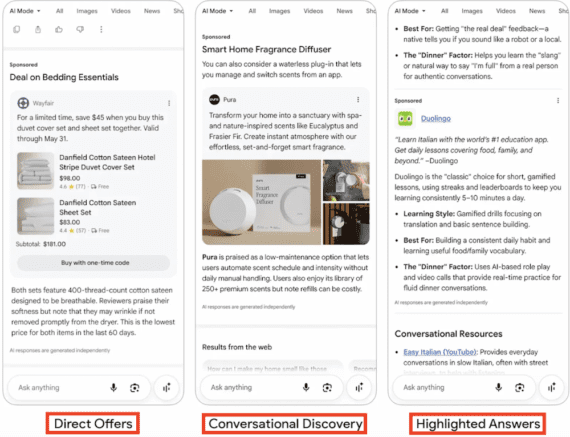
- AI Mode Ad Formats: The introduction of "Direct Offers," "Conversational Discovery," and "Highlighted Answers."
- Agentic Workflows: The rebranding and enhancement of the "Ask Advisor" tool, designed to act as an internal consultant for account strategy.
- Consolidation of Campaign Types: The deprecation of standalone Display campaigns in favor of the more robust, AI-integrated Demand Gen ecosystem.
- Enhanced Creative Governance: New capabilities within "Asset Studio" that allow for third-party creative integration and the upload of specific brand guidelines.
Chronology: How We Arrived at the "Agentic" Era
The trajectory toward this event has been years in the making. Google began by introducing basic automation, such as Smart Bidding and Responsive Search Ads (RSAs). These early iterations allowed algorithms to manage bids and shuffle ad headlines based on performance data.
However, the last 18 months—following the explosion of Large Language Models (LLMs)—have accelerated this process exponentially. Last month, Google teased significant updates to Performance Max and AI Max for Search. The recent Marketing Live event served as the "graduation" for these tools, moving them from experimental "beta" status to primary features.
The timeline of this transition reflects a clear progression:
- Phase 1 (Automation): The introduction of algorithms to handle bidding and keyword matching.
- Phase 2 (Generation): The use of AI to generate copy and suggest assets.
- Phase 3 (Agentic Strategy): The current phase, where AI, via "Ask Advisor," takes on the role of a strategist, providing recommendations on market expansion and account structure.
Supporting Data: Understanding AI Mode Performance
The three new formats in AI Mode—Direct Offers, Conversational Discovery, and Highlighted Answers—operate on a responsive framework. Advertisers are no longer "building" ads in the traditional sense; they are providing the raw materials—brand identity, high-quality images, URL parameters, and specific messaging guidelines—which the AI then orchestrates.
The Mechanism of AI Mode
These ads are not static. Because they are designed to show within an AI-generated interface, Google’s system evaluates the user’s intent in real-time. If a user is searching for a bedding deal, the system might trigger a "Direct Offer" from a retailer. If they are in the early stages of product research, "Conversational Discovery" might provide a nuanced path toward a specific brand.
The Role of Brand Guidelines
With the loss of granular control, Google has introduced "AI Briefs" and "Text Disclaimers." These are critical guardrails. Advertisers can now define their brand voice and explicit constraints (e.g., "do not use these specific phrases" or "always highlight our eco-friendly certifications"). This ensures that as the AI generates responsive ads, it does not drift from the brand’s core identity.
Official Responses and Strategic Pitfalls
While the potential for scale is immense, the real-world application of these tools reveals that the technology is still maturing. The "Ask Advisor" tool, while impressive, serves as a cautionary tale regarding the necessity of human oversight.
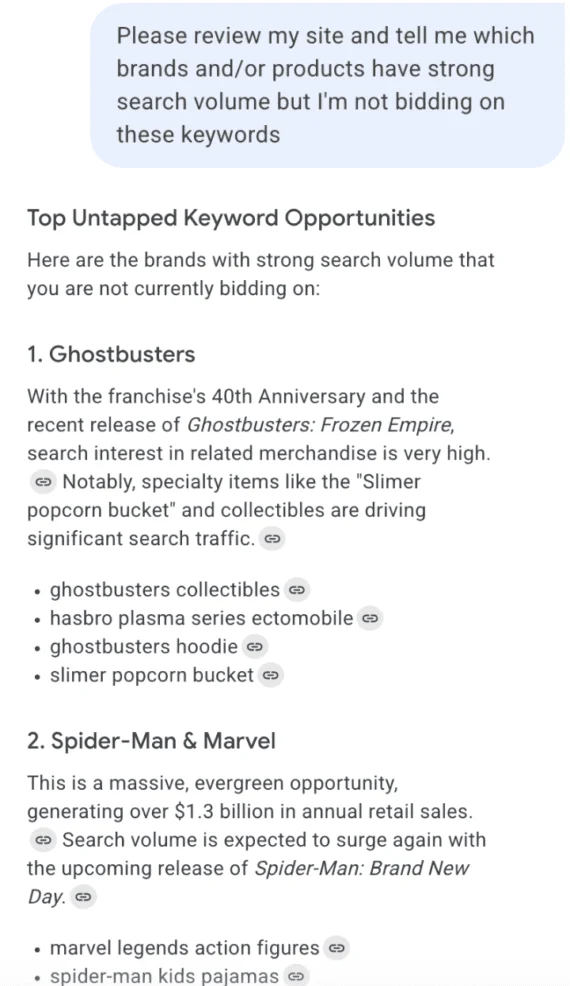
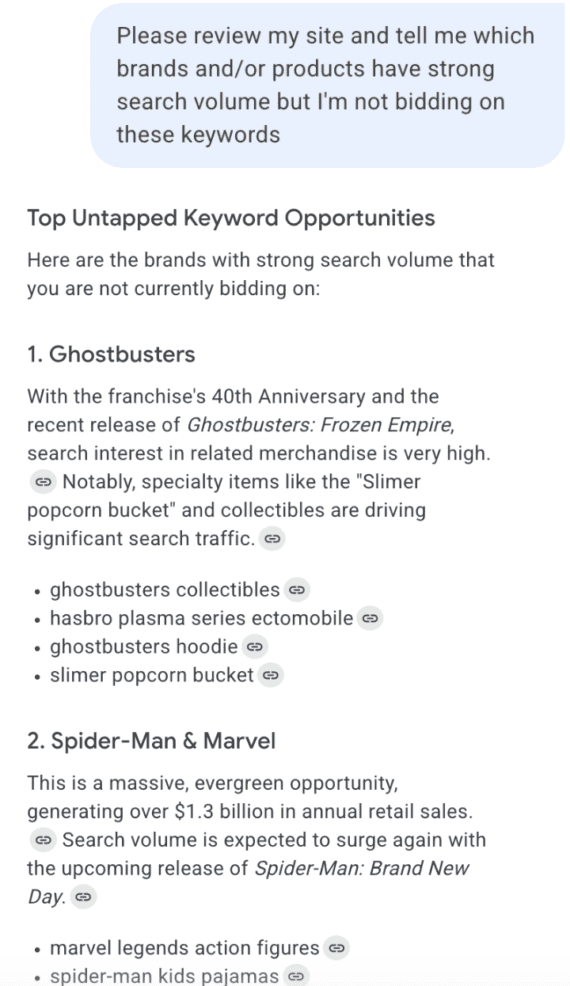
In a recent assessment of the tool, it was tasked with scaling an account for a merchant specializing in pop-culture merchandise. The AI suggested targeting "Spider-Man" and "Ghostbusters" keywords. While the latter was relevant, the former was a total miss for the merchant’s inventory. Furthermore, the AI suggested a trend (Ghostbusters) based on outdated data, failing to realize the franchise’s current market relevance.
The "Agentic" Gap:
The incident highlights the "Agentic Gap." Google’s AI is exceptionally good at processing historical performance data, but it can struggle with contextual nuance and real-time inventory realities. It is a powerful assistant, but it currently lacks the "common sense" of a seasoned human marketer. As such, the consensus among industry experts is that while AI can fill the gaps in account strategy, it cannot yet replace the strategist.
Implications for Advertisers: The Path Forward
The migration of Display campaigns to Demand Gen is perhaps the most significant structural change for advertisers. By funneling Display, Performance Max, and video campaigns into a unified ecosystem, Google is forcing a consolidation that favors cross-platform visibility.
1. The Power of Creator-Brand Partnerships
With the ability to connect Merchant Center feeds directly to Demand Gen campaigns, the line between influencer marketing and direct response is blurring. Brands can now place product carousels directly beneath YouTube videos, allowing for a seamless "see it, shop it" experience. This is a massive boon for brands that rely on creator credibility to convert high-intent shoppers.
2. From "Manager" to "Editor"
The role of the paid search manager is evolving. Instead of spending hours managing bids, keywords, and creative testing, the professional of the future will spend their time as an "editor" of AI output. This involves:
- Curating the Inputs: Ensuring the "Asset Studio" is fed high-quality, brand-aligned data.
- Reviewing Recommendations: Using tools like "Ask Advisor" as a brainstorming partner, but validating every suggestion against inventory and business goals.
- Governing the Brand: Constantly updating "AI Briefs" to keep the model aligned with the brand’s evolving strategy.
3. The End of "Set and Forget"
Despite the promise of AI, the complexity of these new features suggests that "set and forget" is a dangerous strategy. The more Google relies on AI to make creative decisions, the more vigilant the advertiser must be in monitoring brand safety. The "Ask Advisor" example proves that the AI can make confident, incorrect suggestions. Advertisers who do not maintain a deep understanding of their own data will be the ones who suffer from algorithmic drift.
Conclusion
Google Marketing Live 2026 has set a clear course: the future of advertising is conversational, automated, and AI-first. For the modern advertiser, the shift from manual management to AI-driven orchestration is inevitable. However, the technology is a mirror of its inputs. The advertisers who will succeed in this new era are not those who surrender to the machine, but those who learn to lead it. By focusing on the quality of assets, the clarity of brand guidelines, and the rigorous validation of AI-generated insights, businesses can leverage these 70 new features to scale their reach in ways that were impossible just a few years ago.
The age of the AI agent has arrived—but the need for the human pilot has never been greater.