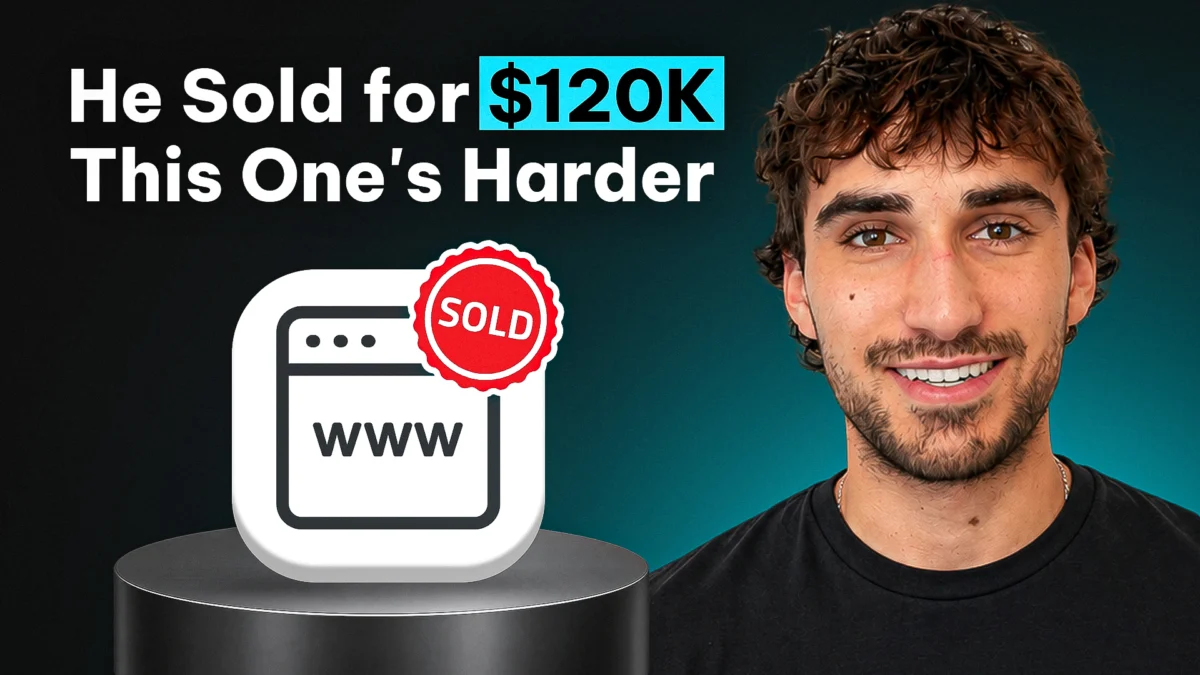
At an age when most young adults are still navigating university lectures and trying to figure out their career trajectories, 21-year-old Maddox Schmidlkofer has already tasted the exhilarating highs of a six-figure entrepreneurial exit. Having built and sold an online gaming site for $120,000 after scaling it to $1,000 per day in revenue, Schmidlkofer is already back in the trenches.
His latest venture, a consumer health app called Tallow, is currently live, acquiring users, and generating revenue. Yet, despite these baseline signs of life, Schmidlkofer finds himself grappling with a harsher, less romantic reality of modern tech entrepreneurship: growth that fails to meet ambitious projections.
Appearing on a recent episode of the Niche Pursuits podcast, Schmidlkofer offered a remarkably candid, behind-the-scenes look at the mental toll, economic realities, and relentless strategic pivots required to build a modern digital business after an early win.
Main Facts: The Anatomy of a Young Serial Entrepreneur
Schmidlkofer’s journey underscores how the barrier to entry for digital business has collapsed, while the barrier to sustained success remains fiercely competitive.
- The Breakthrough Exit: By November 2025, Schmidlkofer successfully sold his unblocked gaming website, DuckMath, for $120,000. At its peak over the summer, the site generated approximately $1,000 per day from programmatic advertising.
- The Current Venture: Launched on May 1, 2026, Tallow is a consumer-facing mobile application designed to scan food and everyday products, providing users with ingredient analysis based on Schmidlkofer’s strict criteria for health and product quality.
- The Performance Gap: At the time of the podcast recording, Tallow was generating less than $2,000 per month. This figure fell well short of Schmidlkofer’s internal target of $4,000 in monthly recurring revenue (MRR) by late August.
- The Ultimate Deadline: Schmidlkofer has drawn a hard line in the sand, extending his internal review deadline to October 31. If Tallow fails to hit the $4,000 MRR milestone by then, he is prepared to walk away from the project entirely.
- Resource Allocation: Recognizing the hyper-competitive nature of the consumer app space, Schmidlkofer now spends roughly 80% of his working hours exclusively on marketing, customer acquisition, and content creation rather than product development.
Chronology: From TikTok Inspiration to Mobile App Realities
The Genesis: Coding and Curiosity (Ages 16–17)
Schmidlkofer’s entrepreneurial spark was ignited on TikTok. After watching a peer younger than himself build a rudimentary unblocked gaming site for students, Schmidlkofer realized he possessed the foundational logic required to do the same. Armed with basic coding knowledge picked up in an AP computer science class, he began experimenting.
His initial iterations were built using basic web-building tools before he transitioned to writing custom code. Crucially, he documented his building process via short-form video content. This early exposure taught him a vital lesson: a digital product is worthless without an audience to consume it. When a single day of ad traffic yielded $240, abstract theory transformed into tangible reality. He promptly abandoned a traditional internship to pursue online business full-time.
The Valley of Failed Experiments
Success is rarely a linear progression. Following his initial experiments, Schmidlkofer launched several ventures that ultimately stalled out. Among them was Quackprep, a platform designed to help college students study via digital, quiz-style archives of past university exams.
While Quackprep generated nominal revenue, Schmidlkofer quickly realized that scaling it would require a grueling, school-by-school content acquisition strategy. Rather than forcing a failing product to grow, he shelved it alongside other early misfires, treating them as low-cost tuition in market mechanics.
The DuckMath Breakthrough
While experimenting with side projects, Schmidlkofer’s original unblocked gaming hub, DuckMath, continued humming along in the background, quietly collecting ad revenue. By the end of the summer, he decided to aggressively focus on its distribution.
He dove deep into the psychology of short-form gaming content, dramatically ramping up his publishing volume. The hyper-aggressive distribution strategy paid off rapidly. Within weeks, DuckMath was netting roughly $1,000 per day.
However, despite the healthy cash flow, personal disinterest in gaming and complications unique to running an unblocked gaming site—such as copyright hurdles and advertising restrictions—prompted him to test the market for an exit. In November 2025, he accepted a $120,000 buyout offer.
Building Tallow in a Crowded Market
With capital in hand and newfound validation, Schmidlkofer turned his attention toward health and consumer advocacy. On May 1, 2026, he launched Tallow. Operating in a category anchored by heavyweights like Yuka, Tallow aims to carve out a distinct niche by scoring and evaluating food ingredients through a specific lens of quality.
Despite entering a crowded market, Schmidlkofer viewed competition not as a deterrent, but as proof of market demand. Yet, gaining traction proved far more punishing than anticipated.
Supporting Data and Economic Metrics
Operating a modern bootstrapped consumer app comes with a distinct financial architecture. Schmidlkofer’s breakdown of Tallow’s financials highlights both the advantages and the hidden perils of indie app development:
- Low Infrastructure Costs: Thanks in part to startup credits secured during a visit to a Y Combinator event, Tallow’s baseline server and operational costs are nearly negligible.
- Platform Fee Relief: Both Apple and Google offer reduced platform commission structures (lowering the standard cut down to 15% for qualifying developers generating under $1 million annually). Schmidlkofer qualifies for this reduced rate, preserving his profit margins.
- The Cost of Visibility: While server bills are low, "invisible" platform friction carries a steep price. Schmidlkofer noted that early App Store search optimization hiccups—such as search algorithms autocorrecting queries to unrelated terms like "Talo"—cost him an estimated $500 in lost subscription revenue during a critical growth phase.
- Marketing Intensity: With customer acquisition costs rising across social platforms, Schmidlkofer allocates 80% of his time to top-of-funnel marketing, leveraging short-form video on channels like Snapchat and building content around viral investigative reporting (such as recent studies revealing widespread mislabeling in commercial avocado oils).
Official Insights and Strategic Challenges
Reflecting on his trajectory during the Niche Pursuits podcast, Schmidlkofer addressed the psychological friction of walking away from a business that is technically profitable, just underperforming against expectations.
"Tallow isn’t a dead project with zero customers, zero revenue, and no signs of life," Schmidlkofer noted, summarizing the nuance of his current situation. "It’s growing. The harder question is whether growth alone is enough to justify continuing at this pace."
One of the most significant strategic hurdles Schmidlkofer faces is the dominance of influencer-backed apps. In the current consumer landscape, apps that partner directly with established creators who already command trusted, niche audiences enjoy a massive structural advantage over indie founders building brand accounts from scratch.
While Schmidlkofer remains open to equity partnerships with major influencers, he sounds a note of caution: handing over significant ownership shares too early can create long-term structural ceilings, especially if an incoming partner lacks operational versatility.
Implications: The Hard Truth About Early Exits
Maddox Schmidlkofer’s ongoing story carries broad implications for the next generation of digital entrepreneurs:
- The Myth of the Linear Path: A $120,000 exit at age 21 proves that high-leverage digital execution is possible for young founders. However, it does not immunize them against the standard brutal economics of new product launches. Every new venture starts entirely from scratch.
- Distribution Trumps Product Perfection: Schmidlkofer’s experiences with both DuckMath and Tallow reinforce a fundamental truth of the modern internet economy: a mediocre product with exceptional distribution will almost always outperform a brilliant product that nobody can find.
- The Art of the Strategic Pivot: Perhaps the most valuable skill an entrepreneur can cultivate is not sheer stubbornness, but the objective self-awareness to recognize when a project’s trajectory does not justify the opportunity cost. By establishing a firm decision point on October 31, Schmidlkofer demonstrates a mature, pragmatic approach to capital allocation and personal runway.
Whether Tallow ultimately achieves its $4,000 monthly revenue target or becomes the foundation for Schmidlkofer’s next iteration, his journey serves as a masterclass in the realities of modern bootstrapped entrepreneurship: clear-eyed, data-driven, and relentlessly focused on the numbers.