
In an era defined by an unrelenting deluge of digital data, humanity faces a paradoxical challenge. We possess instantaneous, global access to the sum of human knowledge—housed within the vast infrastructure of the internet—yet finding precisely what we need, precisely when we need it, often feels like searching for a needle in a digital haystack.

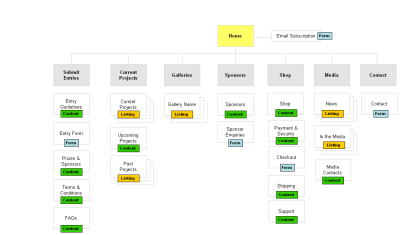
To combat this information overload, designers, developers, and enterprises increasingly rely on information architecture (IA). By systematically categorizing, structuring, and labeling content, IA creates navigable pathways through complex digital landscapes. Authored with insights from UX professional Carrie Webster, this comprehensive exploration examines the fundamentals of information architecture, its practical applications, and the broader socio-political implications of the Information Age.

1. Main Facts: Defining Information Architecture
At its core, as defined by the Information Architecture Institute, IA is "the practice of deciding how to arrange the parts of something to be understandable." From a user experience (UX) perspective, this requires deeply understanding how users think, identifying the problems they are trying to solve, and presenting information within a logical, context-driven hierarchy.

Whether applied to a sprawling enterprise website, a complex software application, or a streamlined mobile app, good IA translates raw data into structured navigation.
Why IA Matters for Users
For the end-user, effective information architecture delivers intuitive clarity. When digital systems are structured logically, users experience:
- Reduced Cognitive Load: Visitors can quickly scan, comprehend, and locate desired content without feeling overwhelmed.
- Seamless Flow: Users can intuitively move from broad categories to specific details and easily retrace their steps if they hit a dead end.
- Resonant Language: Terminology aligns with the user’s mental models rather than corporate jargon.
Why IA Matters for Business
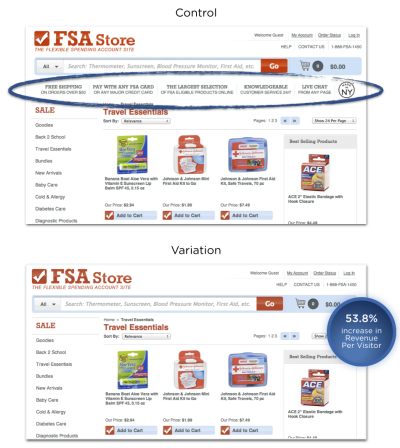
For organizations, the stakes are equally high. Poor navigation directly impacts conversion rates and revenue. In a prominent e-commerce case study highlighted by Optimizely, removing superfluous vertical navigation bars and reducing visual clutter between search bars and product listings yielded a 53.8% increase in customer revenue. By streamlining the path to purchase, businesses eliminate friction and guide users effortlessly toward conversion.

2. Chronology: The Evolution of Search vs. Navigation
The debate over whether users prefer browsing through site navigation or utilizing direct site search has evolved over decades through continuous UX research:

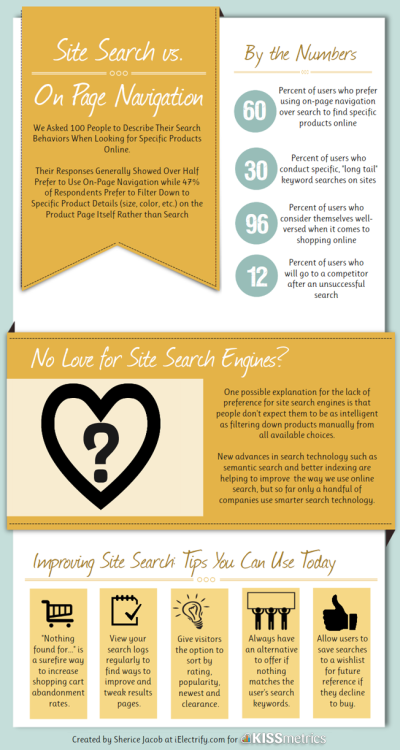
- 1997: Usability pioneer Jakob Nielsen published seminal research indicating that over 50% of website visitors naturally gravitated toward using search functions over traditional site navigation.
- 2010: A study by Gerry McGovern challenged the supremacy of search, revealing that 30% of users still actively preferred navigation over search interfaces.
- 2012: Econsultancy reported that roughly 30% of visitors to e-commerce platforms utilized on-site search, while separate metrics from Kissmetrics placed user preference for search at 40%.
- Modern Era: Contemporary research (such as data from MeasuringU) indicates that approximately 14% of users begin their journey with a direct search, while the vast majority (86%) prefer browsing through structured navigation options.
The consensus among modern UX designers is clear: neither search nor navigation can exist in a vacuum. Complex, content-heavy platforms require a hybrid approach—combining robust, intuitive mega-menus for browsers with intelligent, metatag-driven search capabilities for targeted queries.
3. Supporting Data: Best Practices, Testing, and Implementation
Designing robust information architecture is an iterative, data-driven process. To get it right, designers must leverage proven methodologies and testing tools:
Practical Implementation Strategies
- Minimize Sub-levels: Map out site navigation to ensure content is categorized into the minimal number of sub-levels, preventing user fatigue.
- Clear Labeling: Ensure all categories use recognizable language. On mobile interfaces, icons should always be accompanied by explicit text labels to prevent ambiguity.
- Contextual Wayfinding: Implement breadcrumb trails (e.g., Home > Banking > Accounts > Savings) to give users constant positional awareness.
Testing Methodologies
- Card Sorting: A foundational UX technique where participants organize information topics into groups. In an open card sort, users create their own category names, revealing natural mental models. In a closed card sort, users sort content into pre-determined top-level categories.
- Scenario Testing: Using clickable wireframes or prototypes, designers observe real users attempting to complete specific tasks (such as registering, booking an event, and publishing) to identify bottlenecks in user flows.
- Tree Testing (Treejack): A specialized validation tool that tests a site’s hierarchical navigation structure without the distraction of visual design, asking users where they would look for specific pieces of information.
- Keyword & Semantic Research: Tools like AnswerThePublic allow designers to analyze real-world search queries and synonyms, ensuring that site navigation language mirrors the exact phrasing used by the target audience.
4. Official Responses and Real-World Examples
To understand how IA succeeds or fails in the wild, one need only examine major digital platforms:

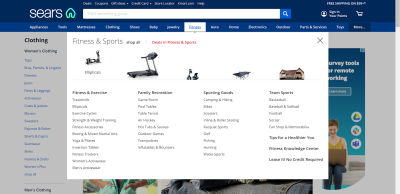
- Successful Mega-Menus (Sears): By utilizing expansive drop-down menus enriched with visual imagery, platforms like Sears allow users to rapidly process sub-categories and make cognitive leaps to desired products.
- Search-Driven Interfaces (Pinterest): Due to the staggering volume of user-generated visual content, maintaining a traditional categorical navigation tree is impossible. Pinterest uses search as its primary navigation mechanism, turning queries into dynamic visual grids.
- Information Overload (Fry’s Electronics – Historical): Poor web design characterized by cramped layouts, lack of white space, and an overwhelming barrage of unorganized choices demonstrates how bad IA actively alienates visitors.
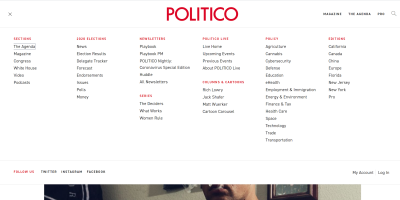
- Hybrid Models (Politico): Content-heavy news and media sites frequently employ a "megamenu" accessible from the corner of the page to organize complex political topics, alongside a prominent search bar for breaking news archives.
5. Implications: The Broader View of the Information Age
Moving beyond the mechanics of website design, we must confront the broader socio-cultural implications of the Information Age. As internet activist Aaron Swartz famously argued before his tragic death in 2013, information is a profound source of power. Swartz dedicated his life to liberating locked academic data and fighting corporate censorship, recognizing that access to information is fundamentally tied to human liberation.

However, the democratization of information is a double-edged sword.
The Weaponization of Information
- Rapid Global Shifts and Misinformation: In the wake of global crises, such as the COVID-19 pandemic, the rapid dissemination of data has forced governments to pivot strategies hourly. Simultaneously, conflicting reports, unverified "fake news" claims, and unfounded conspiracy theories have sown widespread public confusion.
- Data Security and Privacy Breaches: Massive data compromises—such as the 2018 Facebook security breach affecting 50 million accounts, or the 2017 Equifax breach exposing the personal and financial data of over 147 million Americans—demonstrate the severe, long-term personal ramifications of lax information security.
- Legislative Safeguards: In response to these vulnerabilities, global governance has shifted dramatically. Currently, 132 out of 194 countries have enacted data protection and privacy legislation to regulate the unauthorized sharing of personal information, reflecting a steady 10% annual rise in global privacy laws.
Conclusion
Information itself is inherently neutral; it does not discriminate between constructive progress and destructive manipulation. Because we are perpetually surrounded by oceans of data, the responsibility falls upon information architects, designers, and digital creators to impose order, clarity, and ethical structure. By mastering information architecture, we do more than simply build better websites—we help humanity make sense of a complex world, turning overwhelming noise into accessible, actionable knowledge.