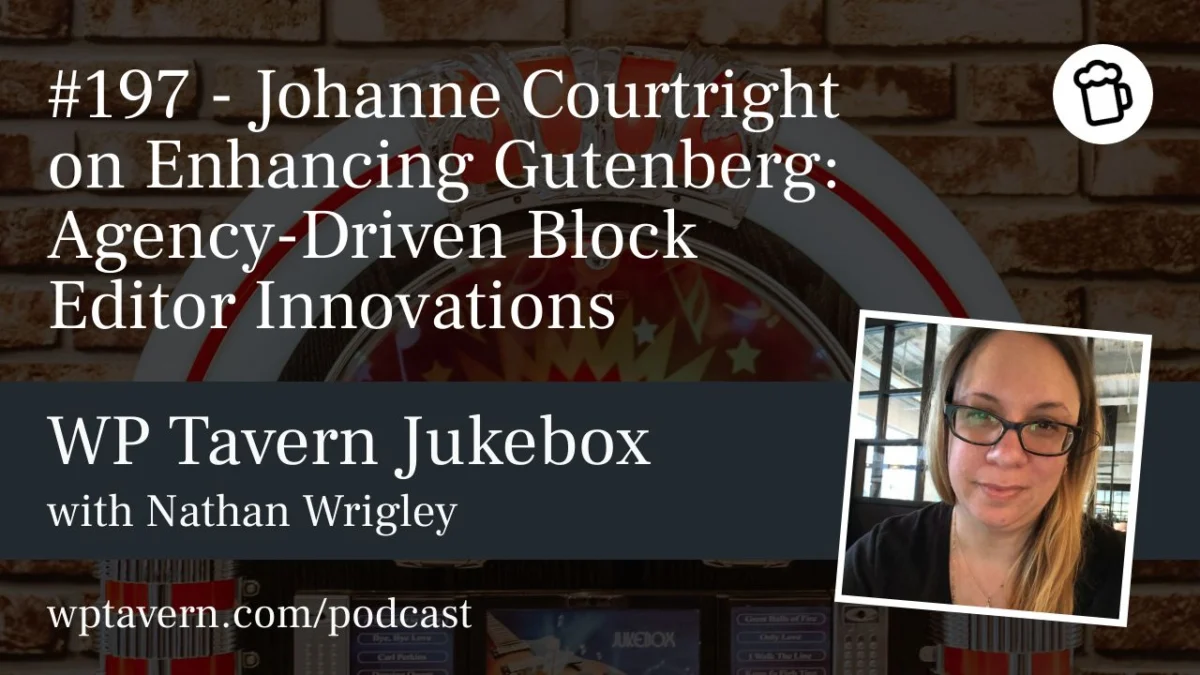
The WordPress ecosystem stands at a critical juncture. Since the introduction of the block editor, the platform has shifted from a CMS focused on static content management to a dynamic, visual site-building powerhouse. Yet, for many professional agencies, the transition to full-site editing has been fraught with friction. Enter Johanne Courtright, a veteran developer whose project, Groundworx, is attempting to reconcile the gap between WordPress Core’s "80/20" philosophy and the pixel-perfect, highly performant requirements of modern agency work.
The Evolution of a Developer: From Dreamweaver to React
To understand the current state of WordPress development, one must look at the path traveled by those who have been in the trenches since the early days. Johanne Courtright’s journey began in 2011, a time when the web was dominated by static HTML and the cumbersome workflow of Dreamweaver.
"WordPress solved a big problem at the time," Courtright explains. "It offered a way to manage content that felt intuitive compared to the static sites of the era." Over the next decade, Courtright evolved from a marketing agency generalist into a specialized developer. Her toolkit expanded from Advanced Custom Fields (ACF) and custom post types to the complex, modern requirements of the block editor and React.
Unlike many who found the shift to Gutenberg intimidating, Courtright treated the disruption as an opportunity. Recognizing that the future of the platform lay in JavaScript and modular components, she invested in formal training to master React. This decision to "go all in" on Gutenberg—eschewing jQuery in favor of the Interactivity API—positions her as part of a new wave of developers who are no longer just using WordPress, but actively extending it to meet modern standards.
The Groundworx Philosophy: Enhancing, Not Replacing
The core of Courtright’s work is encapsulated in her open-source project, Groundworx. Rather than creating a proprietary page builder that traps users in a "walled garden," Courtright’s strategy is to enhance the existing capabilities of WordPress Core.
Addressing the "Agency Gap"
For agencies, the standard Gutenberg experience often falls short. High-end web design demands pixel-perfect precision, complex responsive behaviors, and efficient workflows for non-technical clients. Courtright identified several critical areas where Core was lacking:
- Breakpoint Control: Providing granular control over layout shifts, padding, and font sizes across different device widths.
- Preset Management: Implementing branding-focused color palettes and typography scales that allow clients to maintain visual consistency without "breaking" the design.
- Performance: Stripping away the bloat often found in third-party builders by utilizing the native, performant structure of the block editor.
"The goal," Courtright notes, "is to set up enough blocks and a flexible theme.json foundation that allows users to start fast. It’s not about overwhelming the user; it’s about giving them the tools to be professional without fighting the system."
A New Frontier for Navigation and Layout
One of the most notable components of the Groundworx suite is its approach to the Navigation block. While Core offers a functional menu system, it often lacks the versatility required for enterprise-grade sites. Courtright’s navigation solution leverages the Interactivity API to create menus that are not only performant but also capable of complex behaviors—such as transforming from a tabbed desktop menu to a mobile-friendly accordion—all within the same HTML structure.
This reflects a deeper shift in WordPress development: moving away from "cloned" menus (where desktop and mobile menus are two separate, hidden entities) toward a unified, responsive structure. By using custom post types to manage these navigation components, Courtright has enabled a modular workflow where menus can be built and styled entirely within the block editor interface, fulfilling the original promise of Full Site Editing (FSE).
The 80/20 Rule: Balancing Core and Customization
A central theme of the discussion surrounding modern WordPress is the "80/20 rule"—the philosophy that WordPress Core should provide the 80% of functionality that the vast majority of users need, leaving the remaining 20% to the plugin ecosystem.
Courtright acknowledges the wisdom in this approach but emphasizes the challenges it creates for agencies. "If you are a normal user, WordPress as it stands is fantastic," she says. "But for an agency, you need that extra 20%. You need to ensure your site is responsive at every break point and that the client can edit it without needing a developer to tweak the CSS every time."
Her work with Groundworx serves as a bridge for that 20%. By building a library of modular blocks—including advanced accordions, tabs, and media-content splits—she is providing a professional-grade starting point that respects the Core architecture while delivering the features that agencies demand.
Implications for the WordPress Ecosystem
The broader implications of Courtright’s work suggest a shift in how we perceive the "plugin economy." As the block editor matures, the focus is moving away from massive, all-encompassing page builders toward specialized, lightweight block suites that play nicely with others.
Discovery and the "App Store" Problem
A recurring critique from developers like Courtright is the current state of the WordPress Plugin Directory. "The search is awful," she argues. "It’s stuffed with keywords, and there is no way for new, high-quality development to be discovered."
Courtright draws a comparison to the Apple App Store, suggesting that WordPress needs a more curated, community-driven approach to discovery. She proposes that plugin developers should be able to tag their work with specific technical indicators—such as "Gutenberg-native," "No-jQuery," or "Interactivity API-based"—to help users find the tools that match their modern development standards.
The Future of Block-Based Businesses
Can a business be successfully built on blocks alone? While some skeptics argue that the market for block-based products has yet to reach a critical mass, proponents like Courtright see it as an inevitability. As more agencies move away from legacy page builders, the demand for high-quality, performant, and "future-proof" blocks will only increase.
For Courtright, success is not just defined by revenue. "I do this for myself first," she says. "I build the tools I need to do my job better. If others find them useful, that’s the real success."
Conclusion: A Call for Community and Innovation
As we look toward 2026, the trajectory of the WordPress block editor seems clear: it is becoming a more robust, extensible platform. However, the success of this vision depends on the interplay between the Core development team and the ecosystem of independent developers who are constantly testing the boundaries of what is possible.
Johanne Courtright’s work with Groundworx is more than just a set of blocks; it is a testament to the power of the open-source spirit. By embracing the constraints of the system and innovating within them, she provides a roadmap for other agencies to follow. Her call for a more usable plugin directory, a more community-focused discovery process, and a shift toward modern, performant coding practices is a challenge to the entire WordPress community to keep pushing forward.
Whether you are a developer looking to modernize your workflow or an agency head seeking to bridge the gap between design and development, the evolution of the block editor—led by pioneers like Courtright—offers a promising, and increasingly powerful, future for the web.