WASHINGTON — For as long as commerce has relied on advertising, marketers have grappled with a foundational, vexing question: How much of this revenue would have happened anyway?
Long before the advent of digital tracking, cookies, and multi-touch attribution (MTA) models, early merchants struggled to separate promotional causation from baseline consumer demand. Today, in an increasingly fragmented digital ecosystem dominated by walled gardens and overlapping ad platforms, that challenge has only grown more acute. Despite decades of algorithmic refinement, Paid Search and other digital marketing channels have failed to definitively solve the attribution puzzle.
Instead, the industry is undergoing a paradigm shift. Enter incrementality testing—a rigorous, data-driven methodology that is rapidly replacing flawed attribution models as the gold standard for measuring true marketing impact.
Main Facts: The Flaws of Attribution and the Rise of Counterfactuality
At its core, traditional attribution modeling is plagued by inherent platform bias. For years, marketers have relied on analytics providers—such as letting Google Analytics gauge the efficacy of Google Ads campaigns—to evaluate performance. Unsurprisingly, ad platforms frequently grade their own homework, leading to inflated metrics and overlapping claims of credit.
"Every platform claims the win," industry experts note. Even within a single channel like Paid Search, Brand Search campaigns often monopolize the spotlight, claiming credit for conversions while ignoring the critical top-of-funnel and mid-funnel efforts—such as Non-Brand Search, social ads, or video campaigns—that actually drove the user to search for the brand in the first place.
Incrementality testing strips away these platform biases by focusing on counterfactuality: the art and science of measuring what would happen in the absence of a specific marketing stimulus. Rather than evaluating past performance through passive observation, incrementality testing is a deliberate act of altering marketing inputs—such as pausing specific campaigns in designated regions—to measure the exact variance in real-world outcomes.
Chronology: From Static Modeling to Dynamic Experimentation
The evolution of marketing measurement has followed a distinct historical trajectory, moving from broad assumptions to hyper-fragmented digital tracking, and now toward controlled experimentation.
- The Pre-Digital Era: Advertisers relied on broad market tests, geographical blackouts, and direct-response mailers to gauge if an ad campaign moved the needle on regional sales.
- The Rise of Digital Attribution (Late 1990s–2010s): With the birth of digital tracking, first-click, last-click, and multi-touch attribution models promised granular precision. However, these models quickly became bloated by channel competition and privacy regulations (such as iOS privacy updates and cookie deprecation).
- The Multi-Platform Collision (2020s): As brands diversified across Google, Meta, TikTok, retail media networks, and emerging AI-driven platforms, attribution models completely broke down. Different dashboards claimed credit for the exact same transaction, leaving CMOs with conflicting data.
- The Shift to Incrementality (Present Day): Forward-thinking brands are abandoning purely algorithmic attribution in favor of active incrementality testing frameworks. By establishing baselines, utilizing geo-holdouts, and calculating Minimum Detectable Effects (MDE), modern paid search managers are moving from passive observers to active experimenters.
Supporting Data and Methodologies: How Incrementality Works
Setting up an incrementality test can feel intimidating to teams without a deep statistics background, but the framework relies on structured, repeatable steps.
1. Define Success and the Source of Truth
An advertiser must first determine what is being observed—such as the true bottom-line contribution of Non-Brand Search or the unattributed lift of video campaigns. Crucially, stakeholders must agree on a single, undeniable "source of truth." For an e-commerce brand, this might look like monitoring an overall lift in sales and revenue directly within Shopify, rather than relying solely on platform-reported conversions.
2. Choose the Testing Structure
Paid search managers typically rely on two primary testing structures:
- Geo Holdout Tests: A low-lift, highly effective method where specific campaigns (like Non-Brand Search) are paused in a select group of geographic regions (e.g., ten states) for a set period. Results from this test group are then compared against a designated control group of similar markets.
- Lift Tests (User Holdout): Commonly used in video or display campaigns (such as Google Ads’ Brand Lift and Conversion Lift studies), these tests expose a randomized group of users to ads while withholding them from a control group, tracking performance at the individual user level.
3. Account for Timing and Minimum Detectable Effect (MDE)
External variables—such as seasonality, supply chain disruptions, unexpected promotions, or competitive shifts—can easily skew test results. To combat this, comprehensive testing frameworks include a "halo period" after the test concludes to observe performance normalization.

Furthermore, teams must establish a Minimum Detectable Effect (MDE) prior to launching the test. MDE represents the smallest performance fluctuation required to convince all stakeholders that the test results are conclusive. Unlike statistical significance (which is calculated after the data is collected), MDE sets the baseline expectations for what constitutes a meaningful business change versus routine period-to-period noise.
Official Perspectives and Stakeholder Management
One of the greatest hurdles in implementing incrementality testing is not technical, but cultural. When a digital marketer proposes turning off a high-performing campaign in ten states or pausing brand keywords, leadership often pushes back with immediate concern: "Turning off ads sounds like losing money on purpose!"
Industry leaders emphasize that transparency and meticulous reporting are essential to securing executive buy-in.
"Because the KPI and source of truth were agreed upon before the test was ever launched, there shouldn’t be any surprises when it’s time to review results," brand strategy consultants advise.
When presenting findings, advertisers must clearly outline:
- Pre-period performance versus test-period performance.
- The variance between test groups and control groups.
- Anticipated risk parameters and MDE thresholds.
- A predictable timeline for performance stabilization once the test concludes.
By maintaining a rigorous, regular reporting cadence, digital marketing teams can demystify the process and build long-term trust with broader corporate stakeholders.
Implications: Embracing Inconclusive Results and the Omnichannel Future
What happens when an incrementality test reveals that a supposedly vital paid search campaign is actually driving zero incremental value?
For sophisticated marketing teams, negative or inconclusive results are not failures—they are opportunities. If pausing Non-Brand Search campaigns fails to impact overall revenue, it forces the organization to investigate deeper operational questions. Are the keyword themes misaligned? Is market saturation via alternative channels (such as Performance Max, social media, or generative AI discovery tools) drowning out traditional search terms?
Uncovering the "why" behind unfavorable data allows brands to reallocate wasted ad spend, refine their keyword strategies, and optimize their overall marketing mix.
The Ultimate Secret Weapon
Ultimately, incrementality testing is not a one-off project; it is an ongoing cultural and operational practice. In today’s complex omnichannel environment, no single attribution system is flawless. However, an institutionalized incrementality framework cuts through platform bias, eliminates wasted budget, and ties tactical Paid Search efforts directly to overarching business objectives.
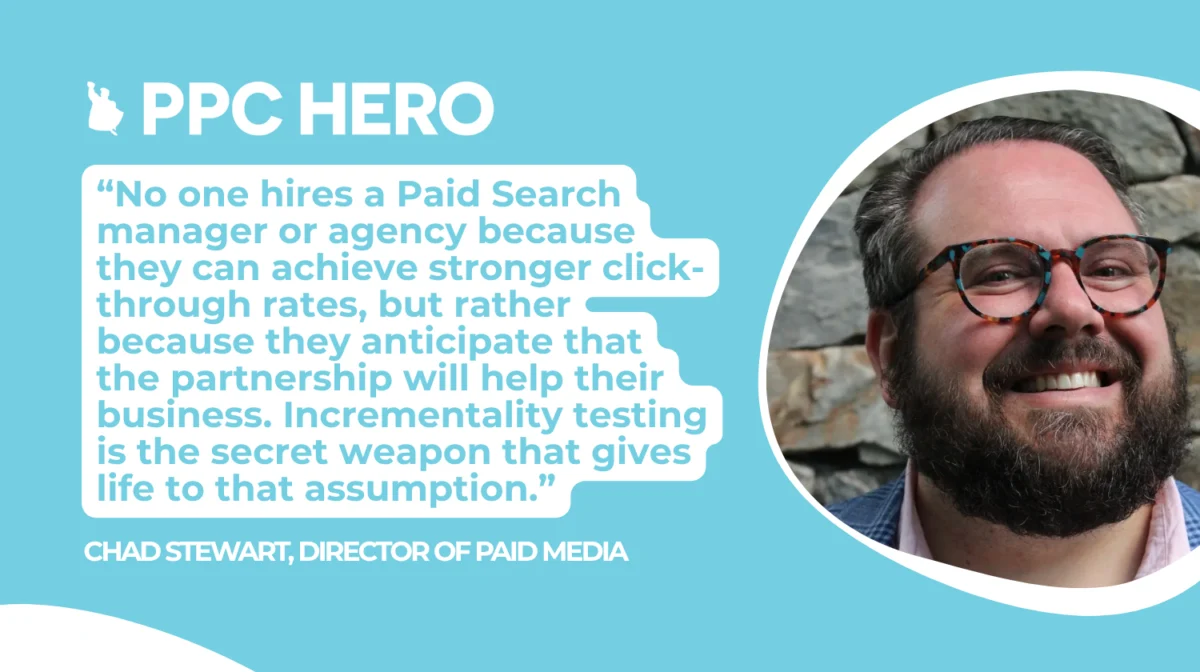
No company hires a digital agency or paid search manager simply to achieve higher click-through rates. They invest because they expect those efforts to drive bottom-line growth. Incrementality testing serves as the definitive proof of that value—transforming advertising from a guessing game into a predictable, highly calibrated science.