As generative artificial intelligence tools infiltrate every corner of the creative landscape—from drafting sophisticated text to rendering intricate graphic designs—an overwhelming wave of anxiety has washed over creators, writers, and designers. The prevailing fear is stark and immediate: Will AI make human creators obsolete?
While machine learning algorithms have been programmed to excel at pattern matching, data processing, and asset generation, they fundamentally misunderstand the essence of design. AI cannot replace the intrinsic skills and behavioral patterns that define the human aspect of creativity. By examining non-technical competencies—specifically curiosity, observation, empathy, advocacy, visual communication, and collaboration—we discover a robust framework of human capabilities that technology cannot replicate. Rather than signaling the death of creativity, AI serves as a powerful catalyst to augment human workflows, freeing creators to focus on strategy, innovation, and genuine human connection.
Main Facts: The AI Disruption and the Fallacy of Replacement
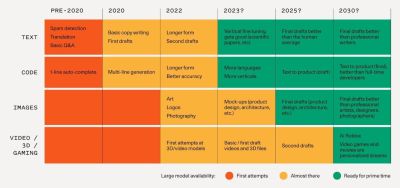
The discourse surrounding artificial intelligence is dominated by timelines, guesstimates, and apocalyptic workforce projections. Industry forecasts from institutions like Sequoia Capital attempt to pinpoint when algorithms will achieve parity with human capability across text, code, image, and video generation. This has fueled a pervasive narrative that human creatives are staring down the barrel of permanent redundancy.
However, the foundational assumption that AI will replace people relies on a flawed premise: that humans and machines possess the same qualities, abilities, and skills.
Artificial intelligence is, at its core, sophisticated technology trained to mimic human intelligence to perform specific tasks. These systems ingest staggering volumes of data—by some estimates, datasets equivalent to a quarter of the Library of Congress. Consequently, AI outperforms humans in tasks requiring the rapid, accurate, rational, and consistent processing of vast data pools.

Yet, processing data is not the same as being creative. AI can generate variations, but it cannot exercise true creativity. It lacks the distinctly human attributes of intuition, emotional intelligence, cultural awareness, and the ability to navigate unpredictable, shifting real-world contexts. Humans are conscious beings driven by a subconscious mind, shaped by a lifetime of experiences, environmental nuances, wisdom, and emotional depth. No matter how sentient an algorithm may appear, these traits cannot be programmed into silicon.
Chronology: A Case Study in Human-Centric Problem Solving
To understand why human presence remains irreplaceable, one must examine how design actually happens in the field. At the onset of the Coronavirus pandemic, a critical real-world project underscored the limits of remote, data-driven assumptions.
Tasked with redesigning a tablet application used by sales representatives for the world’s largest food and beverage company, a design team faced a steep learning curve. Having never worked as a retail sales representative, the lead designer initiated the project by adhering to the golden rule of design: Know Thy User.
Phase 1: Pandemic Constraints and Digital Discovery
During the initial lockdown, the team conducted remote video interviews. While informative, these digital touchpoints offered a sanitized view of the user’s reality.
Phase 2: Immersive Field Research
As soon as local health guidelines and company restrictions allowed, the designer met two sales representatives at a local Walmart. Masked and socially distant, the designer walked a mile in their shoes through dairy, pet food, and freezer aisles.
This single, physical visit unearthed critical operational insights that never surfaced during sterile video calls. Distributed globally across time zones, the design team was able to genuinely empathize with the reps’ arduous daily realities:
- Juggling multiple physical devices alongside cumbersome paper printouts.
- Struggling to operate touchscreens inside freezing, dimly lit walk-in coolers.
- Attempting to stock shelves efficiently without disrupting harried, stressed shoppers.
Sales representatives repeated these grueling workflows twenty to thirty times a day, five days a week. Armed with these visceral, human-centered insights, the team experimented with radical concepts, refined them based on direct feedback, and deployed a redesigned app that garnered glowing praise from both end-users and corporate stakeholders.
This triumph was not born of automated code or algorithmic data crunching. It was forged through designerly behaviors—a term coined by design researcher Nigel Cross to describe the underlying patterns of how designers think, feel, and act.
Supporting Data: The Head, Heart, and Hands Framework
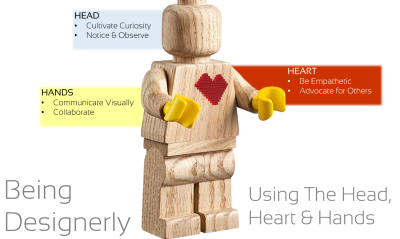
To systematically evaluate human superiority over machine intelligence, we can organize these designerly skills using the "Head, Heart, and Hands" framework established in transformative education models (Orr, Sipos, et al.). This framework categorizes human capabilities into thinking (head), feeling (heart), and doing (hands).
[ THE DESIGNERLY FRAMEWORK ]
 ├── HEAD (Thinking)  ──> Cultivate Curiosity | Notice & Observe
 ├── HEART (Feeling)  ──> Be Empathetic       | Advocate for Others
 └── HANDS (Doing)    ──> Communicate Visually| Collaborate
The Head: Thinking Like a Designer
1. Cultivate Curiosity
Curiosity is the fundamental desire to know, explore, experiment, and understand. While small children display relentless curiosity, educational and professional systems often stifle this trait by conditioning people to hunt for predetermined "right answers."
AI is programmed precisely for this stifled paradigm: it searches for and delivers answers based on existing parameters. Furthermore, AI lacks physical senses; it cannot experience the physical world, taste a meal, feel ambient temperature, or wonder about novel sensory stimuli.
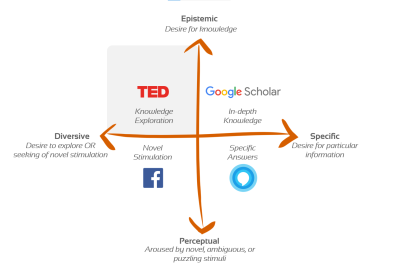
Humans can overcome self-consciousness and the fear of ridicule to practice intentional curiosity. Psychologist Daniel Berlyne’s Theory of Human Curiosity identifies dimensions spanning perceptual versus epistemic curiosity, and diversive versus specific exploration. By nurturing diversive-epistemic curiosity—dedicating 10 to 20 minutes daily to explore entirely new topics through book summaries, TED talks, or cross-disciplinary reading—humans expand their cognitive flexibility in ways algorithms cannot replicate.
2. Notice and Observe
While often used interchangeably, noticing is registering something for the first time, whereas observing is paying sustained, intentional attention. Design ethnography relies on immersing oneself in human environments to watch and listen.
AI cannot observe the world organically because it is tethered strictly to historical training data. Devoid of emotion and contextual grounding, an algorithm cannot interpret the subtle emotional undercurrents of a human interaction in a coffee shop or a grocery checkout line. By removing our headphones, stepping away from screens, and actively observing behavioral details around us, humans unlock a wellspring of inspiration that algorithms simply cannot access.
The Heart: Feeling Like a Designer
3. Be Empathetic
In his definitive work Empathy: Why It Matters, and How to Get It, Roman Krznaric defines empathy as "the art of stepping imaginatively into the shoes of another person, understanding their feelings and perspectives, and using that understanding to guide your actions."
Psychologists Daniel Goleman and Paul Ekman categorize empathy into cognitive, emotional, and compassionate forms. Compassionate empathy drives us not just to understand another person’s plight, but to take action to alleviate it. While tech companies attempt to train AI to recognize facial expressions and mimic emotional responses, machines do not possess consciousness. They lack personal histories, shared vulnerability, and lived experiences. Empathy remains an exclusively human superpower.
4. Advocate for Others
User advocacy sits at the very heart of design. Curiosity, observation, and empathy build deep understanding, but advocacy translates that understanding into protective, proactive action.
An advocate represents the user’s voice in boardrooms filled with competing corporate interests, transforming an impersonal demographic data point into a human being with real needs. While AI can be programmed with rigid ethical guidelines—frequently resulting in bizarre or volatile miscalculations when encountering nuanced human scenarios—it cannot make autonomous, morally grounded ethical judgments. Humans can, and must, advocate for what is right.
The Hands: Acting Like a Designer
5. Communicate Visually
Words can be interpreted in myriad ways; two people reading the same textual description will often conjure entirely different mental images. Visual communication bridges this gap instantly, aligning teams on the same page, slide, or whiteboard.
You do not need to be a fine artist to communicate visually. Quick whiteboard sketches, boxes-and-arrows process maps, or rough screen mockups convey complex ideas with lightning speed. AI cannot read a room, gauge audience sentiment in real-time, or generate creative visual metaphors outside its statistical training set without explicit human prompting. Humans use visual communication to make ideas tangible and drive alignment.

6. Collaborate
Complex problems are rarely solved in isolation. Modern innovation requires multi-disciplinary collaboration—bringing together diverse backgrounds, specialized skills, and varied perspectives to target a shared goal.
Collaboration relies on navigating complex social dynamics, negotiating compromises, and adapting in real-time to shifting emotional and situational inputs. Traditional AI is fundamentally incapable of social navigation. While AI tools can act as powerful assistants—summarizing transcripts, generating boilerplate code, or drafting content—they frequently introduce hallucinations and errors. True collaboration remains an arena dominated by human synergy.
Official Responses and Industry Implications
The broader tech and design industries are rapidly adjusting their posture toward generative AI. Rather than viewing artificial intelligence as an existential executioner, progressive industry leaders are reframing the technology through the culinary analogy of chefs and cooks.
A cook executes tactical instructions, following recipes step-by-step. Automated kitchen machinery and recipe-generation software have streamlined parts of a cook’s tactical execution. However, a master chef focuses on higher-order strategy: designing menus, overseeing kitchen operations, tasting adjustments in real-time, and applying the creative finishing touches before a dish reaches the table. Robots can assist, but they cannot replace the chef’s palate and strategic vision.
Similarly, artificial intelligence is transforming the mechanics of creative work by handling tedious data analysis, generating rapid layout variations, and predicting baseline behavioral patterns. This technological shift frees human designers from mechanical drudgery, allowing them to elevate their focus toward strategic problem-solving.
Key Implications for Professionals:
- Workflow Augmentation, Not Replacement: AI should be deployed as an intelligent assistant to handle administrative overhead, transcription, and rapid asset iteration.
- Double Down on Soft Skills: Technical execution tools will become commoditized. Long-term career security belongs to professionals who relentlessly cultivate designerly behaviors—curiosity, empathy, and advocacy.
- The Human Advantage: In an automated world, solutions that resonate on a deeply human, emotional, and cultural level will command the highest value.
Conclusion
Artificial intelligence will undoubtedly alter how we live and work, driving unprecedented levels of operational efficiency. However, AI cannot be trained to genuinely replicate designerly skills because it lacks consciousness, adaptability, emotional depth, and lived intuition.
By uniting our heads, hearts, and hands through curiosity, observation, empathy, advocacy, visual communication, and collaboration, humans possess an insurmountable advantage over algorithms. The nature of creative work is changing, but the destination remains clear: AI will not replace designers; rather, designers utilizing AI will replace those who do not.