The rapid ascent of generative Artificial Intelligence—tools capable of writing prose, drafting code, and rendering complex imagery—has sent a tremor of anxiety through the creative industries. Designers, illustrators, and UX researchers are increasingly grappling with a singular, existential question: Will my role be rendered obsolete by a machine?
While AI has demonstrated a remarkable ability to perform specific technical tasks with speed and precision, it lacks the fundamental "designerly" behaviors that define human-centered problem-solving. This article explores why the future of design lies not in human replacement, but in a symbiotic augmentation, where AI handles the data-heavy lifting while designers focus on the human experience.
The Reality of the "Designerly" Mindset
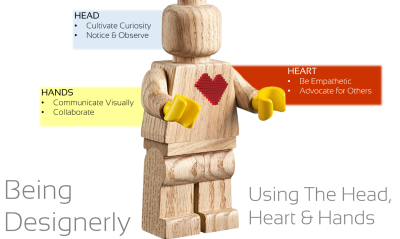
To understand the gap between machine output and human design, we must look at what design researcher Nigel Cross termed "designerly" ways of knowing. This refers to the underlying patterns of how designers think and act. It is not merely about using software like Figma or Adobe Creative Cloud; it is about a holistic approach to problems that integrates the "Head, Heart, and Hands."

A Case Study in Human Connection
During the height of the COVID-19 pandemic, I led the redesign of a tablet application for a global food and beverage corporation. The goal was to streamline the workflow for sales representatives. Standard remote interviews provided a baseline, but they lacked nuance. Once restrictions eased, I stepped into the field, shadowing representatives through dairy aisles and sub-zero freezers.
The insights gained from that physical presence—watching them struggle with touchscreens while wearing gloves in a walk-in freezer, or navigating a busy supermarket aisle—were impossible to capture via video call. This is the essence of human design: the synthesis of curiosity, empathy, and observation. These behaviors allow a designer to identify the "why" behind the "what," a level of contextual awareness currently beyond the reach of any algorithm.
The Chronology of the AI Anxiety
The current frenzy surrounding AI is rooted in the unprecedented speed of its development. Over the last three years, the industry has shifted from simple automation to sophisticated generative models.
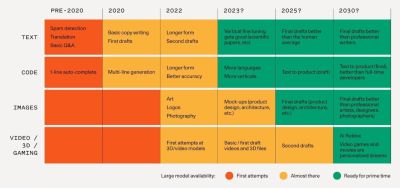
- The Early Phase (2020–2021): AI was primarily used for administrative tasks, such as automated scheduling or basic data entry.
- The Generative Boom (2022–2023): The arrival of large language models (LLMs) and diffusion models allowed for the creation of high-quality copy and imagery.
- The Integration Era (2024–Present): AI is now being woven into the fabric of professional design suites, leading to a shift where "prompt engineering" is becoming a standard, albeit contested, skill.
Despite this timeline, the assumption that AI will replace humans rests on the faulty premise that machines and humans possess the same qualities. AI is trained on massive datasets—by some estimates, the equivalent of the Library of Congress—but it functions by mimicking patterns, not by understanding human intent.
Supporting Data: Humans vs. Machines
The fundamental difference between human designers and AI lies in consciousness. AI is an analytical tool; it excels at processing data, identifying trends, and maintaining consistency. However, it fails at the non-linear, intuitive leaps that characterize true innovation.
The "Head" (Thinking Skills)
- Cultivating Curiosity: Curiosity is a uniquely human drive. It is the desire to explore the unknown. AI is programmed to find answers, whereas designers are trained to question the premise of the question itself.
- Intentional Observation: While AI processes data, humans observe behaviors. By noticing the subtle interactions between a user and their environment—such as a sales rep struggling to balance a tablet—a designer can create a solution that AI would never consider because it lacks the capacity to "notice" the environment.
The "Heart" (Feeling Skills)
- Empathy: Psychologist Roman Krznaric defines empathy as the art of stepping into another person’s shoes. AI can mimic the language of empathy, but it cannot "feel" it. True human-centered design requires the designer to internalize the user’s frustration, joy, or physical discomfort.
- Advocacy: A designer’s job is to represent the user in a boardroom full of competing business interests. This requires ethical judgment—a capacity for moral reasoning that is often absent in machine learning models, which are prone to hallucination or biased output.
The "Hands" (Doing Skills)
- Visual Communication: Storytelling is the bedrock of design. Visuals are not just pretty pictures; they are communication tools that align stakeholders. While AI can generate an image, it cannot "read the room" or understand the strategic nuance of when a rough sketch is more effective than a polished render.
- Collaboration: Design is a team sport. It requires the negotiation of social dynamics, compromise, and the ability to adapt to live feedback. AI can participate in a workflow, but it cannot navigate the complex, often messy, interpersonal dynamics of a high-functioning design team.
Official Industry Perspectives
Leading technology experts and design educators are increasingly pointing toward a "co-pilot" model. Rather than fearing replacement, the industry consensus is shifting toward the idea of the "Chef and the Cook" analogy.
In this scenario, the AI is a highly efficient sous-chef—it can prep ingredients, organize recipes, and automate repetitive tasks. The designer, however, remains the Executive Chef. They define the menu, oversee the quality control, and apply the final, intuitive touches that make a product successful. Companies are now beginning to integrate AI to handle transcribing, data analysis, and rapid prototyping, which frees the human designer to spend more time on strategy, stakeholder management, and deep user research.
Implications for the Future of Work
The rise of AI has profound implications for the professional landscape. The "hard skills"—the technical execution of designs—are becoming commoditized. As these tools become accessible to everyone, the market value of "soft skills" (the designerly behaviors) will skyrocket.
1. Shift from Production to Curation
Designers will spend less time "pixel-pushing" and more time curating outputs generated by AI. The ability to distinguish between a "good" design and a "great" one, based on deep user context, will become the primary differentiator in the job market.
2. The Rise of Ethical Stewardship
As AI becomes more prevalent, the potential for harm increases. Designers will be required to act as the ethical guardians of the digital world, ensuring that AI-generated solutions are accessible, unbiased, and genuinely helpful rather than just efficient.
3. A New Educational Framework
Design education must evolve. While technical training remains necessary, there will be a greater emphasis on psychology, sociology, and philosophy. Understanding the human condition will become just as important as understanding design principles.
Conclusion: The Human Advantage
Artificial Intelligence is a powerful catalyst for efficiency, but it lacks the soul of design. It cannot be "designerly" because it lacks a subconscious, a personal history, and the lived experience that informs every decision a designer makes.

The fear of displacement is understandable, but it is ultimately a misreading of the technology’s purpose. AI is not here to replace the designer; it is here to replace the drudgery. By embracing our uniquely human skills—our curiosity, our ability to observe, our capacity for empathy, and our desire to advocate for others—we can use AI to build a world that is not only more efficient but more deeply attuned to the human experience.
The future belongs to the designers who can harness the machine to elevate their craft, proving that while AI can create, only humans can design with purpose.