In the complex, high-stakes world of global enterprise, the gap between "marketing activity" and "business health" is often masked by a blizzard of data. For many organizations, the primary objective has devolved into the relentless pursuit of traffic—often at the expense of profit. This phenomenon was brought into sharp focus during a recent strategic consulting engagement with a multinational corporation operating across 75 countries. The mandate was clear: build a marketing strategy for the next generation of growth. However, the discovery process revealed a systemic, dangerous reliance on a metric that essentially prioritizes volume over value: Cost Per Session (CPS).
For seasoned marketing and analytics professionals, the existence of CPS as a primary KPI is not just surprising—it is a red flag signaling a deeper, more structural failure in business logic. As the digital landscape shifts under the weight of Artificial Intelligence, the reliance on such superficial metrics is not merely ineffective; it is an existential threat to company profitability.
The Mirage of Activity: Why CPS is a Flawed Compass
For decades, the standard metrics of success were rooted in revenue and conversion. Yet, in the modern marketing department, "Cost Per Session" has crept into boardrooms as a way to measure the "efficiency" of traffic acquisition. The logic follows a seductive, albeit flawed, premise: if we can drive users to our site as cheaply as possible, we are winning.
But what happens when the metric becomes the goal? You end up with a strategy designed solely to "shovel traffic." This is not marketing; it is a mechanical exercise in buying eyeballs.
True marketing professionals distinguish between "things" and "metrics." Impressions and views are merely "things"—they lack the utility required to drive business decisions. Cost Per Session is little more than a sophisticated vanity metric. It tells you nothing about intent, nothing about product fit, and nothing about the actual value being generated for the company. When an organization focuses on CPS, it is essentially asking the marketing team to optimize for the act of visiting, rather than the act of converting.
A Chronology of Strategic Decay: From Activity to Accountability
The evolution of a high-performing marketing organization follows a distinct trajectory: moving from the measurement of Activity to the achievement of Outcomes, and ultimately, the establishment of Accountability.
Phase 1: The Activity Trap
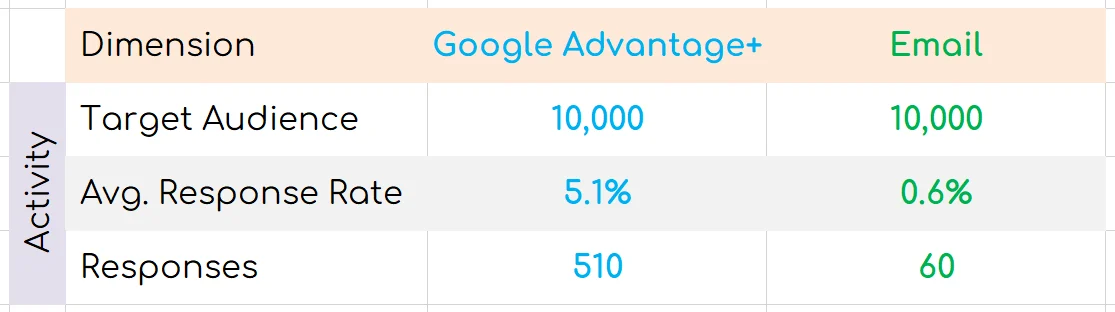
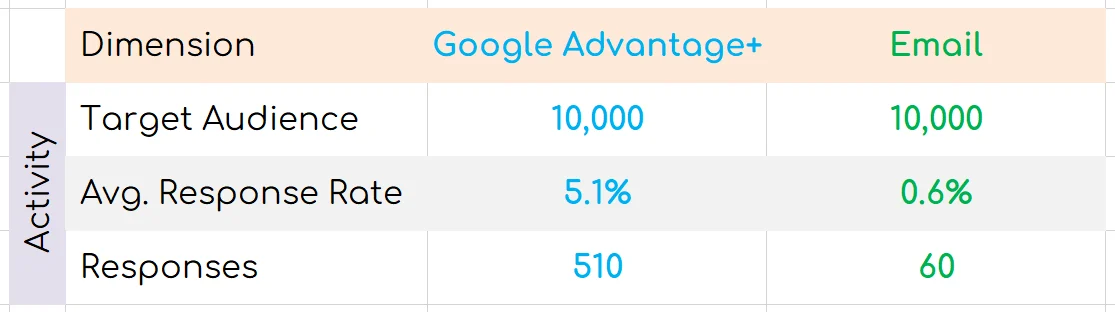
Most corporate dashboards are cluttered with activity-based metrics: clicks, sessions, cost-per-click, and, yes, Cost Per Session. While tools like Google Advantage+ are excellent at generating high response rates, celebrating this volume without context is a mistake. It is easy to be seduced by the sheer number of visitors, but if those visitors aren’t converting, you are simply subsidizing a platform’s growth at the expense of your own bottom line.
Phase 2: The Outcome Pivot
To escape the activity trap, organizations must shift to Outcomes. This means prioritizing Revenue, Conversion Rates, and—crucially—Lead-to-Outcome value. Even in industries with long sales cycles, such as B2B or Pharmaceuticals, the transition to outcomes is possible. By measuring micro-conversions and applying an average Lead-to-Offline Conversion Rate, companies can generate a working model of value that is 85% more accurate than focusing on raw traffic volume.
Phase 3: The Accountability Threshold
The final, most critical phase is Accountability. This is where the CMO meets the CFO. If a CFO truly cares about marketing, they will treat it as an investment portfolio rather than a cost center. To earn this level of trust, marketing departments must account for the total cost of business. This requires subtracting both Campaign Costs and the Cost of Goods Sold (COGS) from the revenue generated.
The Data: Exposing the Profitability Gap
The difference between a "successful" campaign and a "profitable" one is often hidden in the math of accountability. Let us examine a comparative analysis of two common channels: Google Advantage+ (a high-volume automated platform) and Email Marketing.
| Metric | Google Advantage+ | Email Marketing |
|---|---|---|
| Total Revenue | $17,000 | $1,400 |
| Campaign Cost | $7,000 | $100 |
| COGS | $5,000 | $400 |
| Net Profit | $5,000 | $900 |
While Google Advantage+ generates higher revenue, the efficiency of that revenue is drastically different. When we calculate Profit on Investment (POI), the narrative flips.
- The ROAS Fallacy: Return on Ad Spend (ROAS) is often used to justify high spending because it ignores the cost of the goods sold. It inflates marketing’s impact, creating a false sense of success.
- The POI Reality: When you calculate Profit on Investment, you see the truth. In the case study above, every dollar spent on Google Advantage+ yielded a profit of only $0.70. Conversely, Email Marketing yielded a profit of $5.70 for every dollar spent.
The data is incontrovertible: Google Advantage+ may provide scale, but it is currently acting as a "giant sucking sound" on company profit. If the goal is to drive long-term business value, the strategy must pivot away from scale-at-all-costs toward high-margin profitability.
Official Guidance: The AI Shift
The necessity of abandoning superficial metrics like Cost Per Session is no longer just a strategic suggestion; it is a requirement imposed by the new era of AI Search. Google’s recent guidance on AI Overviews and AI Search is explicit: the era of the "one-night stand" visit is over.
Google’s search algorithms are evolving to prioritize "high-quality" clicks—visits where users spend more time, engage with context, and demonstrate clear intent. Google explicitly warns businesses against focusing too much on simple clicks, advising instead that companies look at "various indicators of conversion on your site."
If the platform that feeds the traffic is telling you to stop obsessing over clicks and start focusing on value, continuing to measure Cost Per Session is not just stubborn; it is a direct violation of the best practices for SEO in an AI-dominated landscape.
Strategic Implications: How to "Suck Less"
If your corporate culture is currently trapped in the CPS mindset, you must take immediate, corrective action. The following roadmap is designed to protect your marketing budget and, more importantly, your reputation.
- Stop the Bleeding: If a channel is producing negative or low POI, pause it immediately. There will be internal alarm bells about dropping traffic—ignore them. Remind leadership that profit is a more stable metric than volume.
- Redefine the Metric: If you cannot immediately transition to full POI reporting, adopt "Cost Per Non-Bounced Session." By filtering out the "I came, I puked, I left" traffic, you force your team to acknowledge the true cost of attracting a qualified visitor.
- The A-B-C Strategy: When you restart your paid campaigns, frame them through three lenses:
- A (Intent): What specific user intent are we targeting?
- B (Tactics): How do our creative and offers match that intent?
- C (AI Automation): How are we using AI to turbocharge these tactics rather than just using it as a "set it and forget it" money-burning machine?
Conclusion: The Path to an AI-Proof Career
The transition from Activity to Accountability is undoubtedly difficult. It requires uncomfortable conversations, a deep understanding of financial modeling, and the courage to stop campaigns that are currently "working" on paper but failing in the bank account.
However, for the modern marketer, this is the ultimate safeguard. Organizations that prioritize Outcomes over Activity and Accountability over Outcomes are the only ones that will survive the AI disruption. By aligning marketing efforts with the CFO’s mandate for profitability, you move from being a cost center to a value creator. In a world where AI can automate the "activity," the human ability to prove "accountability" is the only skill that will guarantee long-term career growth.
Carpe diem. The data is waiting; it is time to use it correctly.