By [Your Name/Journalistic Desk]
California has long positioned itself as the global epicenter for autonomous vehicle (AV) development, serving as the primary testing ground for tech giants like Waymo, Zoox, and Tesla. However, the state’s “innovation-first” approach is undergoing a significant pivot. With the signing of Senate Bill 1246 by Governor Gavin Newsom, the era of unbridled experimentation is giving way to a new framework of strict accountability, specifically targeting the industry’s most controversial friction point: the relationship between robotaxis and first responders.
The new legislation marks a definitive shift in power, compelling AV companies to provide boots-on-the-ground support when their vehicles falter and imposing financial penalties for obstructing emergency services. As the technology matures, California regulators are signaling that public safety, not just software milestones, must remain the primary metric of success.
The Core Mandates: What SB 1246 Changes
Under the newly signed law, the rules of engagement for AV companies operating in California are set to change significantly by July 2028. The legislation addresses several systemic weaknesses that have plagued the industry during its rapid expansion:
- Local Incident Response: Companies will be required to deploy "local incident technicians" to the scene of accidents or obstructions. This move is designed to eliminate the reliance on police or firefighters to manually handle disabled or malfunctioning autonomous vehicles.
- The 30-Minute Threshold: A critical enforcement mechanism is the imposition of fines for any AV that blocks emergency responders for more than 30 minutes. This creates a clear economic incentive for companies to maintain a robust, responsive ground fleet.
- Standardization of Remote Operations: The law mandates that any human "remote driver" who takes direct control of a vehicle must be based in the United States and hold a valid U.S. driver’s license. This effectively curtails the outsourcing of critical, real-time safety operations to offshore command centers.
- Mandatory Incident Reporting: AV developers must provide local jurisdictions with real-time data regarding the status and location of vehicles during system-wide failures, ensuring that city officials are not left in the dark during traffic emergencies.
A Chronology of Conflict: From Innovation to Obstruction
The passage of SB 1246 did not occur in a vacuum. It is the culmination of years of escalating tension between Silicon Valley’s autonomous fleet operators and the first responders tasked with keeping California’s roads safe.
The Early Days (2020–2022)
As Waymo and other firms began scaling their commercial operations in San Francisco, the initial novelty of robotaxis quickly soured. Early incidents were largely dismissed as "teething problems"—minor traffic delays or confused vehicles navigating complex intersections. However, as the fleet size grew, so did the complexity of the failures.
The Escalation (2023–2024)
The frequency of high-profile incidents surged. Robotaxis were documented driving into active crime scenes, blocking transit buses, and, most alarmingly, stalling in the paths of ambulances and fire engines. A landmark investigation by TechCrunch highlighted numerous instances where police officers were forced to manually override or “tow” Waymo vehicles, an ironic turn of events for technology marketed as safer than human drivers.
The Regulatory Crackdown (2025–2026)
By 2026, the situation reached a breaking point. The National Highway Traffic Safety Administration (NHTSA) took the unprecedented step of sending a formal demand letter to AV developers, explicitly ordering them to stop interfering with emergency operations. The agency’s intervention, combined with mounting pressure from California’s state legislature, laid the groundwork for SB 1246.
Supporting Data: The Scale of the Challenge
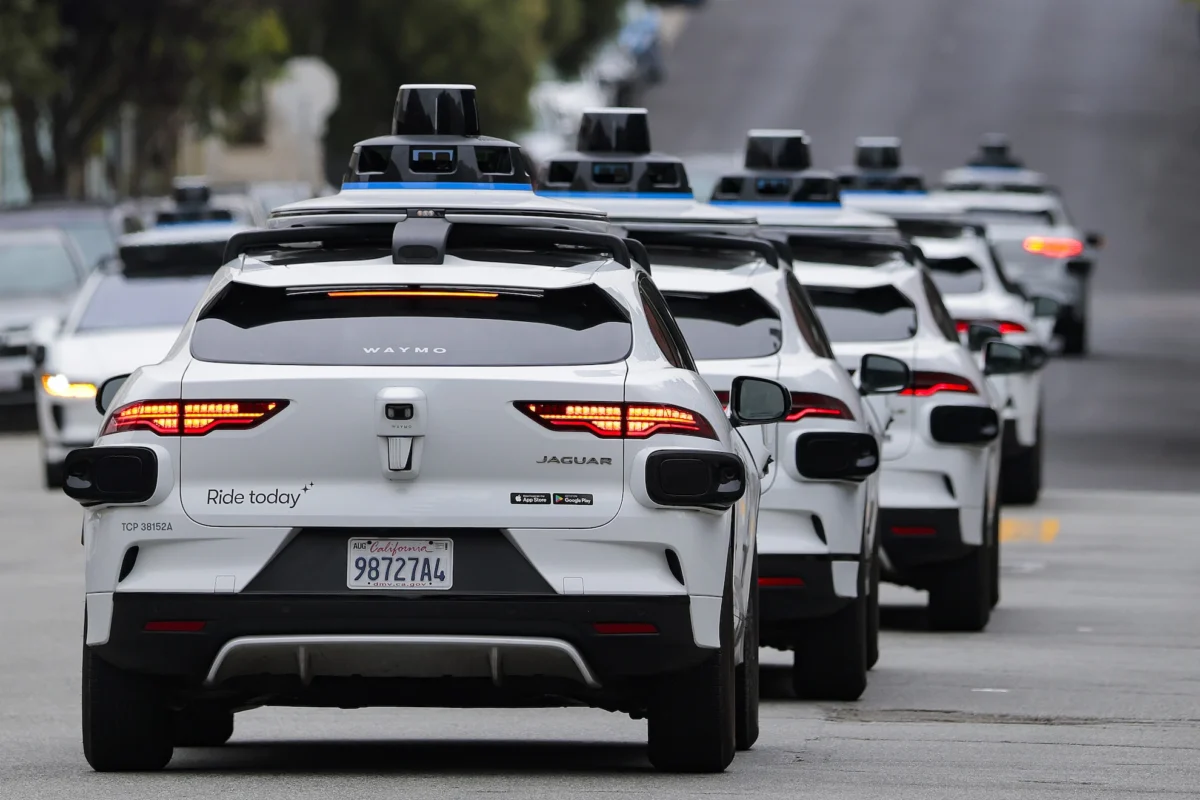
To understand the necessity of this law, one must look at the sheer density of autonomous activity in California. Waymo, currently the dominant player, maintains a fleet of approximately 4,000 vehicles nationwide, with roughly 1,200 operating within the San Francisco Bay Area alone.
When a fleet of this size encounters a software glitch, the impact is magnified. Data indicates that even a minor software hang can trigger a "cascade" effect in dense urban environments. Unlike a human driver, who can pull a disabled vehicle to the curb, an autonomous vehicle—when it enters a "fail-safe" mode—is often programmed to stop exactly where it is. If that stop occurs in the middle of an intersection or a narrow residential street, it becomes a literal roadblock to emergency vehicles.
Furthermore, the industry’s reliance on "remote assistance" has been a point of contention. While companies like Waymo argue that their remote operators provide guidance—not direct driving—the distinction is often lost on the ground. A vehicle that cannot navigate a police barricade is, for all intents and purposes, a failed pilot, regardless of whether a human in a command center in Arizona or the Philippines is watching the feed.
Official Responses and Industry Compliance
The response from the AV industry has been a study in diplomatic adaptation. While many firms initially lobbied against strict mandates, the finalized version of SB 1246 has been met with a pragmatic acceptance.
State Senator Dave Cortese, the architect of the bill, was vocal about the necessity of the legislation. "California has embraced autonomous vehicles, but we cannot embrace innovation at the expense of public safety," Cortese stated. "When an autonomous vehicle crashes, breaks down, or gets in the way of law enforcement, there must be clear accountability."
Industry giants have largely pivoted to a stance of cooperation. A spokesperson for Waymo noted, "We are grateful for the amendments made to the bill, which ensure autonomous vehicle operators can still feasibly serve Californians. Waymo is committed to making roads safer in California and continually improving our service."
Similarly, Zoox, which already maintains its remote operations within the U.S., has signaled its intent to comply, viewing the new regulations as a path toward broader public acceptance of the technology.
Implications: The Future of Autonomous Mobility
The implications of SB 1246 extend far beyond California’s borders. As the state that sets the de facto standard for global technology regulation, California’s shift toward a "safety-first" framework will likely influence similar legislation in other states and countries.
1. The End of the "Wild West" Phase
The industry is moving out of its infancy. For the past decade, the regulatory environment was characterized by permissive testing permits. Now, companies must transition into a mature operating model where compliance, insurance, and rapid-response logistics are just as important as the underlying AI stack.
2. Economic Hurdles for Smaller Players
While major players like Waymo and Zoox have the capital to invest in local incident response teams and U.S.-based command centers, smaller, cash-strapped AV startups may find these requirements cost-prohibitive. This could lead to further market consolidation, as only the largest firms will be able to afford the overhead required to satisfy California’s safety mandates.
3. Redefining "Remote Operation"
The law forces a legal and technical clarification of what it means to operate a vehicle remotely. By specifically defining "remote drivers" as those with a U.S. license who can take active control, the state is effectively requiring companies to maintain a localized workforce of human pilots. This contradicts the long-term industry goal of "human-out-of-the-loop" driving, suggesting that for the foreseeable future, the human element will remain a mandatory backup in the autonomous ecosystem.
4. A New Standard for Public Trust
Ultimately, the goal of SB 1246 is the preservation of public trust. The industry has suffered from a perception that robotaxis are a "tech-bro" imposition on the public square. By ensuring that these vehicles are no longer a hindrance to those who save lives—firefighters, paramedics, and police—the industry hopes to move past the controversy and toward a future where autonomous transportation is viewed as a public utility rather than an experimental nuisance.
Conclusion
As the 2028 implementation deadline approaches, the spotlight remains firmly on the developers. The California Department of Motor Vehicles is expected to flesh out the technical guidelines, including specific response time requirements for the new "incident technicians."
The message from Sacramento is clear: the road to a driverless future is paved with accountability. For Tesla, Waymo, and their competitors, the path forward is no longer just about perfecting the code; it is about proving that they can coexist with the very communities they serve. If they succeed, the AV industry may finally move from the fringes of disruption into the mainstream of urban infrastructure. If they fail, the regulatory walls will only grow higher.