In the realm of digital product development, communication relies just as heavily on pixels as natural language does on words. Writers use vocabulary and syntax to connect with readers, while user interface (UI) and user experience (UX) designers deploy a visual language—fonts, palettes, geometries, and iconography—to forge an intuitive dialogue with users.
When executed effectively, a visual design language (VDL) acts as the cornerstone of exceptional design, transforming chaotic arrays of data into streamlined, cohesive experiences. Yet, building a robust design language from the ground up for a global mobile operating system is a monumental undertaking.
This is the behind-the-scenes account of how designer Gleb Kuznetsov and the multidisciplinary team at the digital product agency Fantasy tackled one of their most ambitious assignments to date: crafting the visual design language for Huawei’s EMUI 5 mobile operating system.
Main Facts: The Anatomy of a Mobile OS Transformation
In 2016, Huawei—rapidly scaling its footprint in the global consumer technology market—enlisted the elite design agency Fantasy to overhaul the interface for its proprietary mobile operating system, EMUI. At the time, Huawei’s software ecosystem suffered from a fragmented identity. Rather than possessing a unified visual language, the OS relied heavily on a heavily customized version of Android plagued by visual inconsistencies and a lack of overarching vision.
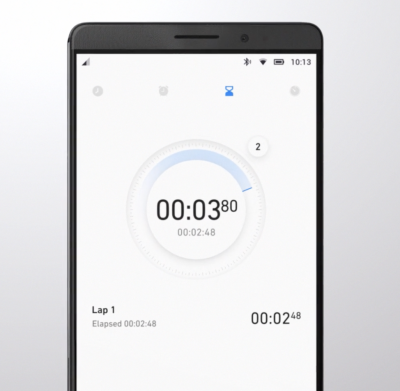
Multiple teams, ranging from UX architects and interaction designers to visual and graphic artists, had previously contributed to the project in isolation. Each discipline had attempted to establish its own method of communication, resulting in a digital "Tower of Babel."
To resolve this, Kuznetsov was tasked with spearheading a unified VDL. The collaboration brought together major industry figures, including Abigail Brody, a former Apple creative director who had joined Huawei in September 2015 as Chief UX Designer and VP of Huawei Devices.
The resulting project yielded several core achievements:
- The UI Audit: A systematic breakdown of the legacy Android OS into atomic elements (shadows, transitions, typography, colors) to establish a baseline.
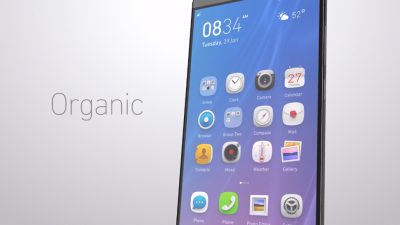
- The Organic Design Philosophy: Moving away from sterile, corporate aesthetics in favor of nature-inspired, fluid geometries.
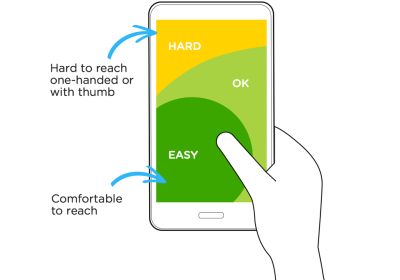
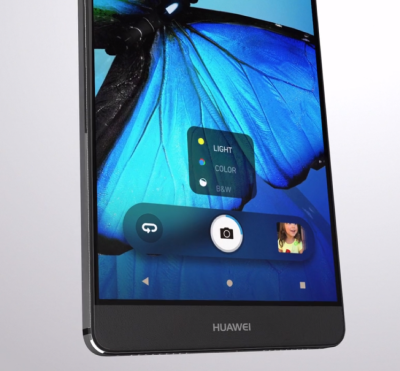
- Thumb-Zone Optimization: Re-architecting core functional elements to reside within the reachable ergonomic zones of modern, larger mobile screens.
- Rigorous Prototyping and Testing: Implementing an iterative "build, measure, learn" feedback loop to validate design hypotheses long before mass production.
Chronology: From Fragmentation to the EMUI 5 Blueprint
The timeline of the Fantasy-Huawei partnership reveals a calculated, step-by-step methodology mirroring traditional consumer product development: research, ideation, design, validation, and implementation.
Phase 1: Research and the UI Audit (Early 2016)
Before drawing a single vector or selecting a color palette, the team initiated a comprehensive research phase. Led by UX lead Jeshua Nanthakumar, researchers analyzed every prominent mobile operating system on the market to map out user pain points.
Concurrently, Kuznetsov’s team executed a exhaustive UI Audit of the existing Android architecture. By decomposing the operating system into its most atomic components—individual buttons, navigation bars, strokes, shadows, and color codes—the team cataloged how individual pieces interacted to form the macro-experience. This audit formed the foundation of a centralized component toolbox designed to guarantee future design consistency across diverse device form factors.
Phase 2: Brand Perception and Competitor Mapping
Understanding Huawei’s global audience required meticulous demographic and psychographic segmentation. Because the OS needed to seamlessly bridge Eastern and Western design sensibilities, researchers built detailed profiles highlighting what North American, European, and Asian consumers valued, expected, and criticized.
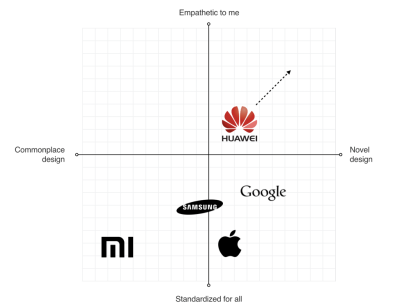
Furthermore, Fantasy mapped out four major industry competitors on a coordinate grid, analyzing their visual language strengths and weaknesses. For instance, while Apple’s iOS was noted for exceptional cross-device scalability and strict standardization, it simultaneously drew criticism for iconographic inconsistencies and an over-reliance on blur effects. This competitive matrix allowed Huawei to carve out a distinct strategic positioning in the market.
Phase 3: Ideation and the Philosophy of Organic Design
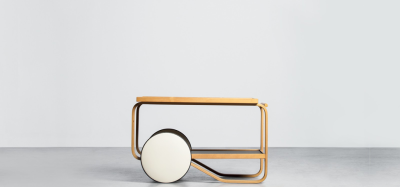
Defining the emotional and functional tone of the OS required a unifying philosophy. Collaborating with Abigail Brody, the team turned to organic design—a concept pioneered by architect Frank Lloyd Wright, emphasizing harmony between humanity and nature.
By grounding the interface in natural forms, smooth curves, and fluid transitions, the design team ensured that every button, icon, and shape felt approachable rather than clinical. Simultaneously, they developed a comprehensive motion design manifesto. Rather than treating animations as superficial window dressing, every transition was engineered to deliver specific emotional and functional feedback, fostering moments of surprise and delight.
Phase 4: Prototyping, Design Reviews, and Testing
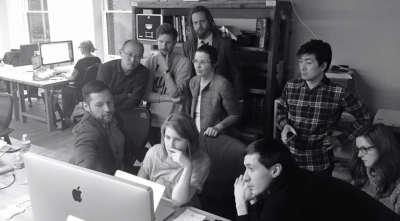
Moving from concept to execution involved intensive iteration. The team utilized physical-digital hybrid workflows—pinning interface screens side-by-side on large physical boards for regular informal design reviews. This allowed team members to rigorously debate micro-details.
To validate these concepts, the team embraced rapid prototyping and dogfooding (internal testing), followed by external user testing. This allowed designers to measure user sentiment and refine interactive elements before locking down the production specs.
Supporting Data: The Mechanics of Visual Design
To appreciate the scale of the EMUI 5 overhaul, one must examine the specific quantitative and qualitative metrics that guided the design choices:
- Ergonomic Restructuring (The Thumb Zone): In 2016, mobile screen real estate was expanding rapidly, yet foundational Android navigation elements remained clustered at the top of the display—requiring users to awkwardly shift their grip. By consulting ergonomic studies (such as Luke Wroblewski’s research on mobile thumb zones) and coordinating with Huawei engineers, the design team successfully relocated key functional controls to the bottom of the screen, creating an industry-standard practice that persists today.
- The Aesthetic-Usability Effect: By pairing high functional clarity with a visually delightful organic aesthetic, Fantasy leveraged the psychological principle that users are significantly more forgiving of minor software frictions when an interface is visually captivating and emotionally engaging.
- Global Market Impact: While design agencies rarely control the final software deployment pipeline, the visual foundation laid during the EMUI 5 project helped cement user confidence. By 2018, Huawei surpassed Apple in global smartphone shipments, driven in no small part by hardware-software synergy and a mature operating system interface.
Official Perspectives and Industry Challenges
The journey of the EMUI 5 project also highlighted a perennial friction point within enterprise tech development: the gap between design conceptualization and engineering implementation.
Gleb Kuznetsov has been candid about the realities of large-scale corporate software deployment. In many instances, the pristine vision crafted by external design agencies undergoes significant alteration when handed over to internal engineering teams operating under tight hardware constraints or legacy codebases. When designers are excluded from the final implementation phase, engineering teams often default to the path of least resistance, compromising the original semantic integrity of the visual design language.
However, the success of such projects frequently hinges on executive leadership willing to champion design integrity. As industry history demonstrates—such as Steve Jobs fighting to preserve the custom minimization animation in early macOS builds against engineering skepticism—having top-level stakeholders who treat design as a core functional requirement rather than an afterthought is vital.
Implications: Why a Robust Visual Design Language Matters
The Huawei EMUI 5 case study offers enduring lessons for product designers, software engineers, and corporate executives alike:
- Language Reduces Cognitive Friction: Just as grammar and vocabulary make human speech predictable and clear, a well-defined VDL removes ambiguity from digital interfaces, lowering cognitive load for users.
- Consistency Drives Scalability: Establishing reusable patterns and cross-platform styling options ensures that companies can rapidly deploy software updates across diverse device ecosystems without fracturing the user experience.
- Design is Iterative and Empirical: VDL creation cannot occur in a vacuum. It demands continuous cycles of research, atomic UI auditing, user testing, and collaborative critique.
- Form and Function are Inseparable: As Steve Jobs famously noted, design is not merely how something looks and feels, but how it works. When visual elegance is married to ergonomic utility, the result is a resilient, memorable brand identity that stands out in an intensely competitive global marketplace.