The open source movement thrives on collaboration, community, and continuous knowledge sharing. While much of the tech world fixates on core software releases, enterprise integrations, and market share, a quieter yet profoundly vital revolution is taking place on campuses and in libraries across the globe. The WordPress education ecosystem—championed by a dedicated network of community leaders—is experiencing unprecedented growth, scaling rapidly to introduce the next generation of digital creators, marketers, and developers to the world’s most popular content management system.
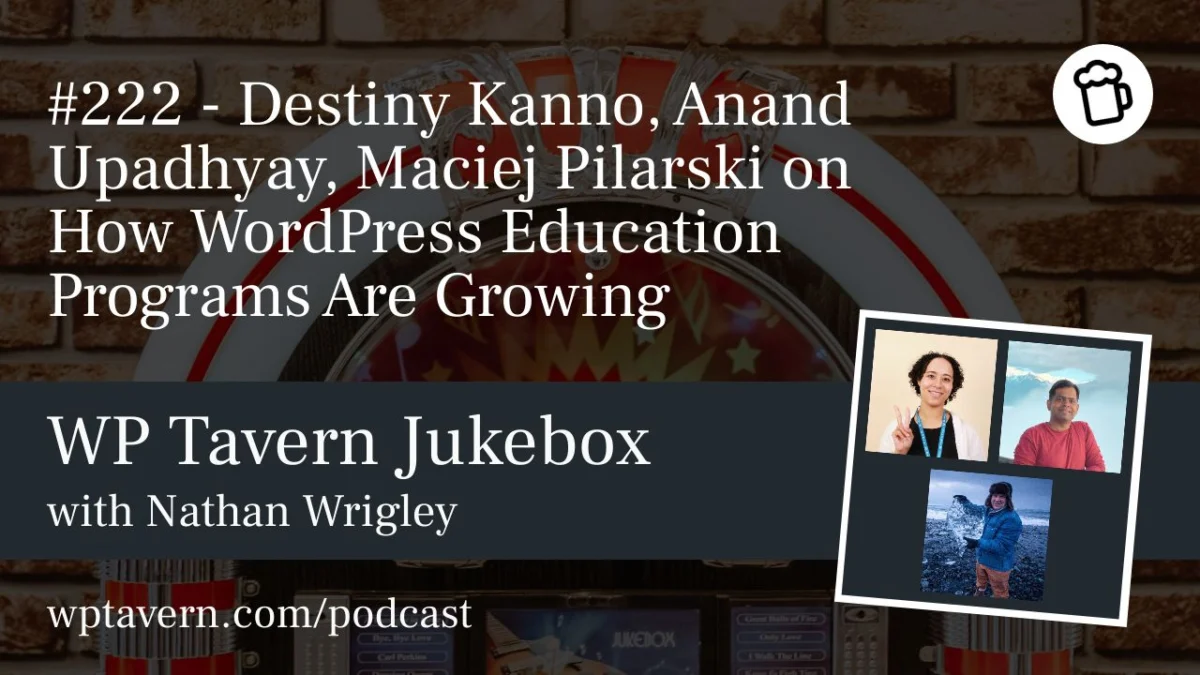
In a recent episode of the Jukebox Podcast from WP Tavern, host Nathan Wrigley sat down with three prominent WordPress Education Initiative leaders: Destiny Kanno, Education Program Manager sponsored by Automattic; Anand Upadhyay, plugin developer and community contributor; and Maciej Pilarski, administrator of the WordPress Credit Program. Together, they mapped out the current landscape of WordPress education, highlighting three cornerstone pillars: the WordPress Credits Program, Campus Connect, and Student Clubs.
The Main Facts: Three Pillars of WordPress Education
At its core, the global WordPress education framework is designed to remove barriers to entry and provide structured, scalable pathways for learners of all ages. Rather than operating in silos, three distinct initiatives work in seamless harmony to foster long-term community growth:
- The WordPress Credits Program: A structured, contribution-based academic initiative connecting higher education students with the global open source community. Students trade 50 to 150 hours of practical contribution work during an academic semester for official university credits, mentorship, and certification.
- WordPress Campus Connect: A flexible, event-driven initiative designed to introduce students of all educational levels—from primary schools and libraries to major universities—to the vast potential of WordPress. These dynamic, multi-format events go beyond basic blogging, covering everything from web design and marketing to development.
- WordPress Student Clubs: Peer-led, sustainable learning hubs established directly within educational institutions. These clubs maintain momentum between formal Campus Connect events, empowering students to teach their peers, run hackathons, and cultivate essential leadership skills.
Chronology: The Rapid Acceleration of Global Outreach
The modern expansion of WordPress education is not an overnight phenomenon, but rather the result of years of grassroots persistence, strategic relationship-building, and organizational backing.
The Foundation and Early Experiments
The roots of these programs stretch back several years, gaining significant momentum with the relaunch of Learn WordPress and the early establishment of university partnerships. The WordPress Credits Program officially took its first major step as an experiment at the University of Pisa in Italy, where humanities students pioneered open source contributions for academic credit.
The Official Launch of Campus Connect
Recognizing the need for a standardized yet accessible gateway for younger learners, WordPress Campus Connect was officially designated as an official WordPress event series in May 2025. This designation lowered the administrative barriers for community organizers, allowing boots-on-the-ground advocates like Anand Upadhyay and Pooja to forge lasting relationships with local academic institutions.
Recent Explosive Growth
In the months leading up to mid-2026, the educational movement has been turbocharged. The WordPress Credits Program expanded its footprint from a handful of initial institutions to 21 universities globally. Notably, this expansion reached a major milestone following WordCamp Asia, securing its first institutional partnership in Africa—at a university in Uganda—thanks to international networking. Concurrently, WordPress Campus Connect surged to complete over 42 official events across 71 participating institutions, successfully reaching more than 5,500 students worldwide.
Supporting Data and Metrics: Measuring Impact Beyond the Numbers
In the corporate technology sector, success is traditionally measured by immediate financial return or rigid key performance indicators (KPIs). However, open source education requires a more nuanced approach to data—one that prioritizes sustainability, real-world application, and long-term community health.
- 42+ completed Campus Connect events held globally since May 2025.
- 71 participating educational institutions actively collaborating with the WordPress community.
- 5,500+ students reached through interactive workshops and seminars.
- 450 higher education students globally enrolled in the WordPress Credits Program, with 75 official graduates holding certificates signed by WordPress leadership.
- 21 universities officially partnered with the WordPress Credits Program, spanning Europe, Asia, and Africa.
Furthermore, qualitative data points underscore the profound impact of these programs. For example, recent student-focused ticket sales for regional events, such as Women’s Day initiatives in Ajmer, India, saw 50% of tickets sold immediately to local student cohorts, selling out much faster than anticipated and injecting vital youth demographic energy directly into the local meetup ecosystem.
Official Responses and Perspectives
The leaders driving these initiatives emphasize that the success of the program relies on collaboration, institutional trust, and the removal of red tape.
Destiny Kanno, reflecting on the challenges of convincing institutions to embrace open source, noted the initial skepticism often faced by organizers:
"A lot of institutions are like, wait, so what’s in it for you? Why is there a little bit of dubiousness sometimes in the reaction? You’re going to give your time to educate our students, why? But once they see, it’s like, no, we really are just passionate about spreading WordPress, showing students what’s capable with their website, how it applies to different skillsets as well."
Maciej Pilarski highlighted the organic, non-competitive nature of the overlapping programs, pointing out how they mutually reinforce one another:
"Those initiatives set backgrounds for each other. In some institutions, the interest sparks with a Campus Connect event, and that gets the institution interested in those initiatives, which sets background for WordCamp Credit. And it happens also the other way around… These initiatives don’t compete with each other. They support each other."
Anand Upadhyay underscored the importance of peer-to-peer learning through Student Clubs in creating self-sustaining local ecosystems:
"The Student Club’s ambition is that wherever the Student Club is from, next time a Campus Connect event is happening, we should not have to tell them about what WordPress is and why they should learn this thing. There should be already a sustainable ecosystem… This whole ecosystem is built around bringing more people to the contribution, bringing more people to use WordPress, build websites, as individuals and as a business."
To support educators and student leaders, Destiny Kanno announced the ongoing development of the Meetup Activity Library. This resource provides comprehensive facilitation guides and hands-on presentation decks (such as modules focused on WordPress Playground) designed to remove the intimidation factor for new facilitators and scale the program globally.
Implications: Building the Next Generation of Open Source Stewards
The implications of these robust educational frameworks extend far beyond simple software adoption. As the veteran demographic of the WordPress community ages, ensuring the longevity of the project requires a deliberate, structured injection of fresh perspectives, youthful enthusiasm, and diverse skill sets.
By introducing students not only to the technical mechanics of building websites—encompassing design, marketing, and development—but also to the foundational ethics of open source governance, these initiatives are actively future-proofing the WordPress project.
Programs like the WordPress Credits Program bridge the gap between academic theory and practical community contribution, validating student efforts with official credentials, portfolio pieces, and direct mentorship. Meanwhile, Student Clubs and Campus Connect events ensure that local communities remain vibrant, inclusive, and accessible to anyone with an internet connection and a curiosity to learn.
As these educational initiatives take center stage at flagship international events like WordCamp Europe—featuring dedicated educational tracks, discussion panels, and student showcases—it is clear that education is no longer a peripheral community effort. It has become the beating heart of WordPress’s sustainable future.