MIDTOWN, MANHATTAN — In an era where every modern corporation is locked in a relentless identity scramble—simultaneously morphing into a technology provider, a media empire, and an entertainment conglomerate—the traditional concept of corporate identity has fractured. When boundaries blur, brand ambiguity becomes an existential threat.
Enter the fundamental challenge of modern marketing: How do you maintain an uncompromising sense of self when your business model stretches across hardware, software, digital advertising, generative AI, and creator ecosystems?
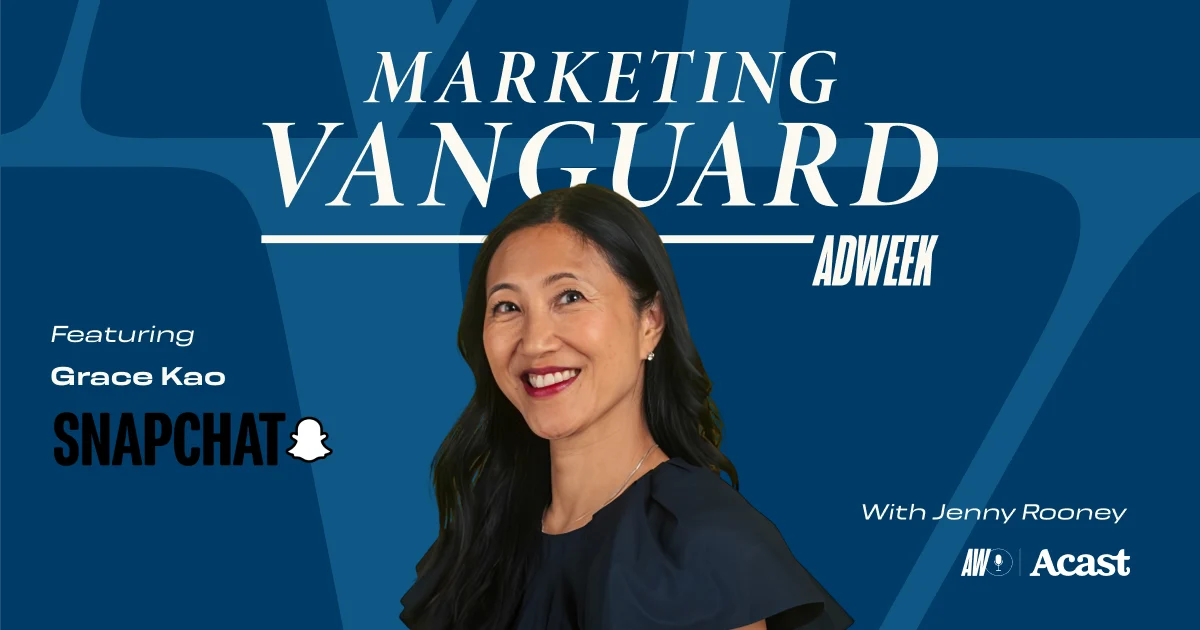
This core dilemma sits at the heart of the latest episode of Marketing Vanguard. In a wide-ranging, unscripted conversation, host Jenny Rooney sits down with Grace Kao, Chief Marketing Officer of Snap, to dissect what it truly takes to build a resonant brand in a crowded landscape. The discussion delves deep into Snap’s strategic pivots toward intimate chat, real-world utility, and the guiding philosophy that modern marketers should ask themselves before launching a single campaign: “How do we actually add something to the consumer’s life?”
For industry leaders looking ahead to major hubs of industry collaboration—such as the upcoming ADWEEK House: Advertising HQ in Midtown—Kao’s insights offer a masterclass in modern positioning, cultural relevance, and the enduring power of disciplined brand architecture.
Main Facts: The Anatomy of Modern Brand Survival
At its core, the conversation between Rooney and Kao addresses the friction points of contemporary brand leadership. As digital ecosystems mature, consumer skepticism rises, and algorithmic feeds homogenize digital experiences, distinctiveness is no longer just a nice-to-have; it is the ultimate economic moat.
- The Multi-Hyphenate Trap: Modern enterprises routinely span tech, media, and commerce, often diluting their core value proposition in the process. Kao emphasizes that as organizational complexity expands, internal and external brand clarity must remain unshakeable.
- Snap’s Strategic Evolution: Far from being a static social media feed, Snap is intentionally positioning itself as an essential communications utility—an "operating system" for a generation—anchored by the camera, real-time chat, and physical-world utility.
- The Challenger Brand Blueprint: Drawing from a career that spans Apple, PlayStation, Yahoo, Pandora, Instagram, Spotify, and now Snap, Kao argues that the most enduring brands maintain a challenger mindset, driven by a sharp point of view and a willingness to reject conventional consensus.
- The Creative Bar: For a platform defined by Gen Z and Millennial users who constantly build, remix, and share, standard corporate advertising falls flat. Kao enforces a strict mandate: Snapchat’s marketing must match the native creativity of its community.
Chronology: From Apple to Snap—The Evolution of a CMO
To understand Grace Kao’s perspective on modern marketing, one must look at the unconventional trajectory that shaped her philosophy. Her entrance into the industry was entirely accidental, setting the stage for a career built on navigating some of the world’s most culturally defining brands.
The Accidental Beginning: BBDO and Apple
Kao’s journey into advertising began when she stepped away from graduate school and took an entry-level position as an executive assistant at BBDO, working directly on the Apple account. Stepping into the orbit of Apple during a formative period of modern tech history provided an early, indelible lesson in leadership and brand discipline. Working alongside iconic leadership instilled in Kao an understanding of founder-led clarity—the idea that when a clear vision emanates from the top, it acts as an organizational compass, aligning everything from product development to global campaigns.
The Portfolio Years: PlayStation, Yahoo, Pandora, Instagram, and Spotify
Over the next two decades, Kao’s career spanned a roll call of digital and entertainment giants. Whether she was working on PlayStation’s gaming community, navigating Yahoo’s legacy transition, scaling Pandora’s audio streaming ecosystem, or helping shape the cultural footprints of Instagram and Spotify, a clear pattern emerged. Kao consistently gravitated toward brands that possessed three distinct traits: intense youth cultural relevance, deeply engaged communities, and uncompromising points of view.
The Snap Chapter: Grounded in Friendship
When Kao arrived at Snap, she stepped into an organization uniquely defined by its mission: empowering humanity to express themselves, live in the moment, learn about the world, and have fun together. Rather than chasing every shiny object in the tech ecosystem, Kao has focused her tenure as CMO on anchoring the Snapchat brand back to its foundational pillars: authentic friendship, creative expression, and real-world connection.
Supporting Data and Industry Context: The Shift Toward Utility and Real Connection
Kao’s strategic observations arrive at a critical juncture for digital platforms and advertisers alike. The digital marketing landscape is undergoing a massive structural shift away from passive, top-of-funnel impression chasing and toward utility-driven engagement.
The Death of the Generic Feed
For years, social media platforms converged on a singular architecture: the algorithmic content feed designed to maximize "time on site" through endless media consumption. However, user fatigue, privacy regulations, and cultural burnout have fueled a counter-trend. Younger demographics increasingly reject passive scrolling in favor of private messaging, closed-group sharing, and real-world utility.
Snapchat’s product architecture reflects this data reality. By opening directly to the camera and prioritizing peer-to-peer communication via chat, Snapchat functions less like a broadcast network and more like digital infrastructure for interpersonal relationships. For marketers, this changes the metrics of success. The question is no longer just how many eyeballs a brand can capture via interruption, but how seamlessly a brand can integrate into behaviors that are already occurring organically.
The Rise of Challenger Dynamics in Legacy Organizations
Kao’s observation that "challenger brands need something to fight for" is backed by shifting consumer preferences. Modern consumers—particularly Gen Z—possess highly tuned radar for corporate inauthenticity. Brands that attempt to appeal to everyone inevitably end up appealing to no one. Kao points out that true challenger brands embrace friction; they take risks, challenge industry assumptions, and refuse to soften their edges just to capture broad-market consensus.
Official Responses and Strategic Perspectives
Throughout the episode, Kao unpacked several operational philosophies that guide her team at Snap. Her insights provide a roadmap for how modern brand architects should approach creative execution, organizational culture, and platform partnerships.
On Founder-Led Clarity and Organizational Focus
"One of the biggest lessons from working around Apple was the power of founder-led clarity. When there is a visible leader who can articulate what the brand stands for, that clarity travels through the organization. That matters even more now, as businesses stretch across tech, media, entertainment and other categories. The company may expand. The portfolio may get messier. The brand still needs a clear center."
This perspective serves as a warning against corporate sprawl. As modern businesses acquire new capabilities, enter new verticals, and adopt emerging technologies (such as generative AI and spatial computing), internal messaging often fragments. Kao stresses that executive leadership must maintain a laser-focused definition of the brand’s core purpose to prevent organizational drift.
On Defining What You Stand Against
"Knowing who you are is often easier when you know what you are against. That is part of why I’ve gravitated toward challenger brands throughout my career. They tend to have sharper points of view, more willingness to take risks and less interest in being liked by everyone."
By framing brand identity through the lens of resistance to convention, Kao highlights why safe, focus-grouped marketing consistently underperforms. True brand equity requires taking a definitive stance, even if it alienates a portion of the broader market.
On Snapchat as a Generational Operating System
"Snapchat is something closer to an operating system for a generation than simply another content feed. It opens to the camera, prioritizes chat and increasingly functions as a utility for how people communicate, locate one another and stay connected. The opportunity is not only to interrupt attention. It is to understand the behaviors already happening on the platform and find a useful role inside them."
This philosophical pivot shifts the paradigm from advertising as "content interruption" to advertising as "service integration." When a platform becomes part of a user’s daily utility infrastructure, brands must provide genuine value rather than mere creative noise.
On Raising the Creative Bar
"Snapchat’s own marketing has to match the creativity of the community using it. That means listening to creators, understanding what people actually value, and building work that earns its place on the platform. For a brand whose audience is constantly making, remixing, and communicating, average creative is not good enough."
Implications for Marketers and the Advertising Industry
Grace Kao’s conversation on Marketing Vanguard carries profound implications for CMOs, agency leaders, and brand strategists navigating the complexities of the modern media ecosystem.
1. The Imperative of Cultural Co-Creation
Brands can no longer afford to operate as isolated broadcasting towers pushing monologues down to consumers. In ecosystems shaped by platforms like Snapchat, audiences are active producers, remixers, and participants. Marketing must evolve from a finished product delivered to an audience into a flexible framework designed to be interacted with by an audience.
2. Redefining Platform Utility
As digital touchpoints multiply, marketers must evaluate whether their media investments rely purely on forced attention or genuine utility. Brands that successfully embed themselves into consumer workflows—whether through augmented reality shopping tools, seamless transactional chat integrations, or practical utility—will build far more resilient equity than those relying solely on traditional banner or video ads.
3. Embracing Edge Over Averages
In an era dominated by risk-averse corporate governance and data-driven homogenization, Kao’s defense of the challenger mindset is a rallying cry for distinctiveness. Safe, middle-of-the-road creative strategies are easily ignored by digital natives. To cut through the noise, brands must be willing to lean into distinct points of view, champion cultural truths, and accept that trying to please everyone is the fastest path to irrelevance.
As the industry prepares for gatherings like the upcoming ADWEEK House: Advertising HQ in Midtown, Kao’s overarching message remains clear: the tools of media and technology will continue to evolve at a breakneck pace, but the fundamental responsibility of the marketer remains unchanged—to build a brand with a crystal-clear center, an authentic voice, and a genuine reason to exist in the lives of its community.