SAN FRANCISCO — In a major keynote address at its annual DevDay conference today, OpenAI unveiled its most ambitious product architecture to date: Dots, a new class of always-on autonomous agents powered by the company’s cutting-edge GPT-6 Astra model. Equipped with dedicated cloud computing environments and native web browsers, Dots represent a paradigm shift from conversational AI interfaces to fully realized, proactive digital coworkers capable of executing complex, multi-step workflows across the internet and enterprise software stacks.
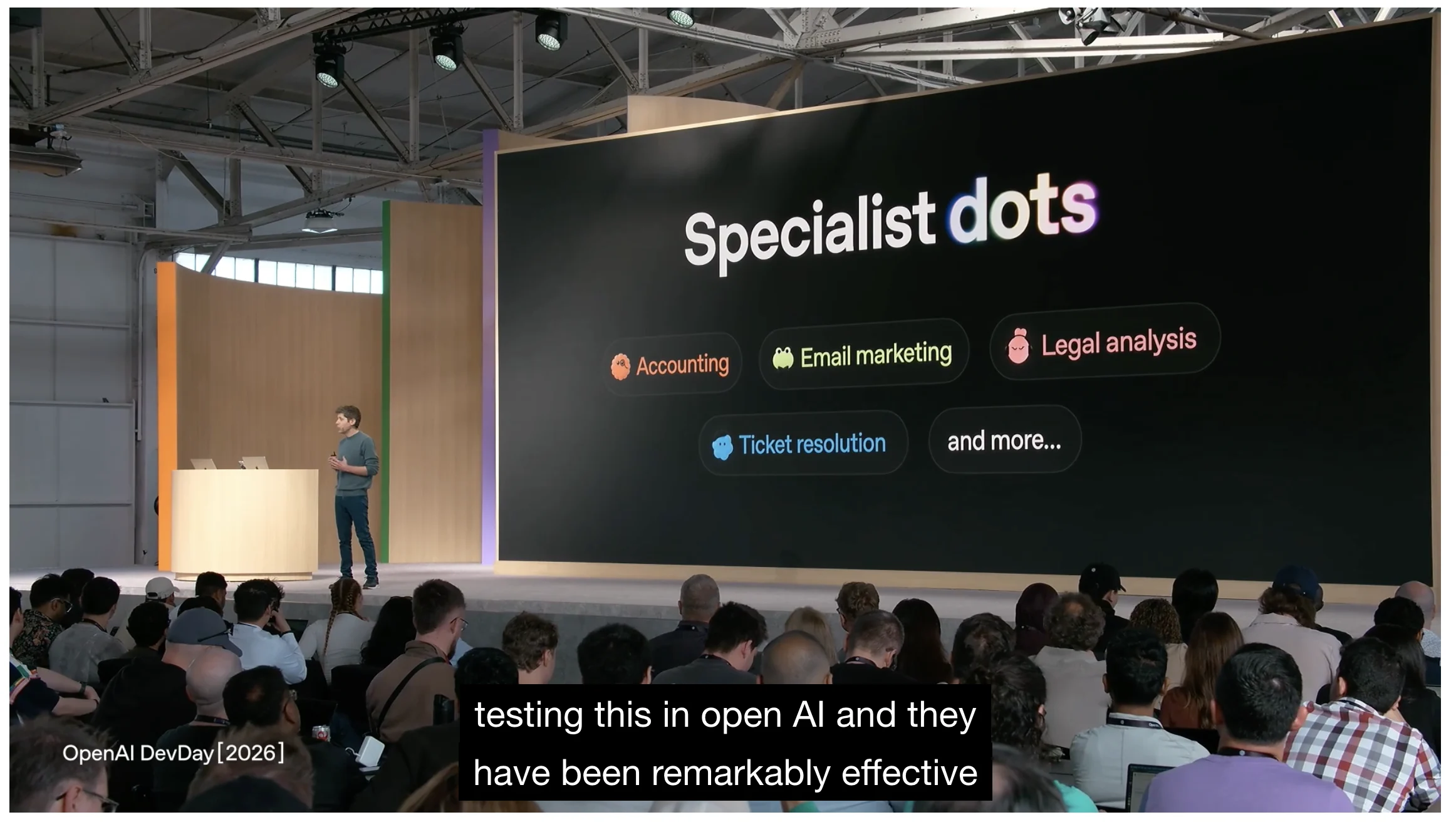
Alongside general-purpose autonomous agents, CEO Sam Altman introduced "Specialist Dots," precision-tuned iterations designed to shoulder heavy enterprise workloads. Among the specific enterprise use cases showcased during the keynote was automated email marketing, sharing the spotlight with accounting, legal analysis, procurement, and ticket resolution. While general-purpose variants are rolling out immediately to select consumer and enterprise tiers, the introduction of autonomous agents into the sensitive realms of email campaigns and customer communications has ignited immediate debate regarding infrastructure transparency, data privacy, and the future of digital labor.
Main Facts: The Anatomy of OpenAI’s "Dots"
The introduction of Dots marks a technological leap forward, moving generative AI away from reactive text-generation chat windows and into proactive, independent software execution.
At their core, Dots are continuous, always-on background processes. Unlike standard ChatGPT sessions that require constant human prompting, a Dot is designed to monitor, reason, and act independently over extended periods. Running on the foundational architecture of the GPT-6 Astra model—OpenAI’s most sophisticated multimodal engine yet—each Dot is provisioned with its own dedicated cloud computer instance and an integrated web browser. This gives the agents the unprecedented ability to navigate live web pages, interact with SaaS dashboards, execute code, manage files, and interface directly with local or cloud-hosted software without continuous human hand-holding.
During the DevDay presentation, OpenAI divided the release strategy into two distinct categories:
- General-Purpose Dots: Broadly capable autonomous assistants rolling out across OpenAI’s Pro, Business Premium, and Enterprise subscription tiers.
- Specialist Dots: Highly focused, verticalized agents built to handle complex enterprise workflows. Internal testing by OpenAI showcased these specialist models operating across five primary domains: procurement, invoice processing, email marketing, customer support, and commercial contracting.
While the general-purpose agent is widely accessible to higher-tier subscribers (with notable regional limitations), Specialist Dots are currently locked behind an enterprise pilot phase. OpenAI engineering teams are collaborating directly with select enterprise clients to custom-configure each Specialist Dot’s responsibilities, boundaries, and tool integrations, positioning the offering firmly as a bespoke enterprise solution rather than an off-the-shelf software purchase.
Chronology of the DevDay Reveal and Rollout
The path to today’s announcement has been marked by a quiet, intensive internal development phase at OpenAI’s San Francisco headquarters, followed by a carefully staged rollout schedule.
- Pre-DevDay Internal Testing: Over the past several months, OpenAI deployed Specialist Dots internally to stress-test their capabilities across corporate operations. According to CEO Sam Altman, these units were integrated into departments handling procurement, invoice processing, email marketing, customer support, and commercial contracting. Altman remarked during the keynote that the agents proved "remarkably effective in many roles."
- The DevDay Keynote Address: On stage, OpenAI leadership demonstrated live capabilities of GPT-6 Astra-powered agents browsing the live web, analyzing multi-page legal documents, and drafting targeted marketing campaigns. The reveal of the email marketing specialist dot immediately drew significant attention from digital marketers and data privacy advocates alike.
- Immediate Availability (General-Purpose): Post-keynote, OpenAI initiated the gradual rollout of general-purpose Dots to ChatGPT Pro, Business Premium, and Enterprise subscribers. However, strict regional exclusions apply at launch, notably blocking Pro users across the European Economic Area (EEA), Switzerland, and the UK due to regulatory complexities. Business Premium users in all supported regions gain access, while Enterprise administrators must manually enable the feature, which remains disabled by default.
- Enterprise Pilot Phase (Specialist Dots): Concurrently, OpenAI opened its sales funnel for Specialist Dots. Organizations wishing to deploy verticalized agents for email marketing or accounting must currently submit a corporate contact sales form to initiate a customized engineering deployment.
Supporting Data, Architecture, and Access Specifications
To understand the operational scope of Dots, industry analysts have closely examined OpenAI’s accompanying technical documentation, help center guidelines, and security whitepapers.
Deployment Matrices and Regional Restrictions
The rollout strategy highlights a bifurcated approach between consumer-facing automation and highly regulated enterprise deployments:
- Consumer & Pro Tiers: General-purpose Dots are currently reaching Pro subscribers globally, except within the European Economic Area (EEA), Switzerland, and the United Kingdom, where stringent automated decision-making and data transfer regulations under the GDPR likely necessitate further compliance reviews.
- Business & Enterprise Tiers: Business Premium users across all supported regions are receiving the update. Enterprise customers retain strict administrative control; the beta feature is turned off by default, requiring IT administrators to explicitly toggle permissions before employees can provision an agent.
- Rollout Velocity: OpenAI has confirmed that the deployment is phased and gradual, meaning users within eligible tiers may experience a delay of several days before the feature populates within their account dashboard.
Email Integration Mechanics
For the digital marketing community, the integration of Dots with personal and corporate email infrastructure represents both an immense opportunity and a operational blind spot.
According to OpenAI documentation:
- Account Connectivity: A Dot can successfully connect to a user’s personal email account, operating in the background to read, triage, draft, and take actions based on incoming messages.
- Identity Limitations: At launch, a Dot cannot possess or operate its own native, independent email address. Instead, it acts as an autonomous layer operating through the user’s existing email client and credentials.
- Security & Transparency Gaps: OpenAI has published a dedicated safety note detailing read-only background access and approval rules. However, critical operational details remain entirely opaque. As of press time, OpenAI has published zero documentation regarding what types of email marketing campaigns the email marketing dot is authorized to send, the underlying sending infrastructure or SMTP relays utilized, or how recipient consent, list hygiene, and CAN-SPAM/GDPR compliance are technically enforced by the agent.
Official Responses and Industry Reactions
The reception to OpenAI’s DevDay announcements has been a mixture of awe at the technological capability of GPT-6 Astra and deep skepticism regarding the integration of autonomous agents into business-critical operations like email marketing and legal compliance.
Speaking on the efficiency gains demonstrated during internal tests, Sam Altman emphasized the transformative nature of always-on software labor:
"We’ve tested these specialist dots internally across procurement, invoice processing, email marketing, customer support, and commercial contracting. In many roles, they have proven to be remarkably effective. This is not just about writing text anymore; this is about delegating execution."
Enterprise software analysts, however, have raised immediate red flags regarding the lack of transparency surrounding the Specialist Dot pilot programs. Marketing technology specialists note that allowing an autonomous AI agent to interface directly with email distribution lists without clear governance frameworks risks catastrophic deliverability failures, spam complaints, and severe regulatory penalties.
In an official statement addressing security concerns, OpenAI’s safety team stressed that Dots operate under strict guardrails:
"We have built safety, security, and privacy directly into the core architecture of Dots. Through read-only background access protocols and mandatory user approval checkpoints, we ensure that human oversight remains central to sensitive operations, mitigating unauthorized actions across external platforms and communication channels."
Despite these assurances, enterprise cybersecurity firms have urged caution, noting that giving an AI agent with a dedicated cloud computer and browser access to corporate email accounts expands the enterprise attack surface significantly.
Implications: The Future of Autonomous Work and Email Marketing
The launch of OpenAI’s Dots and the GPT-6 Astra model signals a profound turning point in the evolution of artificial intelligence. By crossing the threshold from conversational assistants to autonomous background agents equipped with their own browsers and computing environments, OpenAI is directly challenging traditional SaaS business models.
Implications for Digital Marketers and Email Operations
The inclusion of email marketing as a core use case for Specialist Dots carries sweeping implications for the marketing industry:
- Hyper-Personalization at Scale: Traditional email marketing relies on rigid segmentation rules and pre-written templates. An autonomous agent powered by GPT-6 Astra can theoretically ingest real-time web data, analyze customer behavior, and dynamically compose, optimize, and execute hyper-targeted email campaigns on an individual basis.
- The Compliance Minefield: Without transparent frameworks detailing how OpenAI’s email marketing dots handle list management, opt-out requests, and data privacy regulations, marketers face substantial liability. Delegating customer communication to an autonomous agent without a clear audit trail could easily trigger severe violations under global data protection laws.
- Redefining Agency and In-House Roles: As Specialist Dots transition from enterprise pilots to commercially available solutions, the day-to-day responsibilities of marketing professionals may shift from content creation and campaign deployment to high-level strategic oversight and agent governance.
Broader Economic and Technological Consequences
On a macro level, the rollout of Dots accelerates the race toward autonomous enterprise operations. As businesses increasingly delegate repetitive, multi-step workflows—such as invoice processing, procurement, and customer support—to cloud-based AI agents, the operational overhead of modern enterprises is poised to shrink dramatically.
At the same time, regional divides—such as the exclusion of EEA, Switzerland, and UK users from the general-purpose rollout—highlight a widening regulatory chasm between the United States and international jurisdictions regarding autonomous AI systems. As OpenAI gathers empirical data from its enterprise pilots and gradually expands access, the industry will be watching closely to see whether these autonomous agents can maintain operational safety without stifling innovation.
Additional updates and deep-dive technical analyses will be published as OpenAI releases further details regarding the email marketing pilot program and as independent testing environments become available.