The rapid democratization of software engineering through Large Language Models (LLMs) has permanently altered the web development landscape. For decades, the industry operated on strict determinism: input A yielded output B precisely one hundred percent of the time, governed by methodical processes and structured logic. Today, developers face a non-deterministic reality where models like Anthropic’s Claude can spin up fully functional applications from simple natural language prompts, shifting the paradigm from manual syntax writing to high-level system orchestration.
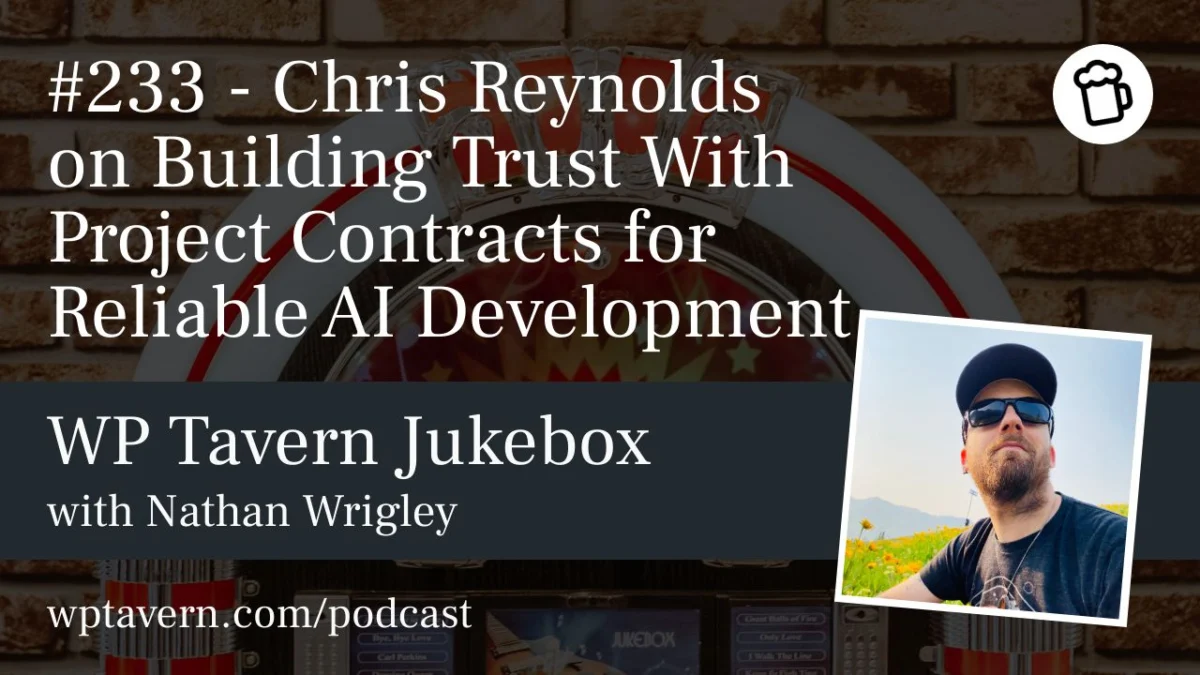
However, this newfound creative freedom—often celebrated by "vibe coders" and non-traditional developers alike—comes with inherent risks. LLMs are fundamentally optimized to find the path of least resistance from point A to point B, a tendency that can lead to shortcuts, security vulnerabilities, and unpredictable codebases if left unchecked. To explore these evolving dynamics, WP Tavern’s Jukebox Podcast recently sat down with Chris Reynolds, Senior Manager of Developer Relations at Pantheon, to discuss his WordCamp US presentation, “Parenting Claude: Guardrails for AI-Assisted Development.”
Main Facts: The Shift Toward AI-Driven Workflows and the Problem of Non-Determinism
The integration of advanced LLMs into daily development workflows has profoundly impacted how web applications are built, tested, and shipped. With a career spanning roughly 20 years in the WordPress ecosystem—including stints at WebDevStudios and Human Made—Reynolds joined Pantheon five years ago, transitioning into Developer Relations two years ago. As part of Pantheon’s expansion into supporting Next.js and other modern frameworks, Reynolds began using Claude to code his personal website from scratch as a practical experiment to understand the capabilities and limitations of AI-assisted development.
Reynolds highlights a core technical challenge: LLMs are non-deterministic black boxes. When prompted to accomplish a task, an AI model will seek the fastest route to completion. Without rigid boundaries, this can result in undesirable behaviors, such as rolling back previously functioning code during refactoring, introducing hardcoded secrets into repositories, or bypassing critical accessibility and testing standards.
To combat this erratic behavior, Reynolds introduced the concept of a "project contract." Rather than relying on constant, tedious manual oversight—effectively "yelling at the AI" to fix its mistakes—developers can codify their project standards directly into the workflow using structured markdown files (Claude.md, agents.md), automated test-driven development (TDD), and pre-commit hooks. This creates a non-negotiable forcing function that ensures AI-generated code meets rigorous compliance checks before it can ever be committed to a repository.
Chronology: From Experimental Chatbots to Agent Orchestration
The trajectory of AI development over the past several years underscores a dizzying pace of evolution that has caught even veteran engineers off guard:
- Pre-2023 (The Era of Small Language Models): Early iterations of machine learning models struggled significantly with complex logic, often producing incoherent text or basic spam reminiscent of historical automated Twitter bots.
- Late 2022 to 2023 (The Public LLM Boom): The public launch of ChatGPT and subsequent conversational agents demonstrated a sudden, massive leap in fluency and capability, crossing the Turing test threshold with little fanfare and fundamentally changing the public perception of artificial intelligence.
- Late 2024 to 2025 (Code-Capable LLMs): Major updates across leading LLMs drastically improved their proficiency in programming languages and framework comprehension, turning them into genuinely viable engineering tools.
- 2026 (The Era of Agent Orchestration and Guardrails): As highlighted by Reynolds, the current industry focus has shifted past basic prompting to multi-agent workflows. Modern engineering practices now utilize specialized agent roles—such as separate coding agents, planning agents, and automated reviewer agents—to validate code quality systematically.
Supporting Data: Workflow Mechanics and Project Contracts
Implementing robust guardrails requires moving past traditional code review methods, which struggle to keep pace with the sheer volume of AI-generated output. Reynolds outlines several practical mechanisms used to establish trust in non-deterministic environments:
- The Reviewer Agent Workflow: Instead of reviewing thousands of AI-written lines manually, a secondary reviewer agent is automatically spawned to check the work of the primary coding agent against a strict checklist.
- Automated Checklists: Every proposed commit must pass a comprehensive suite of verifications, including:
- Build and linting verification
- Mandatory test-driven development (TDD) validation (where the AI writes the failing test first, then writes the code to pass it)
- Accessibility audits
- Strict security scans to ensure no API keys or secrets are inadvertently written to the file system
- Cryptographic Timestamps and Gates: If the reviewer agent’s checklist passes, it generates an approved status file with a valid timestamp. Pre-commit hooks intercept any attempt to bypass this process, rejecting unverified code automatically.
- Design System Integration: For frontend design, components are routed through tools like Storybook, allowing human oversight of the visual output before final implementation.
Official Perspectives: The Philosophy of Developer Relations and Technical Trust
Reflecting on his role at Pantheon, Reynolds emphasizes the core function of Developer Relations: translating complex, highly technical concepts into accessible, actionable guidance for the broader community. Pantheon provides a developer-centric hosting platform featuring multi-dev environments, making best practices around emerging tech crucial for community sustainability.
However, industry leaders are increasingly grappling with the philosophical implications of leaning heavily on AI. Reynolds points out a paradox: while AI tools dramatically democratize web development—allowing non-developers to build functional prototypes in an afternoon rather than weeks—they also challenge conventional software reliability standards.
When asked about confidence levels in AI-generated output, Reynolds admits that developers rarely read every line of code produced by modern LLMs. Trust is not established by reviewing individual lines, but by trusting the integrity of the automated guardrails and forcing functions surrounding the system.
Implications: The Future of Senior Engineering and the "Missing Rung"
Beyond day-to-day coding efficiencies, the rapid adoption of LLMs raises profound questions about the future of the software engineering career pipeline.
The Attrition of Foundational Skills
A primary concern raised during the discussion is the potential atrophy of cognitive load and foundational problem-solving skills among developers. If junior-level tasks are entirely outsourced to AI agents, the industry risks removing the foundational first rungs of the professional ladder.
[Traditional Pipeline] -> Junior Tasks -> Mid-Level Experience -> Senior Oversight
[AI-Assisted Pipeline] -> AI Execution -> Senior Reviewer (Missing Junior Experience?)
Without the struggle of writing boilerplate code and troubleshooting basic errors, it remains unclear how future generations of developers will cultivate the deep contextual understanding required to effectively guide and constrain advanced AI systems.
The Problem of Scale and Uncertainty
Furthermore, the tech industry faces mounting scrutiny over the rapid expansion of physical infrastructure—such as massive new data centres—to power AI models whose internal mechanisms remain imperfectly understood even by their creators. As Reynolds notes, humanity successfully navigated its way into a world of highly capable LLMs without fully comprehending why they work the way they do, relying instead on empirical utility.
Conclusion
As the web development community looks toward the coming years, the mandate for engineers is clear. Embracing playfulness and accelerated workflows is no longer enough; developers must act as architects of trust. By implementing rigorous project contracts, automated reviewer agents, and unyielding guardrails, the industry can harness the incredible democratizing power of AI without losing control of its digital infrastructure.