The fundamental architecture of the client-agency relationship is currently undergoing its most significant structural shift since the dawn of the internet. As "Agentic AI"—systems capable of autonomous decision-making and execution—moves from experimental to foundational, the traditional agency billing model has become not only inefficient but actively detrimental to business performance.
The era of paying for "execution hours" is ending. In its place, a new paradigm is emerging: one where agencies are no longer paid to touch the machine, but to provide the strategy, governance, and high-level judgment that directs it. For brands, this transition represents a massive opportunity to slash redundant costs while simultaneously reinvesting in the high-value, human-centric work that AI cannot replicate.
The Death of the Execution Army
For decades, the standard agency contract has been predicated on an "execution army." Brands paid retainers for account management, manual keyword sculpting, daily bid adjustments, and the relentless production of "optimization" reports. This was the era of the hamster wheel: agencies were rewarded for activity, often under the guise of "micro-optimization," to justify high monthly fees.
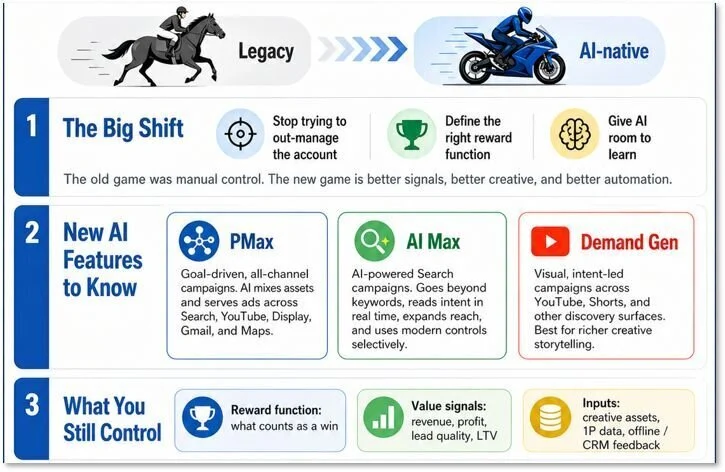
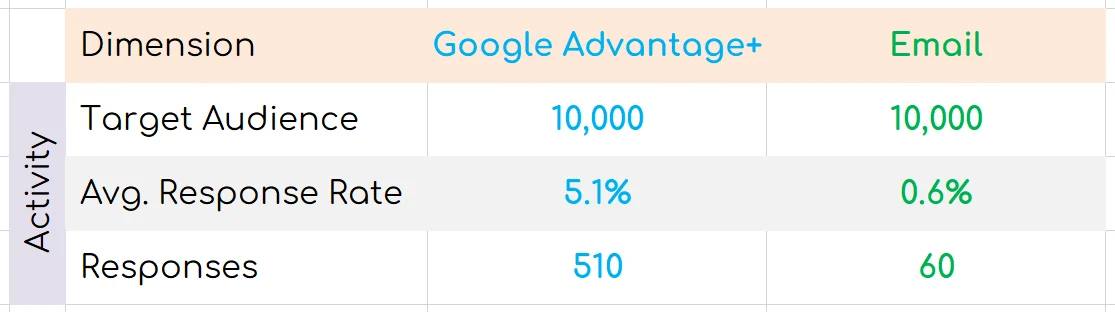
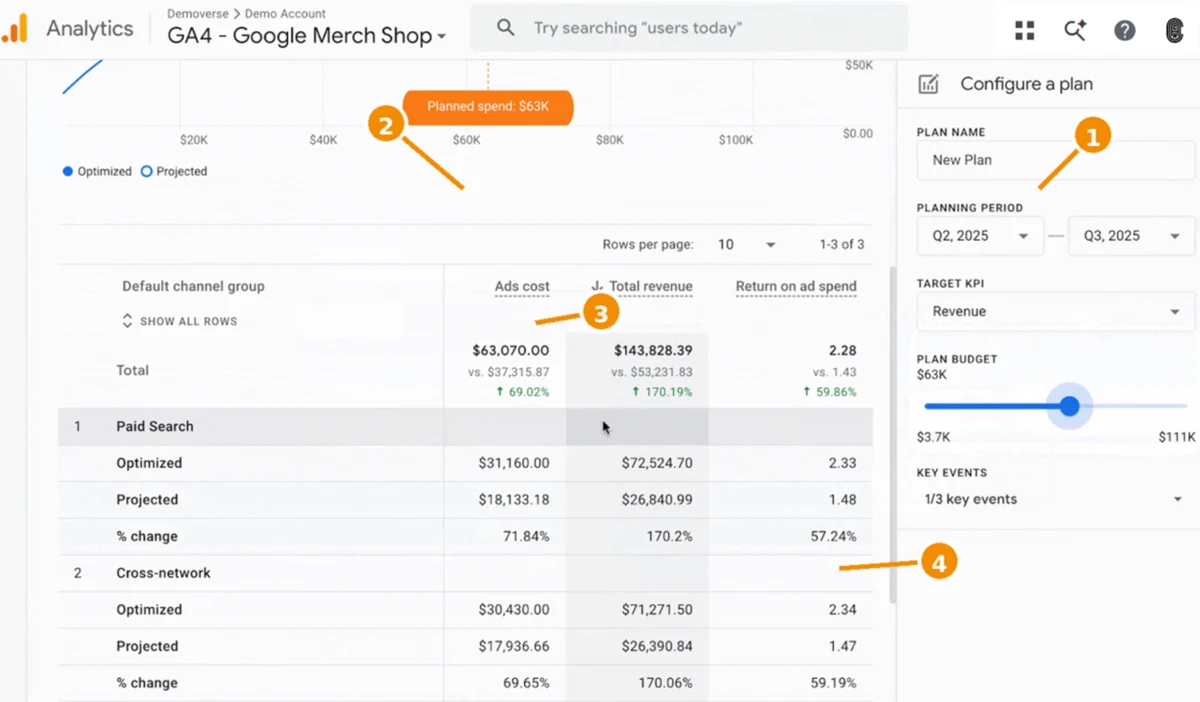
However, modern advertising platforms—led by Google’s Performance Max (PMax), Meta’s Advantage+ (A+), and similar automated suites—have fundamentally changed the landscape. These systems now ingest tens of thousands of data points to optimize bids, creative combinations, and targeting in real-time. When an agency manually intervenes to "rescue" a campaign by shifting bids or pausing ads, they frequently disrupt the machine learning cycle, degrading performance in the process.
In the AI era, the agency’s role is no longer to do the work; it is to govern the machine. The "execution army" is being replaced by intelligent automation, leaving a massive surplus of manual labor that brands are currently paying for, but no longer need.
Chronology of the Transformation: From Manual to Autonomous
The transition toward an agentic future is not a distant event; it is a current reality that is accelerating.
- 2023–2024 (The Awareness Phase): Brands began realizing that automated bidding and generative creative tools were outperforming manual human efforts. However, legacy contracts remained tied to traditional, labor-intensive SOWs.
- 2025 (The Friction Phase): The misalignment between agency incentives (billing for hours) and performance (achieved by letting AI run) became untenable. Many brands began noticing that "account management" was actually causing performance volatility.
- 2026 (The Pivot Point): We have entered the era of the "Agency Operating Model 2.0." Brands are now systematically stripping out manual work from contracts, resulting in projected fee reductions of 25% to 75% for routine execution tasks, while simultaneously reallocating those savings into strategic, high-impact consulting.
Supporting Data: Where the Savings (and Growth) Lie
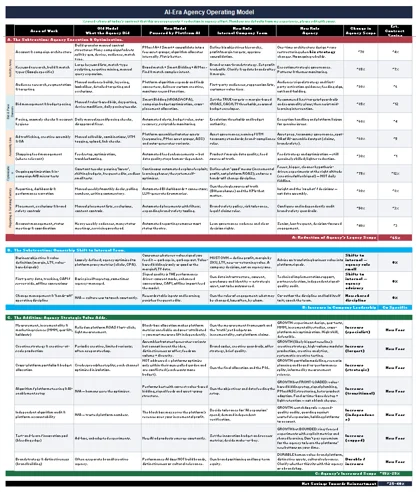
The math behind the transition is stark. A typical agency contract is currently weighed down by five primary clusters of work that are increasingly handled by platform intelligence.
1. The Agency Activity Army (22% of Cost)
Previously dominated by manual keyword research and segmentation, this area has been consumed by algorithmic targeting. The agency’s role is now limited to high-level architecture design.
- Work Reduction Potential: 78%
2. The Bid & Pace Dancers (14% of Cost)
Manual bidding and day-parting are now relics. Smart bidding algorithms outperform humans by reacting at a speed and scale no team can match.
- Work Reduction Potential: 73%
3. The Assembly Line (12% of Cost)
Trafficking, tagging, and ad-format building are being automated by generative tools within the platforms themselves.
- Work Reduction Potential: 45%
4. The Optimization Theater (16% of Cost)
This was often the most expensive—and destructive—part of the contract. Constant, unnecessary A/B testing and "tweaking" often prevented algorithms from reaching a stable state of learning.
- Work Reduction Potential: 75%
5. The Reporting & Servicing Factory (30% of Cost)
The manual creation of weekly decks and endless "check-in" meetings is the primary target for elimination. With AI-fronted data lakes providing real-time "why" and "what" insights, the need for the "reporting factory" has evaporated.
- Work Reduction Potential: 60%
When these figures are aggregated, the total potential for contract fee reduction is significant, often exceeding 60% for companies still stuck in the old-world model.
Implications: The New Operating Model
The objective of this shift is not simply to "save money," but to align the agency’s incentives with the business’s success. As long as agencies are paid a "Percent of Media Spend," they are incentivized to spend more and touch more, which is the exact opposite of what an AI-driven, high-efficiency model requires.
To move forward, the industry must migrate to a three-tier fee structure:
- Lean Base Retainer (40%–50%): Covers core governance, steering, and data engineering.
- Project-Based Fees (30%–40%): Dedicated to high-value creative concepts, complex strategic analytics, and portfolio-level strategy.
- Outcome-Based Incentives (15%–25%): Tied directly to incremental profit or verified business lift, ensuring the agency is rewarded for growth, not activity.
The Future for Agencies: Evolution or Obsolescence
Agencies are not becoming worthless; they are becoming more valuable, provided they can pivot. The best agencies will emerge as indispensable partners, moving from "execution arms" to "judgment centers."
By shedding the burden of $50/hour manual labor, agencies can afford to hire high-level talent—experts in psychology, data engineering, and creative strategy—who are paid to solve problems that AI cannot. The agencies of 2027 will not be judged by how many hours they log, but by the "Sophistication Score" they bring to a client’s digital maturity.
For the client, this requires a change in internal management as well. It is time to audit your contracts, reclaim ownership of your data and pixels, and eliminate the toxicity of "principal media" markups often hidden within the "Percent of Spend" model.
Bottom Line
The "Agentic AI" era demands a complete decoupling of activity from value. If your agency is touching your account more than once every ten days, or if your SOW is still dominated by manual reporting and micro-optimization, you are paying for a bygone era.
The transformation is here. It is time to renegotiate not to cut, but to align. The agencies that embrace this change will see their value rise, their margins improve, and their client relationships deepen. Those that cling to the old model of selling "motion" will find themselves rapidly replaced by the machines they refuse to trust. The future of marketing is not about doing more; it is about doing the right thing, at the right time, with the right level of human intervention.